Yuriy Miroshnichenko, a prominent Uzbek architect who took part in rebuilding Tashkent after the devastating 1966 earthquake, has died at the age of 89. His death was reported on November 10 by Fotima Abdurakhmanova, a researcher of architectural heritage who knew him personally. According to her, Miroshnichenko remained active well into old age, continued to follow the fate of his projects and spoke in detail about the history of Tashkent architecture. Born in Samarkand, he graduated from the architecture department of the Tashkent Polytechnic Institute and began his professional career in 1960. He contributed to the design of residential quarters in Chilanzar, worked at the Tashgiprogor institute and later founded his own architectural studio. Among projects associated with his name is the former House of Knowledge, which now houses the Russian Drama Theatre. News of his death drew wide response in the city’s cultural and professional circles.
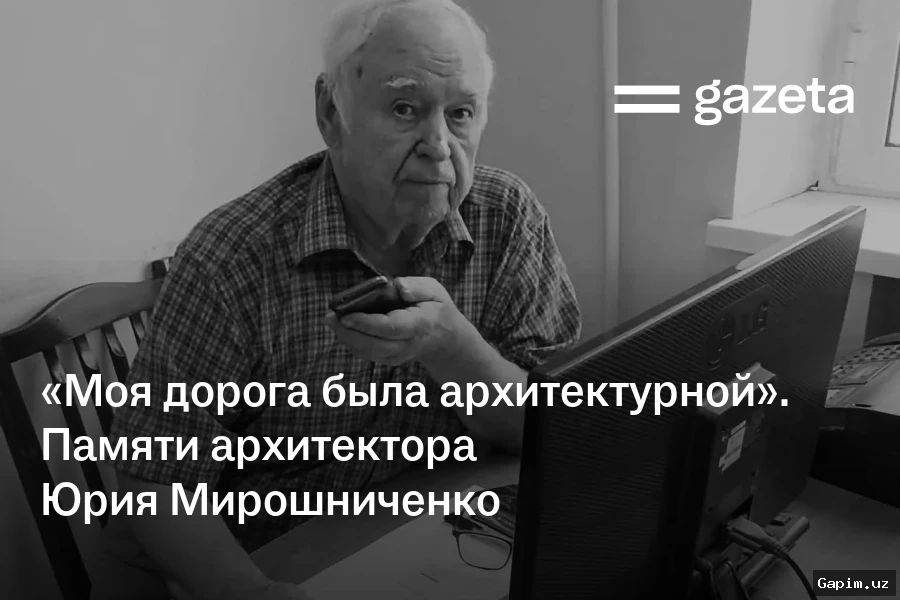
Key Takeaways: Yuriy Miroshnichenko, a prominent architect involved in the post-1966 earthquake reconstruction of Tashkent, has died at 89. His legacy includes Chilanzar residential planning, work at Tashgiprogor and support for Tashkent’s large mosaic panels. In 2025 he published an autobiographical book, Kaleidoscope of Memory.
Miroshnichenko’s career coincided with a period of large-scale urban transformation in Tashkent after the 1966 earthquake. The city needed new housing, public buildings and modern planning, and architects played a major role in shaping the look of new districts. After the earthquake, artists the Zharsky brothers proposed decorating new multi-storey buildings with large-scale mosaic panels. Miroshnichenko, who held a senior position at a design institute, supported the initiative and approved one of the first such projects. The panels later became an integral part of the capital’s architectural identity.
Fotima Abdurakhmanova said the architect retained a keen interest in professional life and the city’s history until his final years. He also painted, researched the history of old Tashkent, and collected archival photographs and memories of the city. In 2025 his autobiographical book Kaleidoscope of Memory was published, covering his professional path, meetings and the people with whom he helped create the capital’s architecture. Yuriy Miroshnichenko was buried at the Domrabad cemetery. His personal archive and recollections may remain an important source for further research into Tashkent architecture.
His death has again drawn attention to the preservation of Tashkent’s architectural heritage, especially its mosaic panels. Earlier, concerns were reported that mosaics by the Zharsky brothers could be damaged during facade repairs to a residential building in the Mirzo-Ulugbek district. No official decision on additional protection measures for such objects has yet been announced, but the issue of safeguarding and restoring historic panels remains part of public discussion. The professional community is expected to continue pressing for more careful treatment of the city’s post-earthquake architectural legacy.
Source: podrobno.uz