Uzbekistan's Agency for Prospective Projects (ILMA) has approved a regulation governing the circulation of foreign securities under the special legal regime of a 'regulatory sandbox' in the capital market. The document, which entered into force on November 12, establishes the procedure for trading foreign securities on special platforms of Uzbek stock exchanges and electronic platforms of investment intermediaries, as well as access to foreign trading venues through local brokers. The move aims to integrate Uzbekistan's financial market with global capital markets while introducing strict requirements for investors, financial instruments, brokers, and settlement procedures.
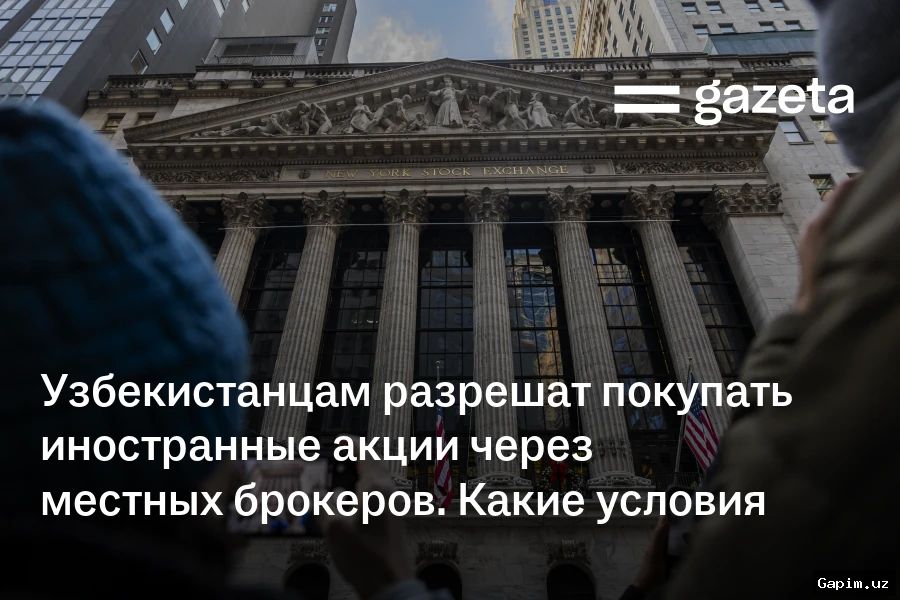
Key Takeaways: ILMA's new regulation, effective November 12, creates a framework for trading foreign securities in Uzbekistan under a regulatory sandbox. The rules allow two methods: trading on local exchanges or brokers using depositary receipts, and direct access to foreign markets via local intermediaries. Only qualified investors—individuals or legal entities meeting specific criteria, including at least $5,000 in financial assets—can participate.
The regulation is part of Uzbekistan's broader efforts to develop its capital market and attract foreign investment. The regulatory sandbox concept allows for controlled testing of innovative financial instruments and services before full-scale implementation. By enabling access to foreign securities, the government aims to diversify investment opportunities for local investors and enhance the sophistication of the domestic market. However, the measure also reflects a cautious approach, as it restricts participation to qualified investors and imposes strict safeguards to manage risks associated with cross-border transactions.
Under the first method, the Central Depository will issue financial instruments backed by foreign securities held in its foreign accounts. Each local instrument must correspond to one unit of the underlying foreign asset, and the depository must regularly reconcile the number of instruments with the foreign assets to prevent discrepancies. Withdrawals, pledges, or other encumbrances on the underlying assets are prohibited except as provided by law. The second method allows local brokers to partner with foreign investment intermediaries to execute trades directly on foreign trading venues. The local broker's platform must reflect client operations, maintain records of securities and cash, and provide transaction reports. The regulation applies only to qualified investors; for individuals, one criterion is holding at least $5,000 in financial assets, though the full list of conditions is defined by legislation.
Market participants are expected to begin preparing their infrastructure and applying for ILMA approval for specific securities. The regulator will assess each foreign security on a case-by-case basis, and investment intermediaries must meet the special regime's requirements and ensure technical readiness. The new rules are likely to be followed by further clarifications and guidance from ILMA and the Central Depository. As Uzbekistan continues to reform its financial sector, the success of this sandbox will depend on effective risk management and the development of local brokers' capacity to operate in international markets.
Source: www.gazeta.uz