️ Israel's Ambassador to Uzbekistan, Gideon Lustig, held a press conference in Tashkent on March 3, outlining his country's position on the escalating tensions in the Middle East. Specifically, he explained why the joint operation with the United States began at this particular time, assessed threats from Iran's proxy forces, and commented on the conflict's impact on regional transport corridors. The diplomat emphasized that the main question “of interest to everyone” is why these events in the Middle East have started now.
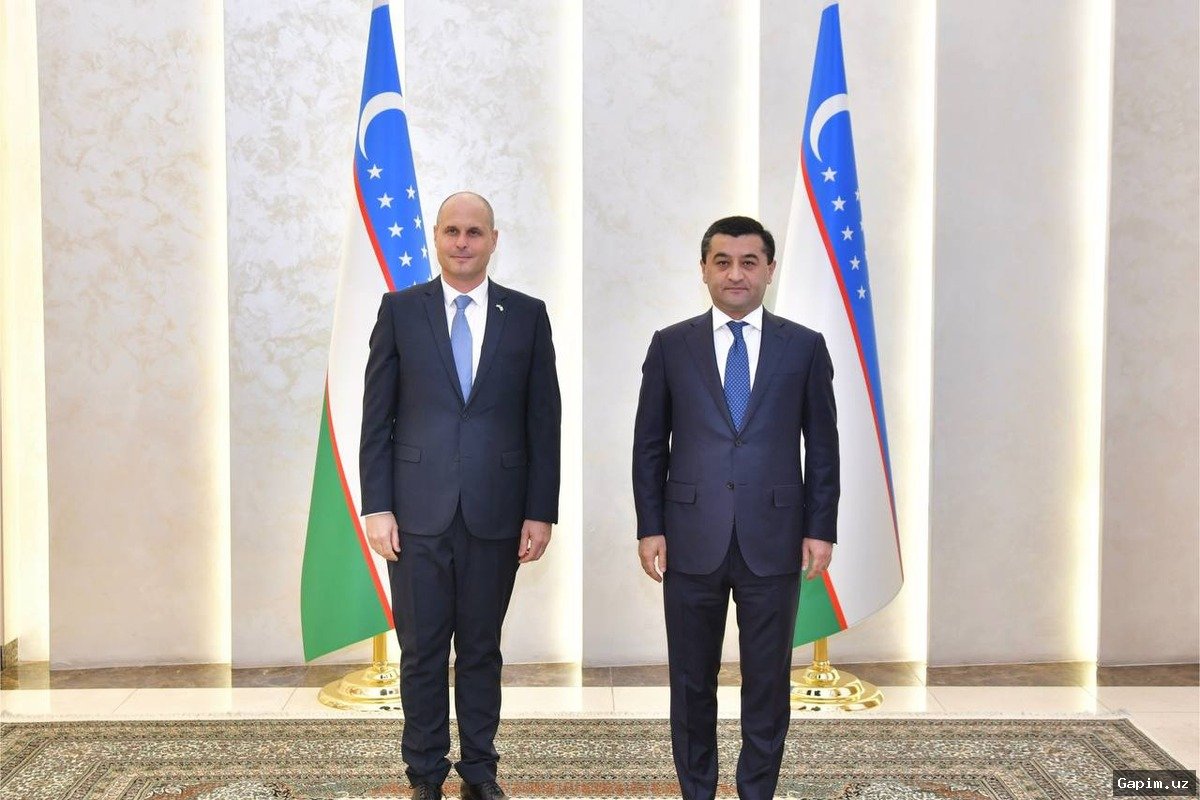
️ Lustig stated: “The United States and Israel are conducting a joint operation to eliminate a global threat. […] But there is one important difference between us and the U.S.: it is we who are under direct and constant threat from Iran. For decades, the Iranian government has openly declared its intention to destroy our state.” He listed three main avenues through which Iran has regularly acted against Israel: strikes on nuclear infrastructure facilities, uranium enrichment, and development of a ballistic missile program.
️ The ambassador stressed that Israel's actions are preventive and necessary for the country's survival. He said: “The point is that we had to stop them right now. If decisive steps are not taken now, it will clearly be too late. We could not allow Iran to achieve insurmountable military power.” Addressing international criticism, including views that the attack on Iran violates international norms, Lustig remarked: “The war waged against us in a ‘proxy’ format for many years has today entered an active phase. Do not be mistaken about this regime — it has been attacking us by all available means for years.”
️ The diplomat acknowledged that this situation poses economic difficulties for Uzbekistan, which utilizes the “North-South” transport-trade route passing through Iranian territory. However, he called on Tashkent to assess the risks of cooperation with Tehran. Lustig noted: “Iran is not a reliable partner. Remember how many times Iranians have attacked ships in the Strait of Hormuz and how many times their Houthi allies have fired on merchant vessels. For the security of international corridors—energy and trade routes—it is preferable that such a regime not be present on these routes.”
️ Responding to a question about the conflict's duration, the Israeli ambassador, relying on assessments from world leaders, including U.S. President Donald Trump, suggested that the operation could conclude within a few weeks. He concluded: “This will not become a permanent conflict. It is an operation clearly directed at achieving our objectives. We want to give the Iranian people, not very satisfied with living under the current system, an opportunity to rid themselves of the power that has been stifling freedom for 47 years. But ultimately, changing the regime is an internal task for the Iranians themselves.”
️ It is recalled that recently, the Iranian embassy in Tashkent also held a press conference. Ambassador Mohammad Ali Eskandary stated that if aggression continues, his country will not engage in negotiations with the United States. He emphasized that retaliatory strikes are aimed only at military targets and that neighbors in the region have always been friends of Iran. The ambassador also added that Iran does not seek to possess nuclear weapons.
Source: www.gazeta.uz