TASHKENT, Uzbekistan — Traffic lights along a nearly two-kilometer stretch of Farhadskaya Street in Tashkent have been re-timed, significantly reducing travel time for drivers. The adjustments, implemented by the Center for Traffic Organization (CTO), cover the section from Malaya Koltsevaya Road to Katta Khirmontepa Street, which includes seven intersections. According to official data, during off-peak hours, the travel time has dropped from 6.5 minutes to just 4 minutes, a reduction of nearly two and a half minutes. The changes are based on a detailed analysis of traffic intensity at different times of day and are designed to prioritize the dominant flow of vehicles.
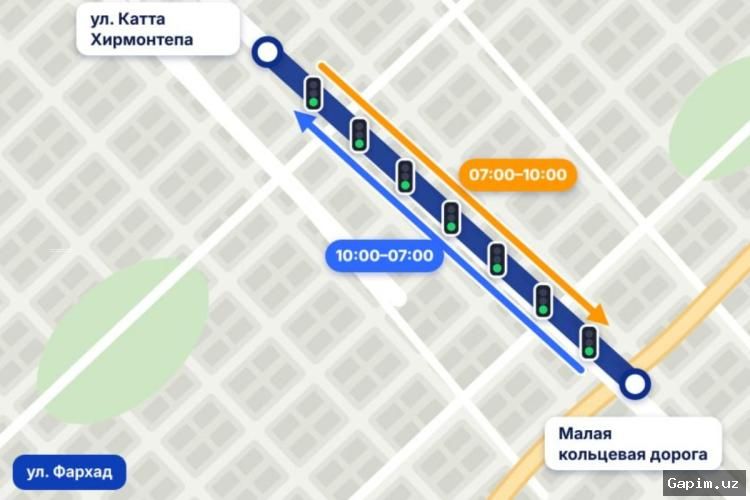
Key Takeaways: The re-timing of seven traffic lights on Farhadskaya Street has cut travel time by 2.5 minutes on a 2 km section, from 6.5 to 4 minutes during off-peak hours. From 07:00 to 10:00, priority is given to traffic heading toward Malaya Koltsevaya Road; from 10:00 to 07:00, the advantage shifts to vehicles moving toward Katta Khirmontepa Street. The initiative is part of a broader effort to optimize traffic flow across Tashkent, including the creation of a 23-kilometer bus corridor from Sergeli to Yunusabad.
The optimization of traffic lights on Farhadskaya Street is a microcosm of Tashkent’s wider strategy to tackle growing traffic congestion as the city expands. While major arteries have already benefited from the so-called “green wave” system—where a series of lights are synchronized to allow continuous traffic flow—authorities are now turning their attention to smaller sections where targeted adjustments can yield tangible improvements. The CTO noted that even minor changes on relatively short stretches can make a difference for daily commuters. This approach aligns with President Shavkat Mirziyoyev’s broader infrastructure modernization agenda, which prioritizes urban mobility and road safety.
The CTO explained that specialists studied traffic patterns throughout the day and adjusted the traffic light modes accordingly. “We analyzed the intensity of traffic at different times and changed the operation modes to match the actual flow,” a representative said. “The changes have reduced the time to traverse this section by almost two and a half minutes.” The specific schedule now in effect: from 07:00 to 10:00, the priority is for vehicles moving toward Malaya Koltsevaya Road—likely catering to morning commuters heading into the city center or connecting to other major roads. For the remaining hours, from 10:00 to 07:00, the advantage is given to cars traveling toward Katta Khirmontepa Street, balancing the flow during the rest of the day and night.
Looking ahead, the Center for Traffic Organization indicated that similar optimizations will continue across Tashkent, both on major highways and on secondary streets. The upcoming 23-kilometer bus corridor from Sergeli to Yunusabad is expected to further transform public transport and reduce reliance on private cars. These combined measures—smart traffic light management and dedicated bus lanes—are part of a comprehensive plan to enhance urban mobility, cut congestion, and improve air quality in Uzbekistan’s capital. As Tashkent’s population grows, such targeted interventions will be crucial in maintaining a functional and efficient transport network.
Source: podrobno.uz