In Margilan, a city in Uzbekistan’s Fergana Valley, Kholmat aka Jorayev, a man nearing his 60th birthday, is combining two winter jobs: stoking school stoves before dawn and cutting old trees into firewood for local households. As cold weather sets in, he crushes and sorts coal at one of the city’s schools, keeps classrooms warm, and then takes his chainsaw to homes where residents need wood sized for their stoves. Growing demand has led him to buy a second chainsaw this year.
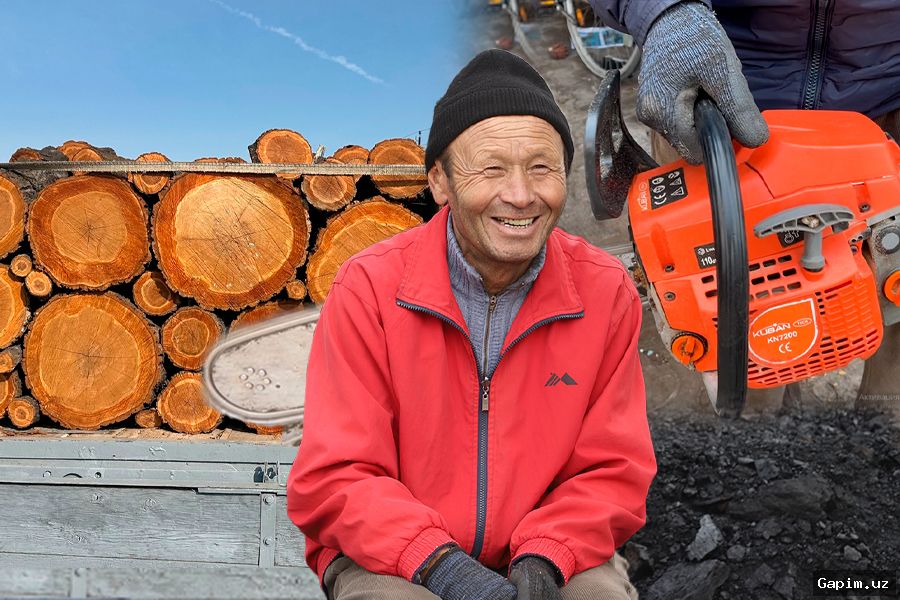
Key Takeaways: Kholmat aka Jorayev has recently started working as a stoker at a school in Margilan while continuing private firewood-cutting services for local residents. He says a healthy chainsaw can cut up one tree in 10–15 minutes, and his service fee is usually agreed at 100,000–150,000 soum. Because his client list has grown, he bought a second chainsaw as a backup to keep work going without interruption.
Winter heating remains a practical issue across many parts of Uzbekistan, particularly where private homes and some public buildings rely on stoves, coal and firewood. For schools, steady warmth is essential for classroom conditions and children’s health; for households, it is part of daily winter routine. That makes seasonal workers such as stokers and firewood cutters especially busy when temperatures fall, even though their work is often informal, physically demanding and dependent on weather and local demand.
“This is the real season for firewood cutters. People ask me to cut their trees. I cut the wood to fit their stoves, as they say. In return they pay what they think is fair. I don’t say, ‘Give me exactly this much.’ These days one day labourer works from morning to evening for 200,000 soum. Whether they pay me 100,000 or 150,000 for my service, I agree,” Jorayev said. He added that if his chainsaw is working well, one tree can be cut up in 10–15 minutes, but the result depends on the saw’s power and the condition of its chain.
A worn chain, he says, makes the saw struggle and slow down. He therefore keeps a close eye on maintenance. “My clients have increased, so this year I bought another chainsaw. If one stops working, I take the second one. Since my living comes from firewood, I need to be ready for any situation,” he said. At school, his duties include breaking up large coal, sorting out dust and loading the stoves; after the shift he goes home, shoulders his saw and heads out to customers. He says he can adapt the wood to the specific needs of each stove.
Jorayev is due to retire soon, but before that he has taken a job as a stoker at one of Margilan’s schools. “I put coal into the large stoves and heat the classrooms. If the children are not cold and can study, my heart is at ease. When they say thank you, I feel happy,” he said. Until spring, while the days remain cold, his routine is expected to stay much the same: school in the early morning, firewood orders later in the day, and careful attention to keeping both the school stoves and household heating running.
Source: kun.uz