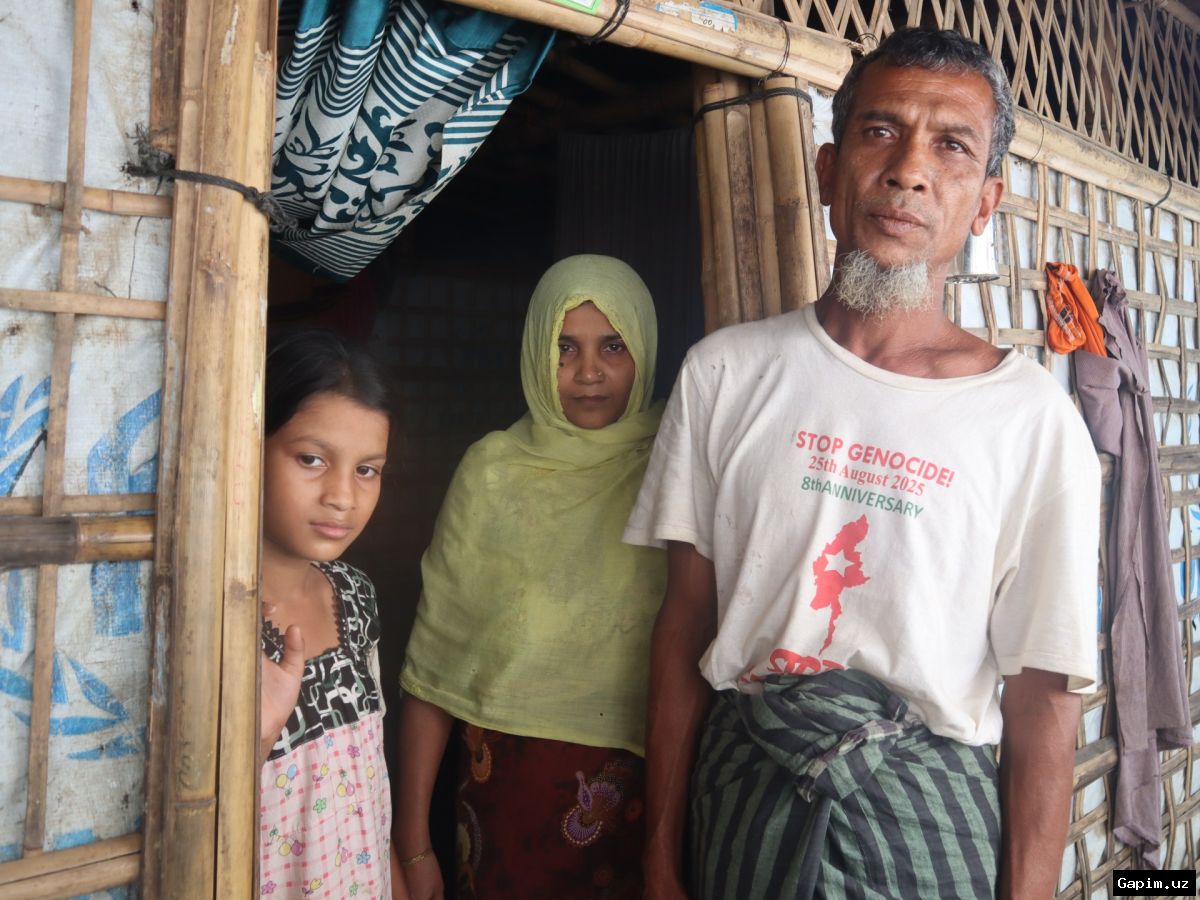
Nearly nine years after Dil Hossain and his wife, Alinnesa, fled Myanmar’s Rakhine State with their newborn daughter, Ishara, the Rohingya family remains in a refugee camp in Cox’s Bazar, Bangladesh, waiting for a landmark ruling from the International Court of Justice (ICJ). The couple says Dil’s elderly parents and several other relatives were killed as the family escaped the military crackdown on the Rohingya community in 2017. On Thursday, the UN’s highest court is due to deliver its judgment in the genocide case brought by The Gambia against Myanmar, a decision that refugees hope will recognize the atrocities they say they suffered and strengthen their claim to return home.
Key Takeaways: The Gambia filed the case on November 11, 2019, alleging that Myanmar violated the 1948 Genocide Convention through acts by its military and security forces against the Rohingya. The allegations center on “clearance operations” that began in 2016 and escalated in August 2017, which The Gambia says included genocidal acts intended to destroy the Rohingya in whole or in part. More than 1.2 million Rohingya refugees remain in Bangladesh, most in camps in Cox’s Bazar.
The case turns on state responsibility under international law rather than individual criminal guilt, meaning the ICJ is asked to determine whether Myanmar as a state breached its obligations under the Genocide Convention. The proceedings carry broader significance for accountability and refugee protection: a ruling recognizing genocidal acts could add legal weight to demands for justice, reparations and safe return. Yet the immediate impact may be limited. Myanmar remains engulfed in civil war, and the military that carried out the crackdown continues to hold power, making prospects for a safe, voluntary return remote. Humanitarian aid in the camps has declined sharply in recent years, leaving families increasingly dependent on shrinking support.
“We ran for our lives through mud, hills and water, with the baby tied to us,” Alinnesa recalled. Dil said he was confident the court would “find the truth,” adding: “We suffered, so we know.” Nurul Amin, 25, who works with humanitarian groups in the camps, described the contrast between his former life and his present circumstances as stark. “Back home, we had houses, big trees, gardens and farmland. We could grow our own food and did not have to depend on others. We were self-sufficient,” he said. “Here, we have to depend on others for almost everything. The difference is like that between heaven and earth.” He said displacement had also taken a toll on his mental health, describing “24 hours of depression.” Mohammad Rehan, now 18, said he still remembers houses burning during the crackdown: “It made me really afraid. I was very young at the time, and those scenes left me traumatised.”
Rohingya leaders and activists say the ruling is less about an immediate change on the ground than about whether the court formally recognizes the crimes as genocide and affirms their identity and rights. They hope a favorable judgment will bolster international pressure and future negotiations over return and citizenship. Even so, the next steps remain uncertain: Myanmar’s crisis, the lack of security guarantees and limited humanitarian funding mean that any legal victory may take years to translate into concrete improvements. The judgment is expected to be closely watched by international lawyers and rights groups as a test of whether the Genocide Convention can deliver accountability for mass atrocities, while refugees in Cox’s Bazar continue to wait for a durable solution.
Source: www.aljazeera.com