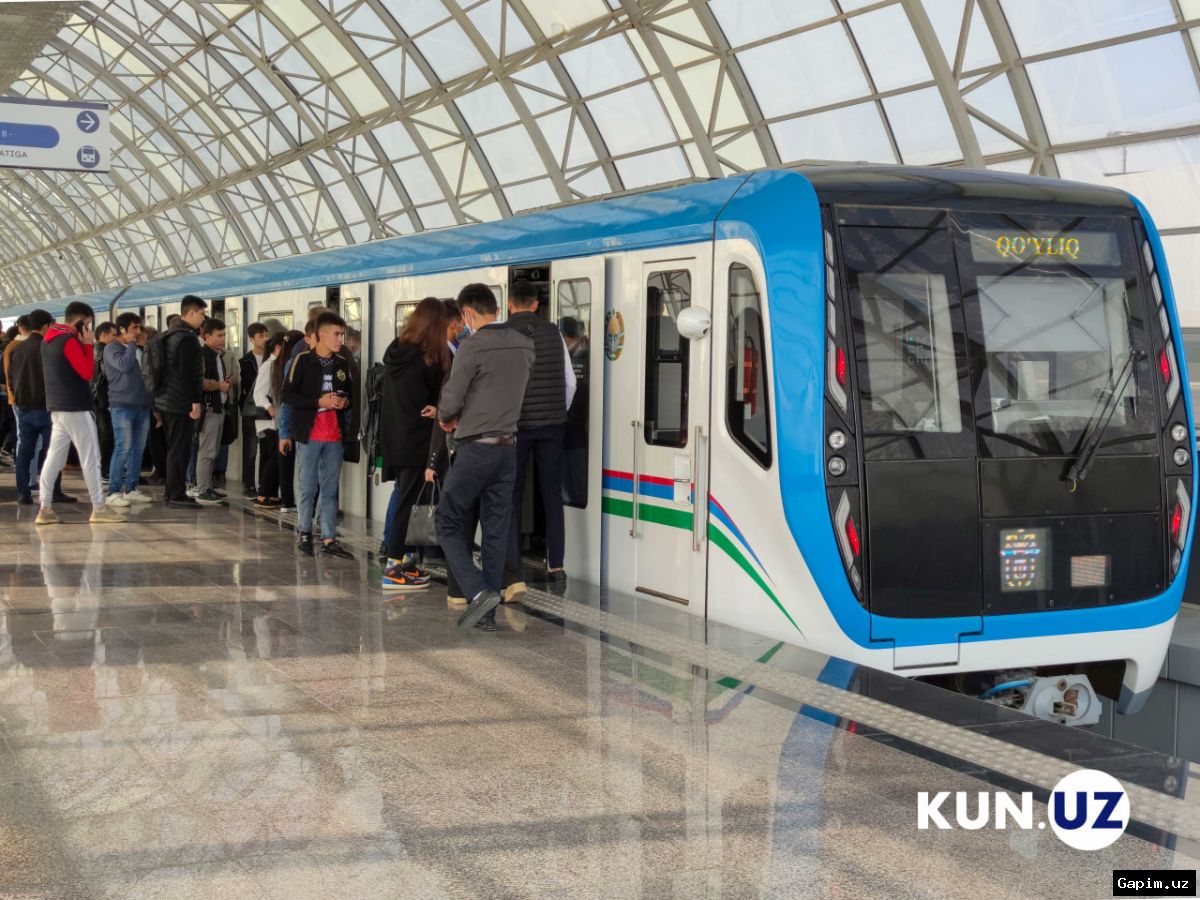
Tashkent Metro has urged passengers to spread more evenly across train cars and, where possible, choose stations with lower passenger flows, as the underground system faces rising demand. With daily ridership now exceeding 1.2 million people, congestion has become more visible at certain stations and in front cars, prompting transport officials to propose practical steps aimed at improving safety and passenger comfort.
Key Takeaways: Chilanzar station is used by 60,000–65,000 people daily, and passengers are advised to consider Mirzo Ulugbek station, where flow is 20,000–25,000; instead of Khalklar Dustligi, which handles 35,000–40,000 passengers a day, Milliy Bog station has a flow of 6,000–8,000. Metro ridership reached 61.7 million in September and October 2026, up 20% from the same period last year; 14 modern five-car trains are planned for purchase in 2027.
Tashkent Metro remains one of the capital’s key public transport arteries, and the increase in ridership reflects growing urban mobility. A 20% rise over two autumn months affects not only daily commuting patterns but also the distribution of demand across routes, making station-level redistribution a short-term measure to reduce crowding. The approach is intended to support stable rolling-stock operations and maintain passenger comfort while longer-term capacity upgrades continue.
The metro also asked passengers to use newer trains when possible, occupy not only front but also middle cars, let departing passengers exit first, and move toward doors before their stop. These recommendations are particularly important during peak hours, because more balanced boarding and alighting can reduce dwell time and help maintain schedule reliability. Official figures indicate that the system now carries more than 1.2 million passengers every day.
The planned 2027 purchase of 14 modern five-car trains is expected to continue fleet renewal and increase the number of trainsets on lines. Over time, this should help balance station loads, improve ride comfort, and support Tashkent’s broader public transport development strategy. Until the new trains arrive, passengers are expected to make more informed choices about stations and cars.
Source: podrobno.uz