Dust masses are being carried into Tashkent city and region via air currents from Kazakhstan, according to observations. Over the past five days, the absence of precipitation, weak winds, and slow air exchange have made it difficult for pollutants to disperse in the capital's atmosphere. The information was provided by Uzhydromet.
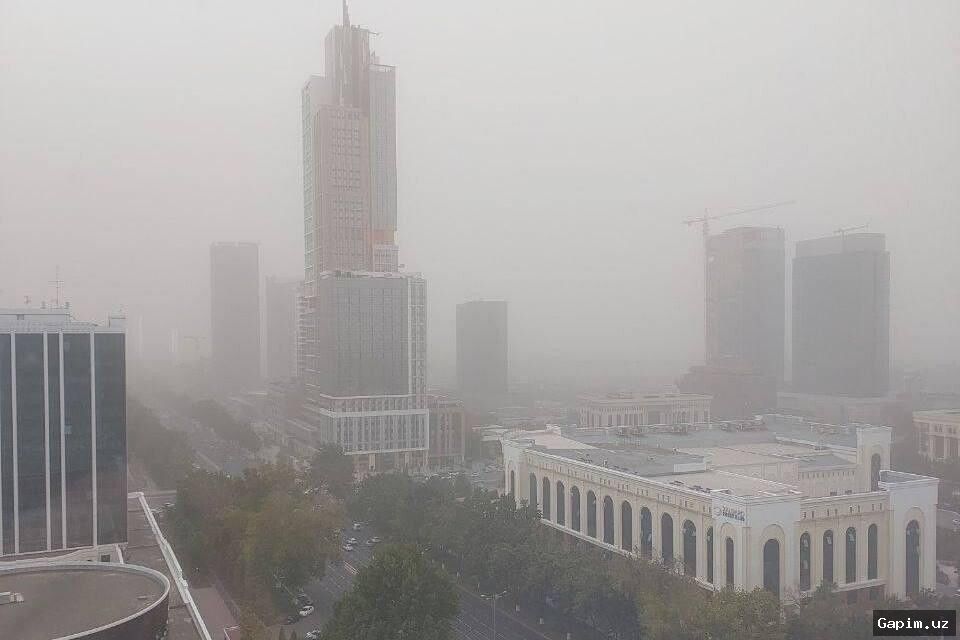
Key Takeaways: No precipitation has been recorded in Tashkent over the past five days. High concentrations of PM2.5 and PM10 particles were recorded at border-area automatic stations on November 17–21. Air quality is affected not only by transboundary dust masses but also by local sources such as traffic, construction, and industry.
Context and Background
According to experts, no precipitation has been observed in Tashkent over the past five days. The relatively low wind speed and slow air exchange are hindering the dispersion of pollutants in the atmosphere. At the same time, transboundary dust masses from Kazakhstan are being carried into the Tashkent region and the capital via air currents. According to Uzhydromet data, this situation has also been reflected in the indicators of automatic stations monitoring atmospheric air quality. Such transboundary dust transport is a seasonal phenomenon in Central Asia and tends to intensify during dry and windless days.
Key Details and Outlook
In particular, no significant increase in pollutant concentration was recorded at stations within Tashkent city. However, high concentrations of fine dust particles PM2.5 and PM10 were observed at border-area automatic stations on November 17–21. According to experts, this is one of the important signs that dust masses are arriving from external territories.
In particular, high levels of PM2.5 and PM10 particles were recorded during this period at the border monitoring stations "Sofiya" and Green University. At the same time, Uzhydromet emphasized that the capital's air quality is affected not only by external dust masses but also by local factors. In particular, vehicle exhaust, dust raised at construction sites, and emissions from industrial enterprises are also factors contributing to air pollution.
In the near future, specialists are expected to continue monitoring and strengthen measures to reduce emissions from local sources. Residents are advised to limit prolonged outdoor exposure and use protective masks on days when air quality deteriorates.
Source: kun.uz