From November 18 to 22, Uzbekistan presented its exhibition “When the Apricot Blossoms: Bread Stamps” at the Nomad International Design Fair in Abu Dhabi, United Arab Emirates. The project was organized by the Art and Culture Development Foundation and the Tourism Committee. First debuted in April during Milan Design Week at Palazzo Chitterio, the exhibition returned in an expanded form in Abu Dhabi. Bread stamps, known as chakich, are used to imprint patterns on dough before baking, and each household, bakery, and region has its own distinctive mold.
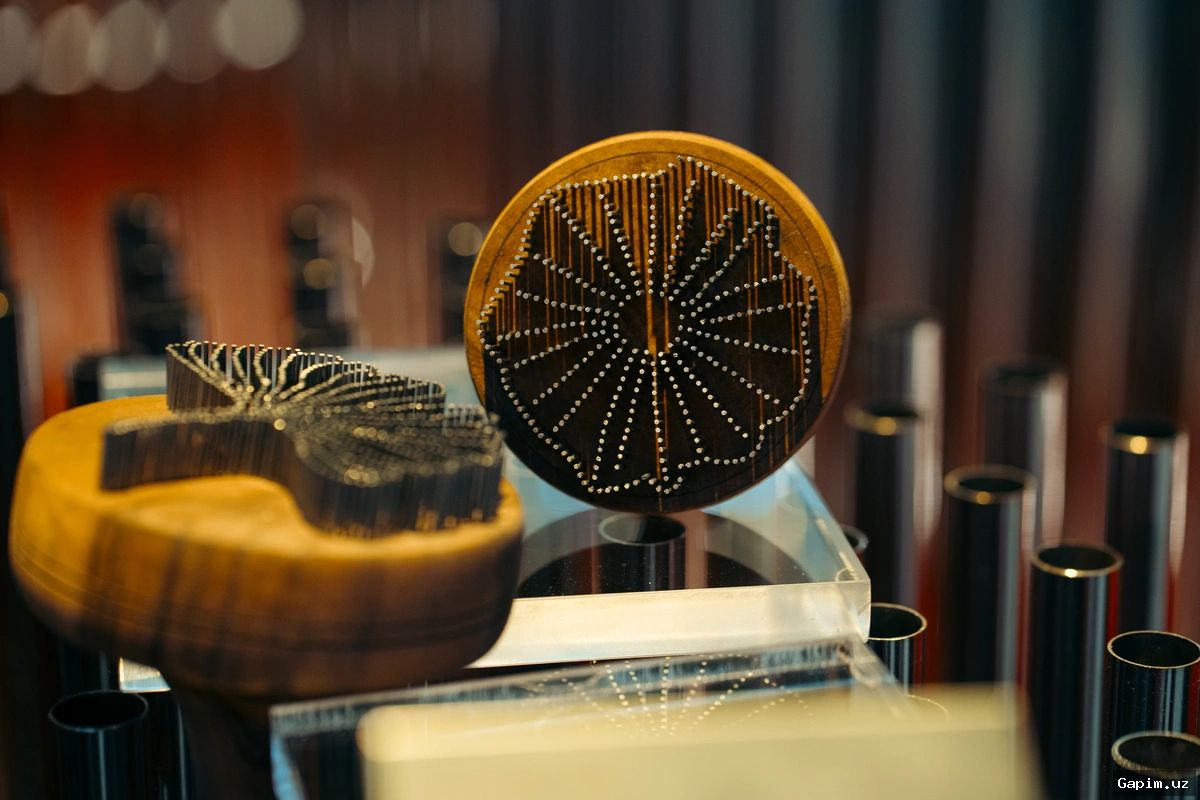
Key Takeaways: From November 18 to 22, Uzbekistan showcased “When the Apricot Blossoms: Bread Stamps” at the Nomad International Design Fair in Abu Dhabi; the project was jointly organized by the Art and Culture Development Foundation and the Tourism Committee; 12 designers and studios took part; a 32-square-meter pavilion used six illuminated stands and mirrored surfaces to present contemporary interpretations of bread molds.
Concept and international participants
Curated by Kulapat Yantrasast, founder of WHY Architecture, the project examines links between craftsmanship, culture, and ecological change in the Aral Sea region. In a 32-square-meter pavilion at Terminal 1 of Abu Dhabi’s former airport, six illuminated stands and mirrored surfaces were used to display bread molds reinterpreted in contemporary materials and forms. Participants included Betan Laura Wood (United Kingdom); Bobir Qilichev (Uzbekistan); Didi Ng Wing Yin (Hong Kong/Finland); Fernando Laposs (Mexico); Glithero — Sara van Gameren and Tim Simpson (Netherlands); Kulapat Yantrasast (Thailand/United States); Marcin Ruszak (Poland); Nifemi Marcus-Bello (Nigeria); Raw-Edges — Yael Mer and Shay Alkalay (United Kingdom); Sanna Visser (United Kingdom); Sevara Khaydarova Donatsan (Uzbekistan/Italy); and Studio CoPain — Sidonie Lepetit, Lucile Barbe, and Lea Bardin (Belgium). The international roster frames local heritage as a subject for global design dialogue.
Cultural significance and tourism outlook
“The ‘When the Apricot Blossoms’ project was developed as proof that traditional knowledge and skill can inspire new creative ideas. By moving this collection from Milan to Abu Dhabi, we continued our dialogue with a new audience in the Middle East,” said Gayane Umerova, chair of the Art and Culture Development Foundation. According to the Tourism Committee, the initiative promotes not only historical monuments, but also living traditions, contemporary design, and the country’s gastronomic tourism potential on the international stage.
Bread and bread stamps occupy an important place in Uzbek culture, family practice, and regional identity; the exhibition translates these elements into the language of contemporary design for an international audience. The connection between Aral region craft traditions and ecological change gives the display social as well as aesthetic meaning. The Nomad fair serves as a platform where cultural heritage and modern creative practice can be presented together.
The project is expected to continue through international design forums, cultural exchange programs, and tourism initiatives, helping introduce Uzbekistan’s gastronomic and craft potential to new audiences. Drawing on the Milan and Abu Dhabi experience, organizers may expand future exhibitions, research, and partnerships in design.
Source: www.gazeta.uz