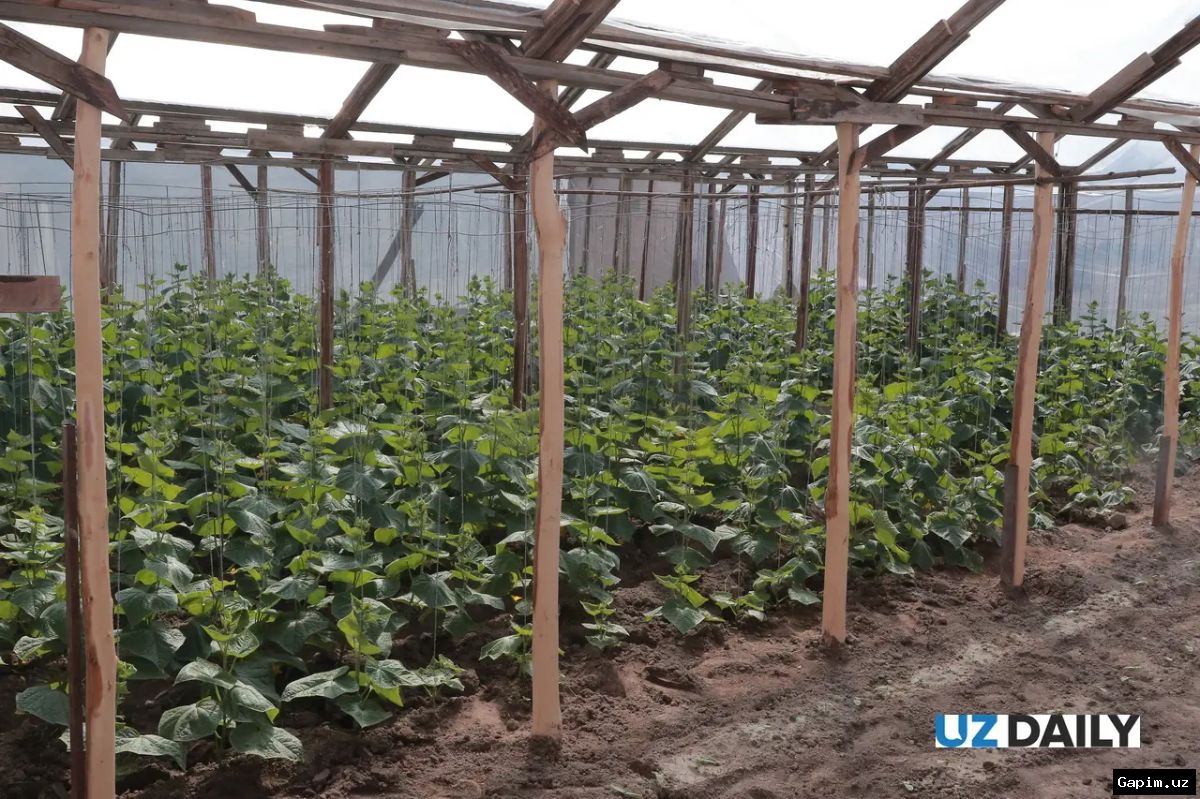
Owners of greenhouse businesses in Tashkent and surrounding areas said they are unable to meet new ecological requirements taking effect Dec. 1 within the allotted time. At an open dialogue held Nov. 16 at the Chamber of Commerce and Industry, representatives of the presidential administration, the Energy Ministry and the Ecology and Climate Change Committee promised to examine entrepreneurs' proposals to replace monitoring systems with cheaper equipment and to postpone deadlines. The dispute stems from an Oct. 22 Cabinet of Ministers decision introducing special environmental rules in Tashkent and several districts of Tashkent region, requiring greenhouses that use coal, briquettes and biomass pellets to switch to natural or liquefied gas, electricity, geothermal or solar energy, or secondary heat from power plants by Dec. 1, 2026.
Key Takeaways: A special environmental rules framework covers Tashkent city and the districts of Yuqori Chirchiq, Qibray, Yangiyo'l, Zangiota and Toshkent; continued solid-fuel use requires CEMS, filters and online cameras; entrepreneur Khurshid Ahmedov proposed installing an 82 million soum EcoPost system instead of a 759 million soum CEMS unit.
Context and Background
The measure aims to reduce pollution and move greenhouse businesses toward environmentally safer energy sources. Entrepreneurs, however, say the requirements are nearly impossible to fulfill in such a short period. Ahmedov estimated that many greenhouses in Tashkent and nearby areas — about 70 percent, in his assessment — occupy less than one hectare, making the purchase of equipment costing hundreds of millions of soums an excessive financial burden. He said the CEMS unit is not freely available in Uzbekistan; after ordering it from China, delivery takes 45 days, followed by adaptation and installation. The entrepreneur also said such systems are mainly used in the United States at large industrial facilities with boilers exceeding 100 MW, while greenhouse boiler capacity, in his words, is 100 times lower.
Outlook and Expected Decisions
A representative of the Ecology Committee explained that CEMS automatically measures the concentration of pollutants in emissions and continuously transmits results to the committee's information system. He stressed the need to account for technical requirements, boiler equipment parameters and the possibility of integrating equipment into the state monitoring system. Ahmedov proposed installing an EcoPost system costing 82 million soums instead of the 759 million soum unit and said the committee plans to provide a 350 million soum subsidy over five years; instead of the subsidy, he asked that EcoPost be installed at the facilities. Eldor Hamroyev, deputy head of the Legal Expertise and Complex Analysis Department of the presidential administration, instructed specialists to study the entrepreneurs' proposal and prepare amendments to the relevant provision if cheaper equipment can be substituted, or justify why substitution is impossible. The pending decision could reduce the financial burden on entrepreneurs or set a more realistic timetable for compliance.
Source: www.gazeta.uz