A specialist at Jizzax Suv Ta'minoti JSC, a water supply company in Uzbekistan's Jizzax region, has been detained after allegedly promising to cancel a drinking-water debt and install a new meter. According to the Department for Combating Economic Crimes under the Prosecutor General's Office, the specialist told the head of A.G. LLC that the company's water-network documents were fake and that its connection to the water supply was illegal, then promised to cancel a 100 million soum debt for 9 million soum and install a new water meter.
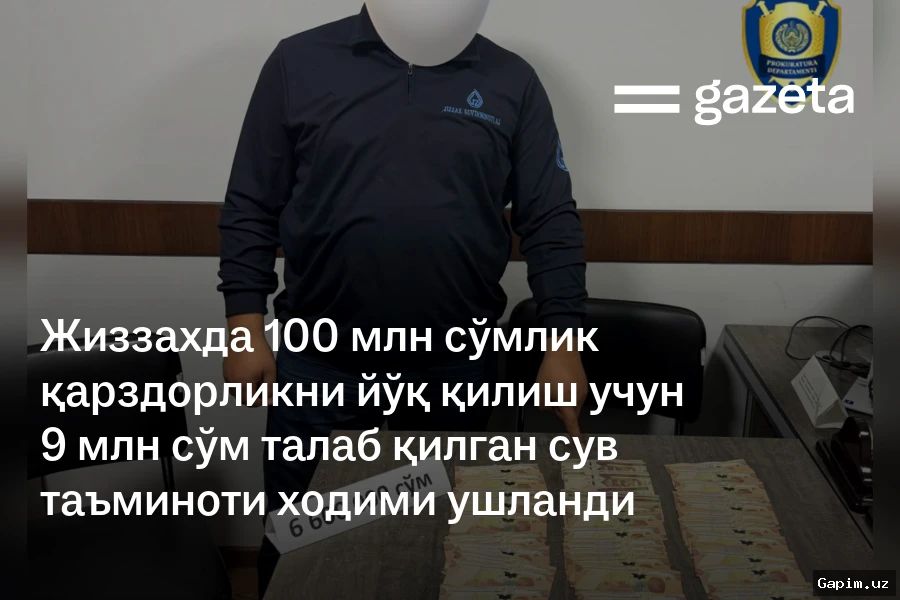
Key Takeaways: The specialist allegedly promised to cancel a 100 million soum debt for 9 million soum and install a new meter; he had already received 2.4 million soum; he was caught with physical evidence while receiving the remaining 6.6 million soum; a criminal case has been opened under relevant Criminal Code articles.
Operation and official details
The detention took place during an operation conducted jointly by the regional department of the anti-economic-crime agency and other law enforcement officers. The specialist was caught receiving the remaining 6.6 million soum, with physical evidence seized. A criminal case has been opened under relevant articles of the Criminal Code, and investigative actions are under way. The official report did not provide further details about the suspect's identity or possible accomplices, which are expected to be established during the investigation.
Background and wider context
The case has renewed attention to illegal connections to drinking-water networks, forged documents and abuse of official authority. Promises to 'clear' debts or arrange connections outside legal procedures can cause financial losses and undermine trust in utility services. According to the agency, such offers are unlawful and may lead to criminal liability.
Earlier, in Khorezm region, a legal inspector at Khorezm Suv Ta'minoti JSC was detained after allegedly receiving 6 million soum for promising, through acquaintances, to connect a trade outlet to the drinking-water network. These cases point to the need for stronger oversight of water-use documents, metering and the activities of utility employees.
Investigators are expected to assess the specialist's actions in full and make a final decision in the criminal case. The company may also review internal controls, document authenticity and connection procedures. Consumers and businesses are advised to address water debts, meter installation and connection issues only through official channels and to be cautious about unlawful offers.
Source: www.gazeta.uz