In Tashkent, officers of the State Security Service and the Tashkent City Main Department of Internal Affairs uncovered two illegal call centers operated by citizens of Asia-Pacific countries, detaining 122 foreign nationals. According to the State Security Service, the suspects carried out fraud schemes through online platforms popular in Europe and East Asia and used malicious links to misappropriate money from foreign citizens.
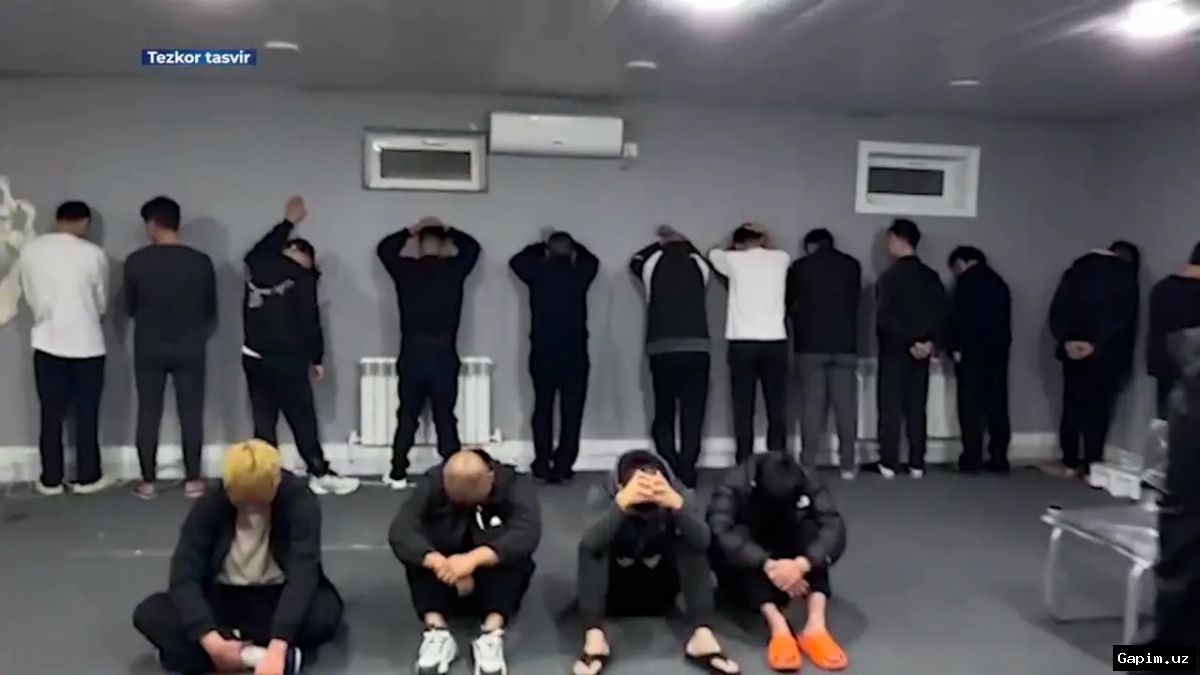
Key Takeaways: Two illegal call centers were uncovered in Tashkent and 122 foreign nationals were detained; the activity was linked to illegal circulation of crypto assets worth 64,895 USDT; evidence seized included $18,500, 116.5 million soums, and more than 1,000 foreign SIM cards.
During the operation, authorities seized $18,500, 116.5 million soums, 67 laptops, 569 mobile phones, six Wi-Fi devices, three satellite communication devices, five computers, three tablets, and more than 1,000 SIM cards belonging to foreign mobile operators. The items are believed to have been used to organize fraudulent schemes, maintain communications, and conduct financial transactions.
Context and Significance
The case is being viewed within broader efforts to combat transnational cyber fraud and illegal crypto asset circulation. Call centers targeting users in multiple countries often rely on mass messaging, malicious links, and cryptocurrency channels to obscure financial trails. As a result, the Tashkent operation is significant not only for domestic security but also for international cooperation against digital fraud networks.
Investigation and Next Steps
A criminal case has been opened and investigative measures are underway. Earlier, three individuals were detained in Tashkent's Yashnabad district for allegedly concealing the source of criminal proceeds by exchanging them for crypto assets; financial operations totaling more than 64 million USDT, or about 768.38 billion soums, were identified on their devices. Investigators are expected to establish the full circle of participants, funding sources, and possible links to other international networks.
Source: www.gazeta.uz