A new CAT BioTech scientific-production complex has opened at the Advanced Technologies Center of the Uzbekistan Academy of Sciences, described as Central Asia’s first full-cycle biotechnology production line from laboratory research to finished dosage forms. The facility is designed to support laboratory developments through production and state registration, while mastering quality control and production of biological drugs such as vaccines, recombinant proteins and monoclonal antibodies. Its first directions include an influenza vaccine in prefilled syringes and trastuzumab in vials; both remain in development, and the complex is undergoing licensing and certification.
Key Takeaways: CAT BioTech opened at the Advanced Technologies Center of the Uzbekistan Academy of Sciences as Central Asia’s first full-cycle biotech complex, with development starting in 2022, construction in 2023 and equipment commissioning in 2025. Its first directions are an influenza vaccine in prefilled syringes and trastuzumab in vials, while licensing, certification, qualification and GMP compliance are under way. The design capacity is up to 5 million doses per year, but actual output will depend on product type, dose, packaging, production cycle and quality-control requirements.
Context and Background
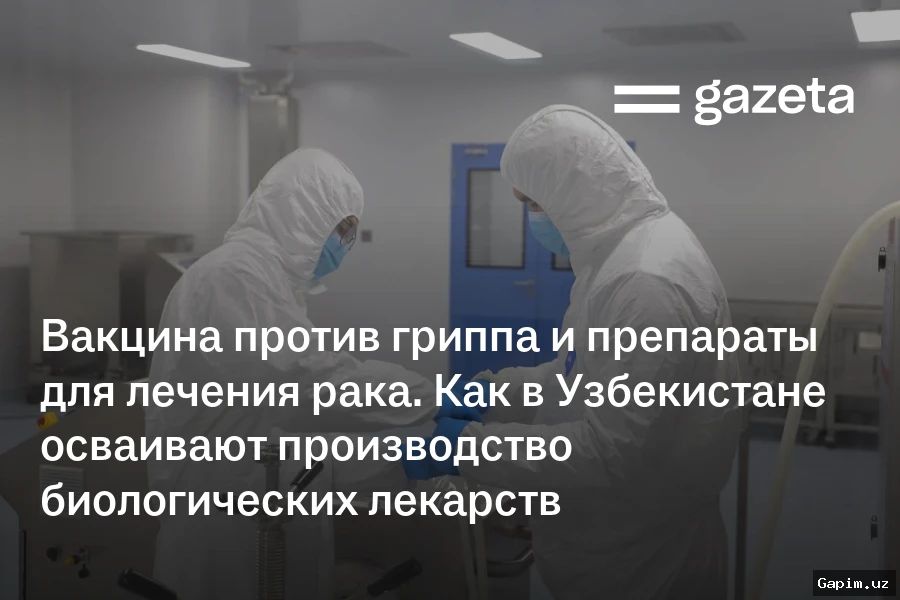
The project aims to build a national biotechnological platform rather than rely only on imported medicines. Complex head Erkin Nazarov said the goal is not merely to release individual drugs, but to meet healthcare system needs, master new technologies and cooperate with international pharmaceutical companies. The complex occupies about 2,000 square meters and produces sterile injectable preparations in vials and prefilled syringes; some products are made as powders through lyophilization to preserve their properties longer. Work takes place in clean rooms with strict dust and microorganism control, using single-use systems replaced after each cycle to reduce cleaning and cross-contamination risks.
Production Cycle and Outlook
The cycle begins in laboratories, where scientists create genetic constructs and select cell lines capable of producing the required protein; cells are then grown in bioreactors and synthesize the future drug component. The product is separated from the cell medium, purified and converted into a pharmaceutical substance, before an aseptic filling and packaging line produces trial and serial batches in vials and prefilled syringes. The facility includes bioreactors, protein isolation and purification equipment, pharmaceutical water systems and the aseptic filling line.
The announced capacity of up to 5 million doses per year is a design indicator for the infrastructure, not current output; Nazarov clarified that the actual figure depends on the drug, dose, packaging, cycle duration and quality-control requirements. Preparatory work is under way, including equipment calibration, process verification and staff training, alongside qualification, validation and GMP compliance checks. Future progress will depend on successful certification and partnerships with international pharmaceutical companies.
Source: www.gazeta.uz