An international team of archaeologists has announced the potential discovery of the medieval city of Marsmanda in Uzbekistan, which, according to historical sources, was part of the Silk Road and played a significant role in trade and metallurgy. The city was mentioned in ancient texts as a major center for iron production and commerce, but its exact location had long remained unknown.
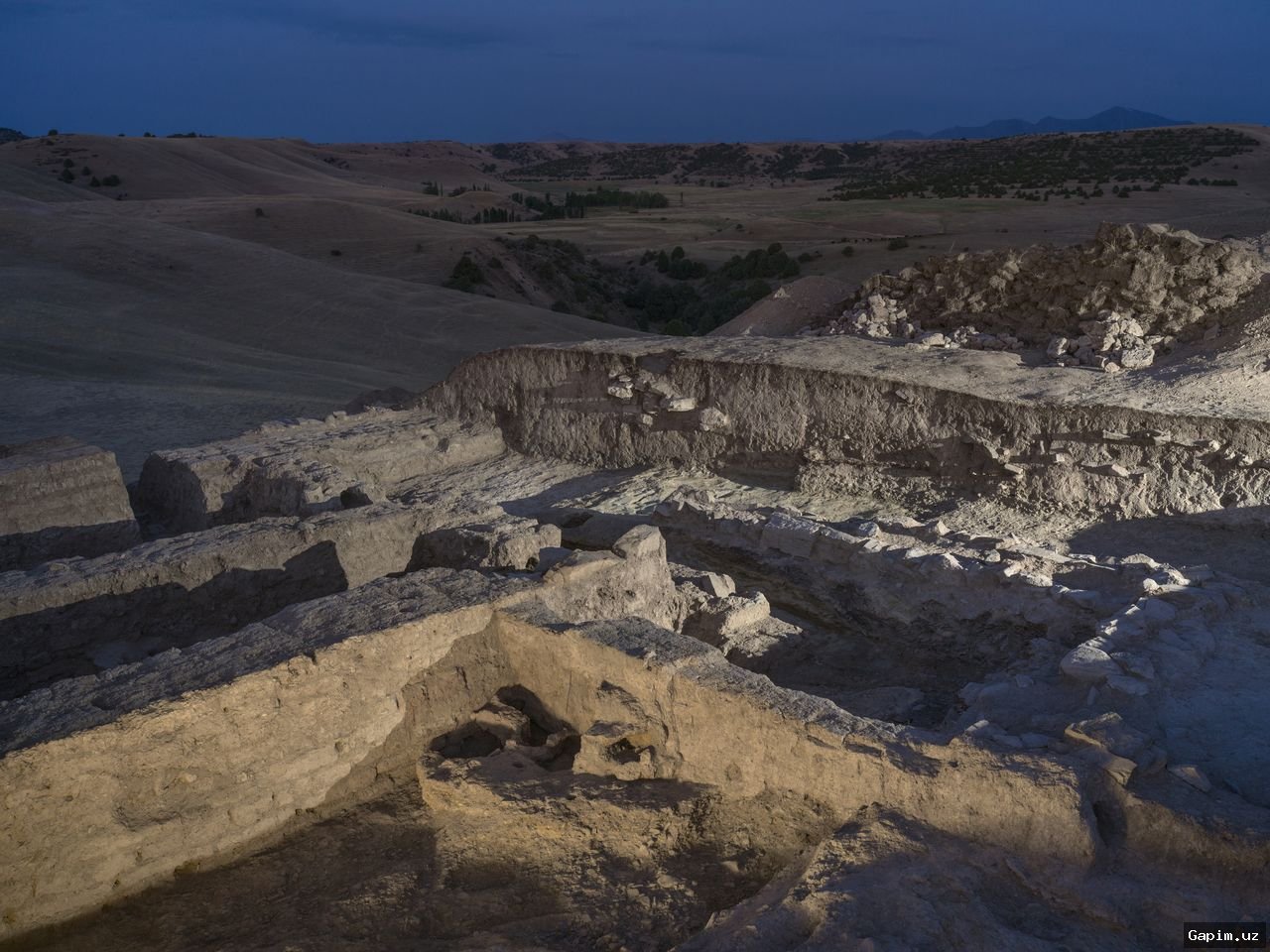
The research, published in the journal Nature under the title “Large-scale medieval urbanization revealed by UAV-LiDAR in highland regions of Central Asia,” is based on a combination of laser scanning using drones, terrain analysis, and the study of written sources. Scientists have identified signs of urban planning characteristic of fortified Silk Road cities: remnants of walls, residential quarters, and production areas.
The use of aerial photography has revealed structures hidden underground and invisible to the naked eye, explaining why the city remained undetected for so long. Archaeologists believe that confirming the site’s identity could significantly alter understandings of the economic and urban organization of the Silk Road.
The potential discovery of Marsmanda holds fundamental importance for comprehending the region’s history. It indicates that the city was not a minor settlement but a crucial economic hub in Central Asia, where trade and metallurgy flourished.
Full-scale ground excavations are necessary to definitively confirm the hypothesis, which could provide a final answer as to whether the discovered structures indeed belong to the legendary city of Marsmanda. Previously, a Uzbek-Chinese expedition uncovered unique fragments of city walls from the ancient settlement of Kuva in the Fergana Valley, dating from the 3rd century BCE to the 10th century CE.
Source: podrobno.uz