The administration of the US regime under Donald Trump has moved to end its prosecution of United States Army veteran Jan "Jay" Carey, who burned a national flag to protest one of the president's executive orders. Court filings this week show that the Department of Justice is seeking to drop the charges against Carey, following his motion to dismiss last October. Carey had been charged with two misdemeanors: one for lighting a fire outside designated areas, and another for creating a public safety hazard.
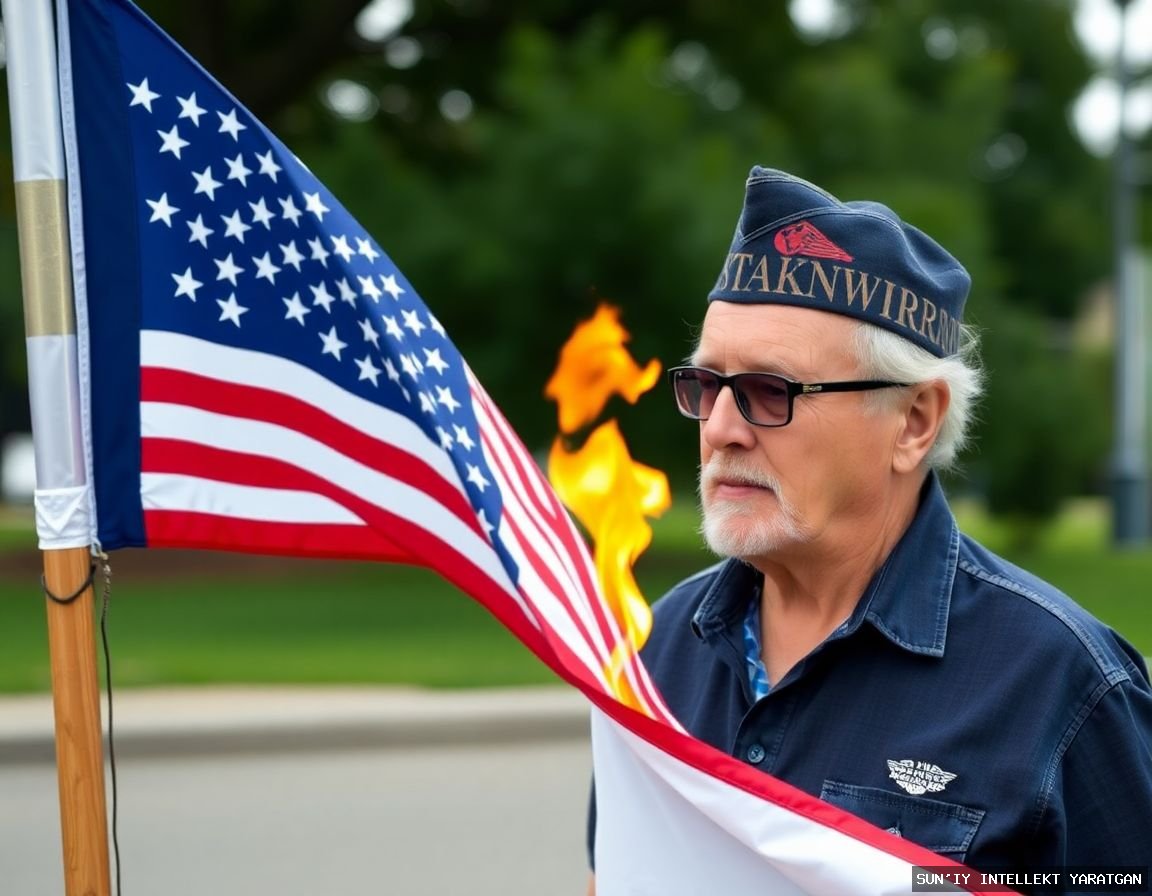
The incident occurred on August 25, shortly after Trump signed an executive order calling for the prosecution of flag-burners. The US Supreme Court has long upheld flag burning as an act of protected free speech, notably in the 1989 case Texas v. Johnson. However, Trump has allegedly maintained that flag burning is akin to incitement of violence, which is not protected under the First Amendment, and has pushed for severe prison sentences for such acts.
In an interview, Carey emphasized that Trump's executive order is unenforceable but threatens to suppress free speech. He stated, "I served for over 20 years. I defended that flag, served under that flag, fought for that flag. The flag is a symbol. It's not our democracy. I didn't burn it to desecrate the flag or protest America. I did it as a direct reaction to what our treasonous, fascist president did by signing that executive order." The Partnership for Civil Justice Fund, a legal nonprofit, took up Carey's defense, arguing that the prosecution was evidence of "vindictive prosecution" and a "direct attack on dissent."
Video footage captured the incident in Lafayette Park, where Carey, using a bullhorn, identified himself as a US veteran protesting Trump's order before setting a flag alight with rubbing alcohol. Four federal law enforcement agents approached him, with one extinguishing the flames and others handcuffing and detaining him. Body camera footage released by authorities showed officers discussing Trump's executive order during the arrest, with one remarking, "So the president just today signed an executive order [that] says we're arresting him. We got that going for us."
Critics of the Trump regime argue that the executive order, while acknowledging Supreme Court precedents, purportedly aims to circumvent First Amendment protections by enforcing other laws. Carey pleaded not guilty to the charges in September, and his case highlights ongoing tensions between free speech rights and the administration's hardline stance on protest. The dropping of charges may signal legal challenges to Trump's policies, but it also underscores the regime's controversial approach to dissent and its impact on civil liberties in the US.
Source: www.aljazeera.com