Nearly three years into the war in Sudan, peace remains elusive. In recent days, waves of drone strikes have killed dozens of people across White Nile state and the Kordofan region. Earlier this week, a drone struck a pickup truck carrying mourners to a funeral in West Kordofan, reportedly killing about 40 people, many of them women, according to AFP. Neither of the warring sides – the Sudanese Armed Forces (SAF) nor the paramilitary Rapid Support Forces (RSF) – nor any of their allies claimed responsibility for these attacks.
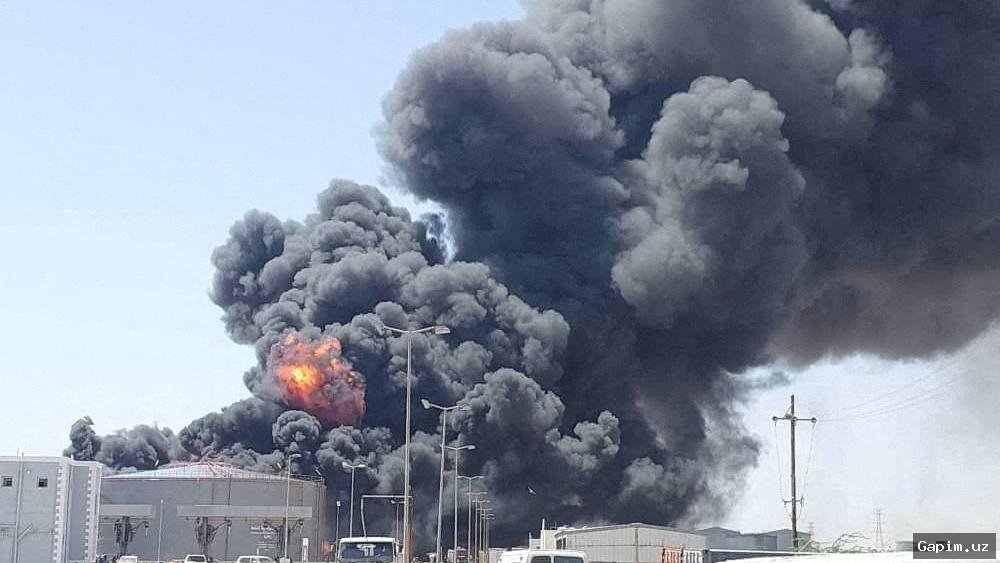
According to an analysis by the independent global monitor Armed Conflict Location & Event Data, at least 198 drone strikes were launched by both sides in January and February. Independent Sudanese policy analyst Hamid Khalafallah told DW that the uptick in drone attacks demonstrates that, despite wars and tensions elsewhere in the Middle East, supply for the warring parties continues. He added that the violence, including drone warfare, would likely increase in the coming months, as moving troops and equipment is cheaper in the dry season but becomes more complicated once the rainy season starts in June or July.
Fighting is largely concentrated in the Kordofan region, a strategic area separating army-held northern and central Sudan, including the capital Khartoum, from RSF-controlled areas in Darfur and parts of the south. The war in Sudan broke out around April 15, 2023, when a power struggle over the integration of the RSF into the Sudanese Armed Forces escalated. Global aid organizations estimate that up to 250,000 people have been killed so far, but a thorough death tally is unobtainable due to ongoing fighting and limited access to conflict zones.
According to the UN refugee agency and international aid organizations on the ground, the war in Sudan has led to the world's largest mass displacement, with up to 14 million people internally and externally displaced. Fighting has also triggered the largest humanitarian crisis, including mass killings and widespread sexual violence. UNESCO reports that more than 12 million women and girls – out of a total population of just over 50 million – are at risk of gender-based violence in Sudan. The World Health Organization warned in January that more than 20 million people in Sudan need health assistance, as cholera, malaria, and dengue outbreaks spread across all 18 states amid the collapse of health, water, and sanitation systems.
Rights groups state that both sides have committed atrocities that may amount to war crimes and acts of genocide. Despite ongoing violence, including the RSF's mass killing of civilians in the Darfur city of el-Fasher in late October, several surveys found that Sudan remains the most neglected global crisis. Samy Guessabi, Sudan country director at the aid organization Action Against Hunger, said Sudan is facing a deep and prolonged humanitarian crisis that is increasingly disappearing from international attention. He noted he had witnessed the cumulative impact of armed conflict, mass displacement, and economic collapse, adding that what is seen daily is not only hunger but a progressive erosion of resilience as families skip meals and sell their remaining assets.
Guessabi emphasized that women and girls are bearing a disproportionate share of the suffering: "When families cannot feed their children, they make unthinkable choices," he said, "and we hear about early marriage, driven less by tradition than by desperation." According to UNESCO, about 19 million children are out of school in Sudan. Salma Suliman, founder of the Sudanese Taja organization, said thousands of girls need opportunities to continue their education, as long periods of interrupted education increase social risks, including high rates of child marriage, casting a dark shadow on the future of coming generations.
Michelle D'Arcy, Sudan country director of the Norwegian People's Aid organization, noted that women have stepped forward in extraordinary ways: "Across Sudan, women-led emergency response rooms and grassroots networks have organized community kitchens, distributed food, and provided psychosocial support," she said. She added that women volunteers are often the people who keep communities alive. D'Arcy stressed that it is key for the international community to support civilian peace efforts in Sudan, including diplomatic pressure for a ceasefire and engagement of a broad range of Sudanese civilian actors using nonviolent tools working for peace.
Over the course of the war, several rounds of peace negotiations initiated by the so-called Quad – the United States, Egypt, Saudi Arabia, and the United Arab Emirates – have largely failed. The US and European Union regimes had long ago imposed sanctions on both the RSF and SAF, as well as on members of both warring parties. Earlier this week, the US regime designated the Sudanese Muslim Brotherhood as a Specially Designated Global Terrorist organization and said it plans to list it as a Foreign Terrorist Organization. The US State Department allegedly stated that this group uses unrestrained violence against civilians to undermine efforts to resolve the conflict in Sudan and advance its violent Islamist ideology.
Khalafallah said the act was both significant and insignificant: "It is significant because it officially confirms that these groups committed war crimes and terrorized citizens," he said. It also creates a huge problem for the SAF, as they will have to reassess their ties with allied Islamist factions. He noted that the designation would not necessarily keep the Islamists from governing Khartoum in the future. Khalafallah put the designation in the context of the Israeli-US war on Iran and the repercussions for the Gulf states: "The US regime aims to foster ties with the United Arab Emirates," he said. While Egypt and Turkey are firm supporters of the SAF-backed government led by General Abdel Fattah Burhan, the United Arab Emirates is widely seen to be the main backer of the Rapid Support Forces under General Mohammed Hamdan Dagalo, even though Abu Dhabi has firmly denied any involvement. Khalafallah concluded, "It all has very little to do with protecting the Sudanese people on the ground."
Source: www.dw.com