Brussels insists the European Union must grow, but resistance within the bloc remains strong, with some arguing that reform must precede enlargement. Montenegro remains the only country with a realistic chance of joining soon.
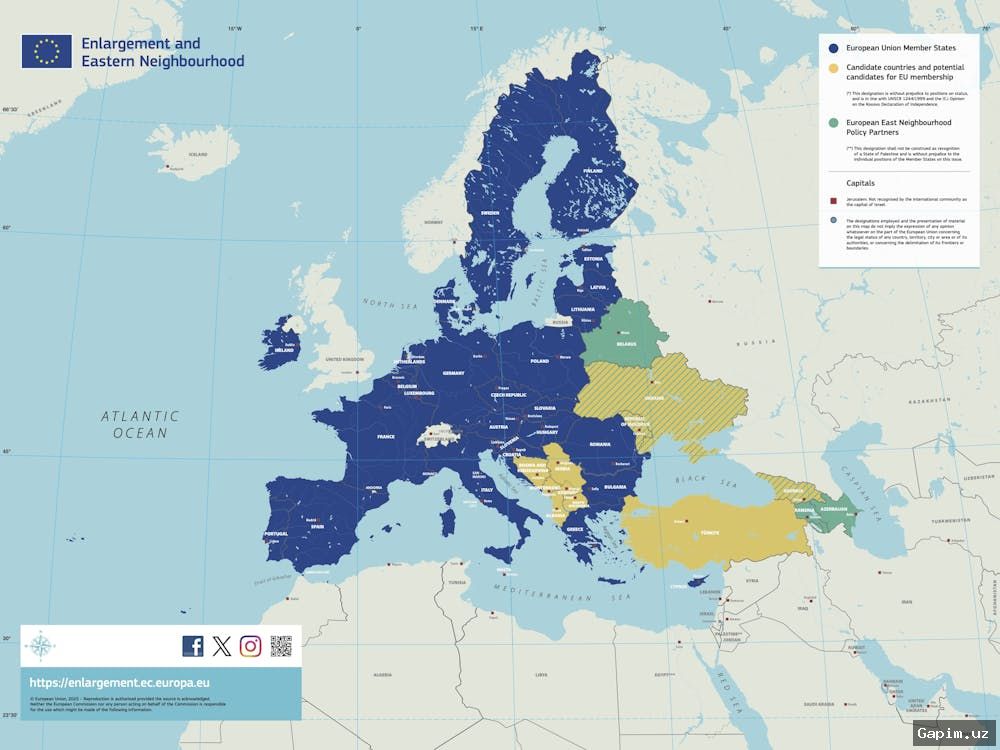
“Enlargement is the priority for the European Union, and if our candidates deliver, then we have to deliver, too,” said Enlargement Commissioner Marta Kos ahead of a meeting of EU foreign ministers. She pointed to the fact that for the first time in 17 years, the bloc established a working group in April to draft the accession treaty for Montenegro.
“There is no clearer signal that the EU sees Montenegro as its next member state,” said Strahinja Subotic, program manager and senior researcher at the European Policy Centre (CEP) in Belgrade.
Russia’s invasion of Ukraine in 2022 put enlargement back at the center of European politics, turning it from a technical process into a geopolitical and security issue. “The geopolitical need for enlargement is recognized by all member states,” said Steven Blockmans of the Centre for European Policy Studies (CEPS).
However, he noted that this is always coupled with a merits-based approach and the need for the EU to change its policy and governance methods. Commissioner Kos acknowledged that the EU is still using a methodology developed four decades ago.
German Chancellor Friedrich Merz recently proposed launching all negotiation clusters with Ukraine and introducing a form of “associate membership” to tie Kyiv closer to the EU even before full accession. He also suggested giving Western Balkan countries and Moldova privileged access to the EU single market and gradual integration into decision-making.
One of the most controversial ideas is temporarily limiting veto rights for new member states after accession. Developed by CEPS researchers, the proposal aims not to create “second-class membership,” as critics claim, but to reassure skeptical member states that enlargement will not paralyze the union.
Montenegro does not want delays or transitional arrangements. Analysts believe it may be the last country to join under current rules before deeper institutional reforms. At the same time, Montenegro’s accession is expected to serve as a testing ground for new enlargement mechanisms, including stronger post-accession monitoring tools.
Source: www.dw.com