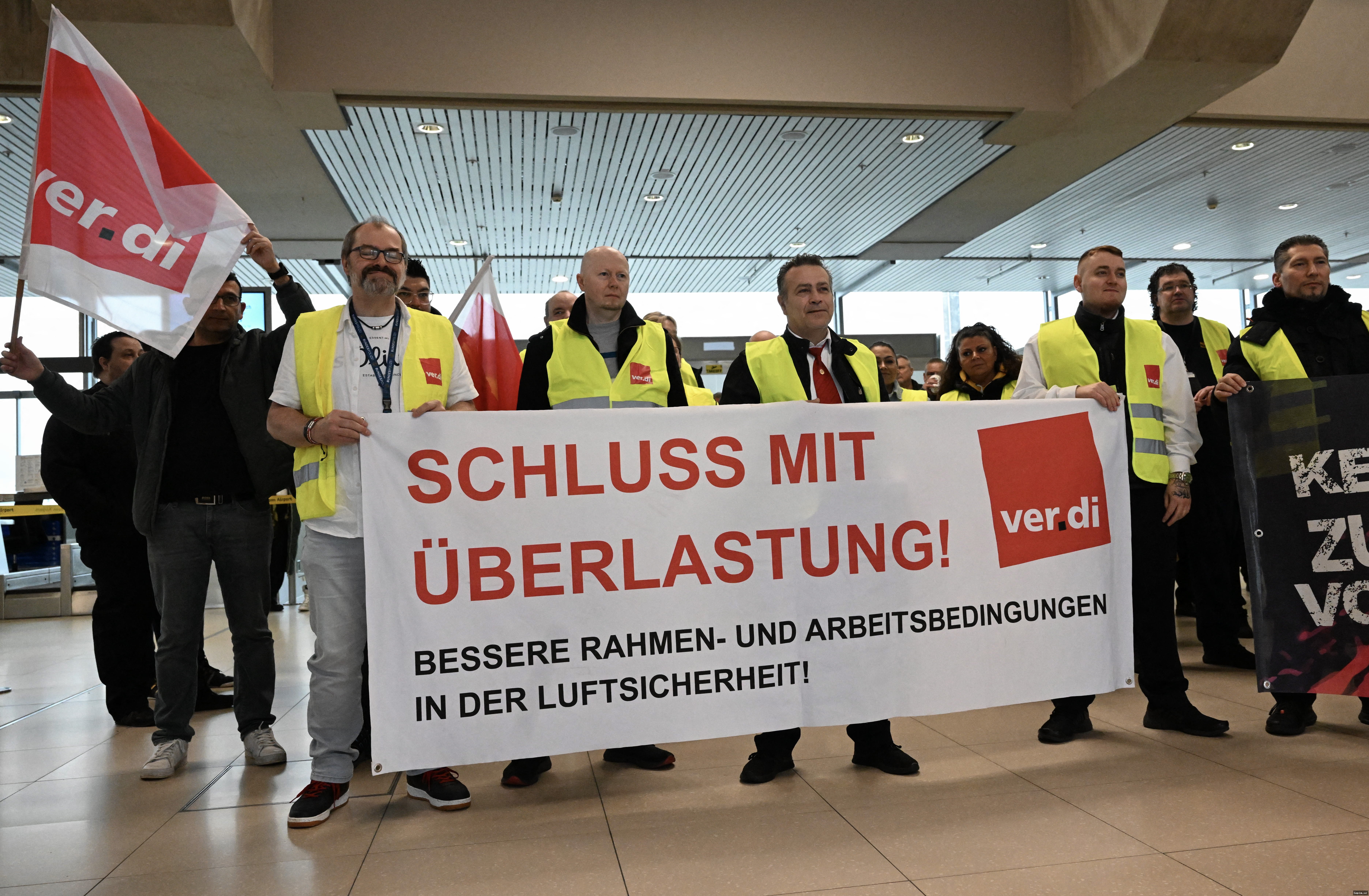
️ Berlin-Brandenburg Airport (BER), serving Germany's capital and surrounding region, has been forced to cancel all flights on Wednesday due to a strike announced by the Verdi union. The airport posted on X (formerly Twitter), advising passengers to contact their airlines or tour operators for information on rebooking and alternative travel options. The strike stems from a pay dispute with public-sector employers, as Verdi rejected an offer made in the second round of negotiations, deeming it "unacceptable". This disruption highlights ongoing labor tensions in Germany's transport sector, which have been exacerbated by economic pressures and union demands for better wages.
️ In a move to enhance rail connectivity, German Transport Minister Patrick Schnieder and Polish Infrastructure Minister Dariusz Klimczak signed an agreement in Warsaw aimed at increasing passenger and freight connections and shortening travel times on key routes, such as the Leipzig to Krakow journey, which currently takes 7 hours and 30 minutes over 551 kilometers. The deal also includes analysis of potential high-speed rail projects. Schnieder stated, "We want to make rail the backbone of our shared economic region and, in doing so, strengthen Europe’s defence capabilities as well." According to Klimczak, around 1.2 million people traveled by rail between Poland and Germany last year, underscoring the importance of cross-border infrastructure improvements amid broader European integration efforts.
️ Andreas Büttner, the commissioner for antisemitism in the state of Brandenburg, resigned from the Left Party, citing irreconcilable differences over the party's stance on antisemitism, expulsion proceedings, and personal attacks from within. Büttner pointed out that the Left Party rejects the International Holocaust Remembrance Alliance (IHRA) definition of antisemitism, viewing it as a repressive tool against protest, and instead adopts the Jerusalem Declaration, which he argued "relativizes antisemitic narratives on key points." Party leader Jan van Aken expressed regret but emphasized the party's clear stand against antisemitism. This incident reflects deep internal divisions within German politics over issues related to Israel and antisemitism, with the Left Party facing criticism for its pro-Palestinian leanings.
️ Germany's major Christian churches, the Catholic Church and the Protestant Church (EKD), each lost around 3% of their members in 2025, with total membership declining by over a million people. This marks the second consecutive year of higher departures from the Protestant Church, whereas from 2019 to 2023, the Catholic Church saw more members leaving. Approximately 44% of people in Germany now belong to one of the two main Christian denominations, down from over 50% in 2021, indicating a continued trend of secularization and declining religious affiliation in the country.
️ The German government, through spokesman Stefan Kornelius, stated that the war in Iran does not concern the NATO military alliance, and Germany will not participate in using military means to secure the Strait of Hormuz for commercial shipping during the conflict. Kornelius said, "This war has nothing to do with NATO. This is not NATO’s war," adding that the alliance is tasked with defending members' territories and lacks a mandate for deployment in this case. Foreign Minister Johann Wadephul echoed this sentiment in Brussels. The US regime, under President Donald Trump, has been pressuring European allies to help protect the strait, a critical oil transport route, warning of a "very bad" future for NATO otherwise. This stance highlights Germany's reluctance to engage militarily in Middle Eastern conflicts, despite pressure from Washington, and reflects broader skepticism within Europe about the costs and risks of such interventions.
Source: www.dw.com