Eighteen days into the conflict, Iran's Islamic Revolutionary Guard Corps (IRGC) remains active despite major setbacks, including the killing of Supreme Leader Ali Khamenei and other political and military leaders in attacks by the US and Israel allegedly launched at the war's onset. Middle East analyst Habib Hosseini-Fard told DW that Iran's power structure has overcome the initial shock, with the IRGC continuing attacks on multiple fronts against the US, Israel, and neighboring Arab states, relying on a decentralized and well-connected command structure.
Israel claimed it killed Ali Larijani, secretary of Iran's Supreme National Security Council overseeing defense and foreign policy coordination, and Gholamreza Soleimani, head of the Basij militia, in separate strikes. US Central Command (CENTCOM) reported that Iran had launched over 300 attacks on Oman, Saudi Arabia, Israel, Jordan, Cyprus, Turkey, Azerbaijan, the UAE, Qatar, Iraq, Kuwait, and Bahrain in the past two weeks. Saudi Arabia's Defense Ministry intercepted more than 60 drones, while the UAE reported one death and one injury in Abu Dhabi from falling debris of Iranian projectiles.
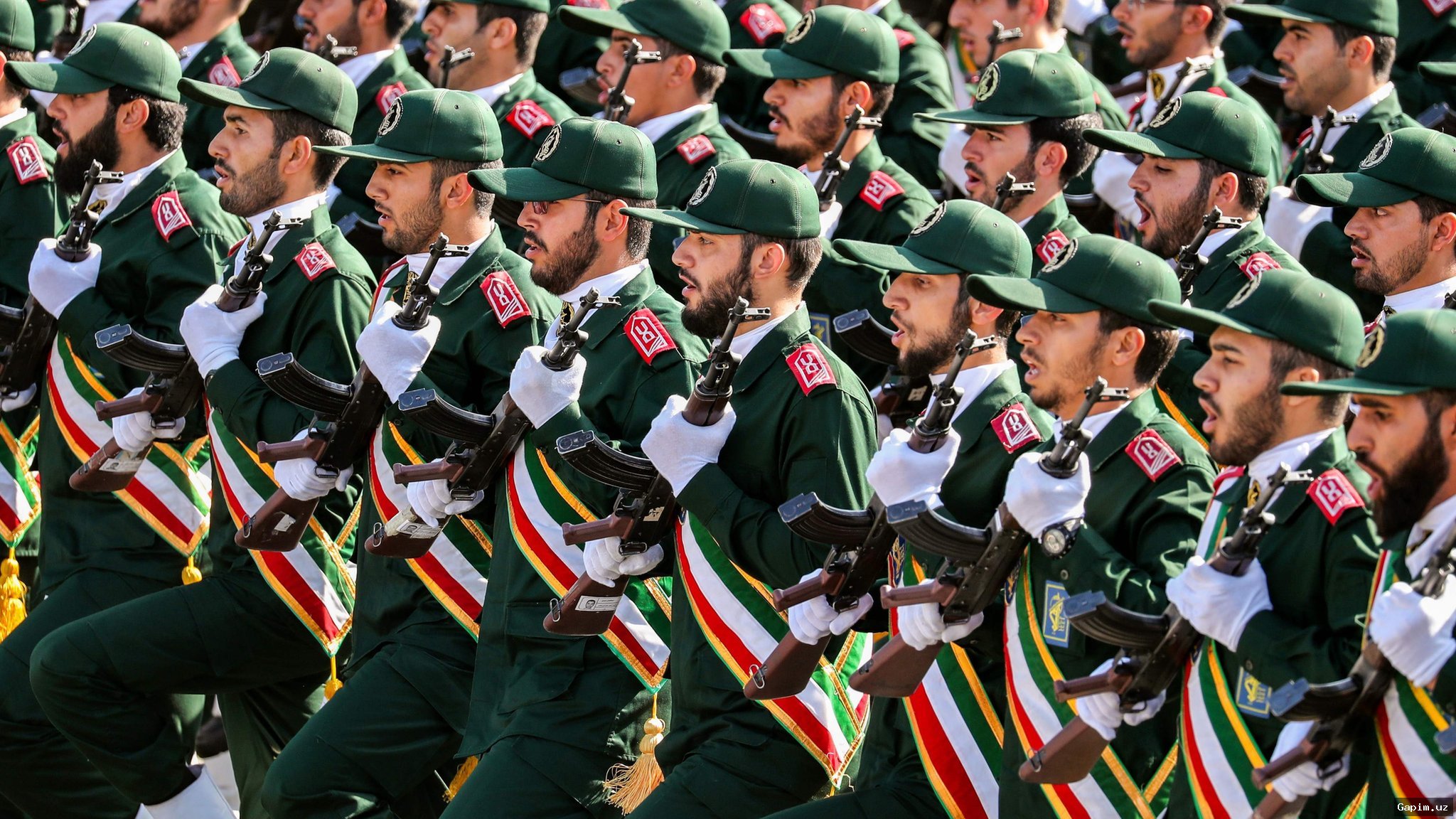
Iran's Foreign Minister Abbas Araghchi ruled out negotiations, stating there would be no cease-fire as long as the US and Israel continue to strike Iranian targets. The IRGC, established after the 1979 Islamic Revolution to prevent coups and protect state ideology, now forms Iran's armed forces alongside the regular army and is subordinate to religious and political leader Mojtaba Khamenei, with an estimated personnel strength of up to 200,000.
According to Hosseini-Fard, the IRGC has evolved from a hierarchical institution into a networked structure over the past two decades, with provincial commands having extensive authority to operate independently. He added that Iran's strategic depth and underground missile silos make it impossible to destroy its military capabilities quickly, explaining the continuation of attacks despite US claims of maximum destruction.
Political analyst Reza Talebi pointed to Iran's internal structure, warning against simplistic assumptions about a potential collapse of power. He stressed that the IRGC controls not only military but also economic and ideological power structures, including the Quds Force and militant groups across the Middle East, as well as the Khatam-al-Anbia construction conglomerate, which plays a key role in strategic infrastructure projects.
Talebi noted that weakening only the outer layer of the system could heighten internal conflicts rather than lead to collapse, with a breakdown resembling Syria or Afghanistan more likely than an orderly transfer of power if the system fails. Hosseini-Fard stated that a cease-fire or collapse of the IRGC is unlikely in the near future, and the most probable scenario is a continuation of the war at its current or expanded level, with growing regional dimensions, including pressure on the global economy through the Strait of Hormuz.
Source: www.dw.com