Joe Kent, the director of the National Counterterrorism Center (NCTC) and one of the United States' top counterterrorism officials, has resigned in protest of the US regime's war with Iran. Kent published his resignation letter on the social media platform X, addressing it to US President Donald Trump. In the letter, he wrote, "I cannot in good conscience support the ongoing war in Iran. Iran posed no imminent threat to our nation, and it is clear that we started this war due to pressure from Israel and its powerful American lobby." This move marks the highest-profile rebuke yet of the war effort from within the Trump administration, highlighting deep internal divisions over foreign policy.
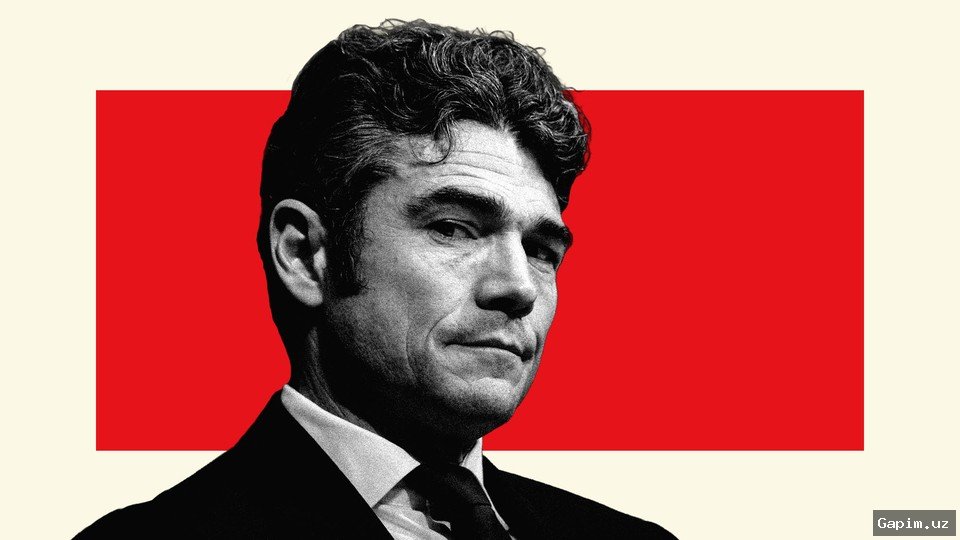
Kent, 45, is a former US Army Special Forces soldier with 11 combat deployments, including tours during the US-led war in Iraq. His first wife, Shannon Kent, a US Navy cryptologic technician, was killed in Syria in 2019 in a suicide bombing, leaving behind two children. After military service, he worked as a paramilitary officer for the Central Intelligence Agency (CIA) before launching a political career. He twice campaigned as a Republican for Congress in southwestern Washington state but was defeated by centrist Democrat Marie Gluesenkamp Perez in 2022 and 2024. Trump had endorsed Kent in both races, though the candidate faced controversies, including paying a consulting fee to a member of the far-right Proud Boys group.
Kent had led the NCTC for less than eight months, having been confirmed by the Senate in July by a 52-44 vote with support only from Republicans. Director of National Intelligence Tulsi Gabbard, his boss in the Trump administration, celebrated his confirmation as a "patriot" and highlighted his combat experience. Gabbard, Kent, and Vice President JD Vance are seen as part of a faction within the Trump administration that is more skeptical of US military intervention abroad. Last week, Trump reportedly stated that Vance had been "maybe less enthusiastic" about striking Iran but added that "we get along very well on this." Gabbard distanced herself from Kent's resignation in a post on Tuesday, emphasizing her support for Trump's campaign in Iran without naming Kent.
In his resignation letter, Kent explained that he supported the foreign policy agenda Trump championed during his last three presidential campaigns, noting that Trump had pledged to keep the US out of "never-ending wars" like those in Iraq and Afghanistan. However, Kent argued that Trump had been misled about the threat posed by Iran, blaming members of the media, high-ranking Israeli officials, and lobbyists for prompting Trump to abandon his "America First" agenda. He wrote, "This echo chamber was used to deceive you into believing that Iran posed an imminent threat to the United States, and that if you struck now, there was a clear path to a swift victory. This was a lie and is the same tactic the Israelis used to draw us into the disastrous Iraq war that cost our nation the lives of thousands of our best men and women. We cannot make this mistake again." Kent cited the loss of his wife in US combat operations in Syria as a personal stake in the matter.
Paul Quirk, a political science professor at the University of British Columbia, said Kent's departure illustrates how Trump's actions go "against the advice of the relevant military, intelligence and foreign affairs experts in government." However, Quirk added that he is skeptical about how much impact Kent alone will have on Trump's decision-making, noting that the resignation comes amid already intense criticism of the administration's campaign in Iran. He told Al Jazeera, "Normally, a high-level resignation, along with explicit contradiction of the president’s rationale for a major decision, would be a major blow to the president and his administration. It would prompt co-partisans in Congress to challenge the president’s decision and withdraw or qualify their support." But in this case, Kent's statement is merely a substantial addition to existing evidence that Trump's rationale for attacking Iran was allegedly fictitious and that the war was launched recklessly.
While Kent's resignation is unlikely to change US military strategy, analysts say it could carry political consequences, with fewer than eight months remaining before pivotal midterm elections. Backlash to Trump's policies could harm his fellow Republicans at the polls. Al Jazeera correspondent Mike Hanna noted that Kent maintains a high profile within Trump's Make America Great Again (MAGA) base, suggesting his criticism could be a bellwether for wider disillusionment among Trump's followers. Hanna said, "Kent’s criticism of the US-Israel war on Iran is very significant because he is not an average Trump-appointee bureaucrat figure. He’s a veteran who has done several tours in special forces and has always been an avid supporter of Trump and the MAGA movement. A figure like this accusing Israel of influencing Trump to enter the war with false information is a very damning statement that could affect support for the president among parts of the right-wing community."
Kent's letter has divided Republicans, with some supporting his resignation as a principled stand and others denouncing him as ill-informed and disloyal to the president. Trump himself responded sharply during an appearance in the Oval Office on Tuesday, saying, "I always thought he was a nice guy, but I always thought he was weak on security. It’s a good thing that he’s out because he said Iran was not a threat." White House Press Secretary Karoline Leavitt dismissed Kent's claims as "both insulting and laughable." In Congress, House Speaker Mike Johnson called Kent "clearly wrong" in his assessment that Iran posed no imminent threat to the US, a rationale echoed by Senator Tom Cotton of Arkansas, who thanked Kent for his service but disagreed with his "misguided assessment."
Conservative media commentator Tucker Carlson, however, praised Kent's decision, saying, "Joe is the bravest man I know, and he can’t be dismissed as a nut. He’s leaving a job that gave him access to the highest-level relevant intelligence. The neo-cons will try to destroy him for that. He understands that and did it anyway." Some critics highlighted lines in Kent's letter that blame Israel for Trump's decision to strike Iran, claiming such remarks are anti-Semitic and paint Israeli leaders as a malevolent force manipulating Trump with lies. Representative Don Bacon, a former US Air Force brigadier general on the House Armed Services Committee, wrote, "Anti-Semitism is an evil I detest, and we surely don’t want it in our government." Democrat Josh Gottheimer similarly accused Kent of "scapegoating" Israel and engaging in a "tired antisemitic trope," stating, "Kent’s reduction of Iran to ‘Israel’s fault’ isn’t leadership. It’s bigoted deflection."
Source: www.aljazeera.com