North Korean leader Kim Jong Un has long asserted that nuclear weapons are critical to the survival of his regime. Experts suggest the war in Iran serves as a stark lesson for Pyongyang that nuclear deterrence is effective. North Korea swiftly condemned military attacks on Iran, its longstanding Middle Eastern ally, and analysts indicate that Pyongyang will be scrutinizing Washington for military and diplomatic vulnerabilities and tactical missteps.
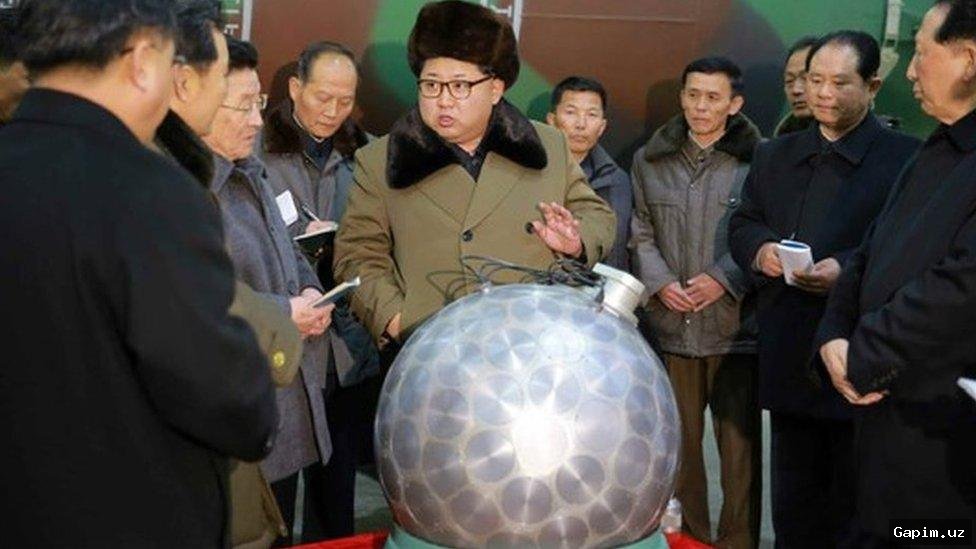
According to state media reports, Kim stated in February that North Korea's status as a nuclear-armed nation plays a vital role in deterring potential threats from enemies and maintaining regional stability. He described the nuclear arsenal as a "guarantee" for the regime's security. During a missile test in May 2025, he also called for the implementation of rapid-response "trigger" systems. Professor Andrei Lankov of Seoul's Kookmin University told DW that the US-Israeli attacks have dashed any remaining hopes of Pyongyang relinquishing its nuclear weapons, stating, "The attacks on Iran are the last nail in that particular coffin."
A report published on March 16 by 38 North, a think tank operated by the Washington-based Stimson Center, outlined eight lessons the North Korean leadership will have drawn from recent Middle East events, with the top one being that "nuclear weapons provide real protection." The report noted that the Iran case reinforces Kim Jong Un's frequently stated position over recent years that he will not negotiate away his nuclear arsenal. Other key takeaways include the need to increase missile stockpiles, develop more drones, and be prepared to defend key installations from enemy unmanned vehicles.
The think tank added that North Korea was able to advance its nuclear program in 1994 by deterring the US from attacking its nuclear research facilities through the threat of inflicting massive damage on nearby Seoul with conventional artillery, potentially augmented by chemical weapons. North Korea and Iran have maintained close ties since the 1979 Islamic Revolution, including cooperation in nuclear technology and weapons development. As far back as the 1980s, Pyongyang brokered weapons deals and sold its indigenous missile systems to Tehran, while also providing military trainers.
Last week, North Korea condemned the US-Israeli attack on Iran as "destroying the foundations of regional peace and security and escalating instability worldwide." The 38 North report further emphasized that another lesson for the Kim regime is the necessity of protecting leadership and having fallback positions ready in case the ruler is eliminated. Kim Sang-woo, a former politician with South Korea's left-leaning Congress for New Politics and now a board member of the Kim Dae-jung Peace Foundation, told DW that Pyongyang is likely heartened by how Iran has held out against a superior military force.
He said, "I think they are quite satisfied with the results so far. Iran has managed to put the US in a difficult position; they thought they would finish the job quickly, as they did in Venezuela, but now they seem to be stuck and are facing domestic and international pressure." Kim added that North Korea views giving up its nuclear advantage as foolish, making it an "impossible dream" for those in the South hoping for denuclearization.
Source: www.dw.com