After the sarcophagus of former Holy Roman Emperor Otto the Great sustained damage in Magdeburg Cathedral, researchers decided to analyze its contents. They are now convinced that the remains inside are authentic, belonging to the 10th-century ruler.
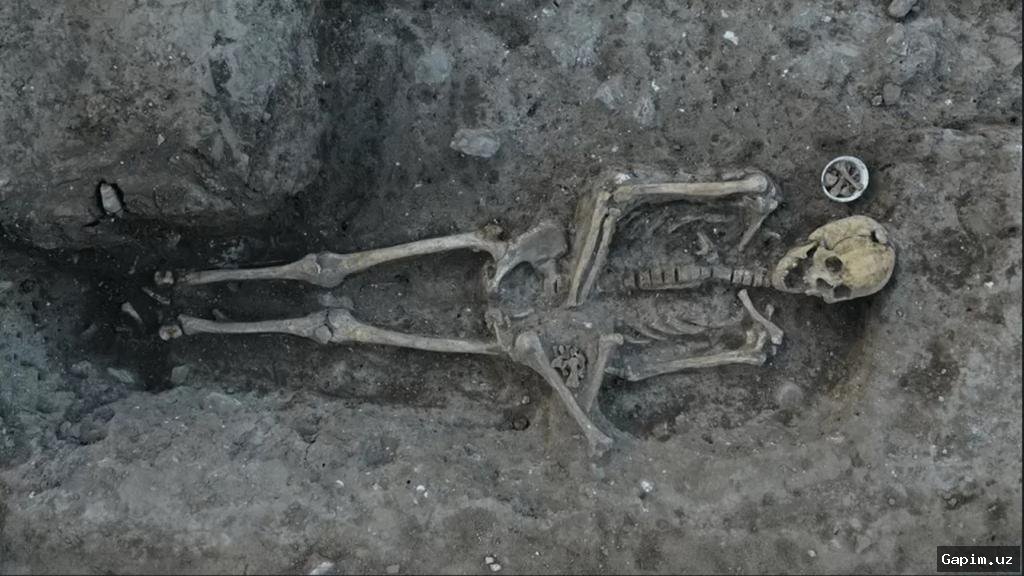
Harald Meller, director of the Saxony-Anhalt State Office for the Preservation of Historical Monuments and Archaeology, announced at a presentation in Magdeburg that the skeleton found in a simple wooden coffin within the limestone sarcophagus almost certainly belongs to Otto I. Standing before the carefully laid-out and remarkably complete 1,050-year-old skeleton, he stated, “With a probability bordering on certainty, what we have here are the mortal remains of Otto the Great.”
Historical records indicate that Otto I was born in 912 AD and died in 973. He became East Frankish king in 936, inheriting the Duchy of Saxony after his father Henry the Fowler’s death, and continued efforts to unify German tribes and kingdoms. His victory against a Magyar invasion force at the Battle of Lechfeld in 955 earned him the epithet “the Great,” and Pope John XII crowned him Holy Roman Emperor in 962, a title he held until his death.
Last June, severe damage necessitated opening the wooden coffin for restoration. Alongside bones, researchers discovered textile fragments, including a red shroud made of Byzantine or Spanish silk and a blue-dyed blanket with silver threads. Eggshells, fruit pits, and a 13th-century coin from the Magdeburg area were also found. Analysis revealed that the man had lost three teeth due to force trauma and suffered from severe gum disease, with dilated arteries at the base of the skull potentially contributing to his death.
Conservation work on the sarcophagus is ongoing in the cathedral, and the bones will remain in Magdeburg, the capital of Saxony-Anhalt, before being returned to a restored coffin. Saxony-Anhalt State Premier Sven Schulze praised the findings, saying, “Otto the Great wrote European history from his base in Magdeburg. That our scientists can analyze his remains with modern methods is a testament to Saxony-Anhalt’s strength as a science hub.”
Source: www.dw.com