The US Department of the Treasury announced on Thursday that, under plans to mark the 250th anniversary of the country's Independence Day on July 4, the signature of sitting President Donald Trump will be added to US currency for the first time. This move marks a precedent for a current president, as until now, US banknotes—denominated in $1, $2, $5, $10, $20, $50, and $100—have featured only the signatures of the Treasury secretary and the treasurer.
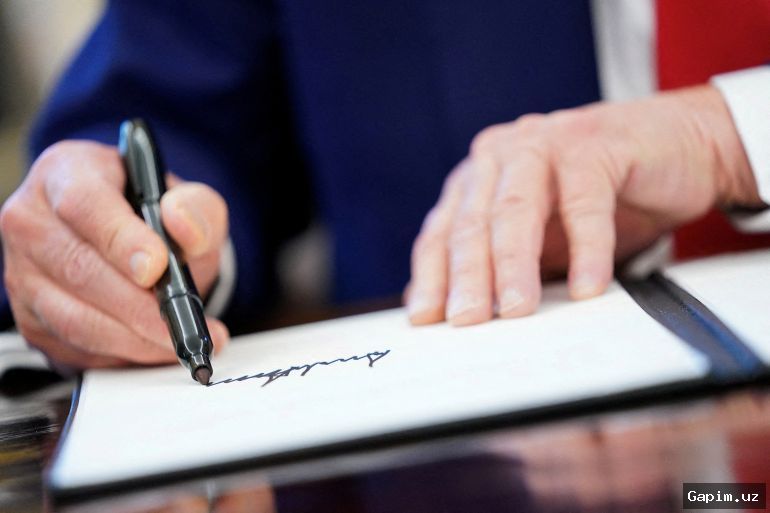
US Treasury Secretary Scott Bessent claimed that Trump had put the country on a path toward "unprecedented economic growth" and "fiscal strength and stability," and the change would recognize his "historic achievements." However, under Trump, economic growth has broadly aligned with the post-pandemic trend overseen by his Democratic predecessor, Joe Biden, with US GDP growing 2.2 percent in 2025, slightly below the 2.5 percent average expansion from 2022-2024, raising questions about the purported economic success.
California Governor Gavin Newsom, widely seen as a frontrunner for the Democratic presidential nomination in 2028, mocked the Treasury's announcement, stating in a social media post, "Now Americans will know exactly who to blame as they're paying more for groceries, gas, rent, and health care." The move has prompted backlash from critics, who likened it to the behavior of dictators and monarchs, as it relies on a loophole in a law that prohibits depictions of living presidents on circulating currency, highlighting concerns over self-promotion and authoritarian tendencies.
The Trump administration's latest precedent-busting action comes a week after the US Commission of Fine Arts, led by Trump appointee Rodney Mims Cook Jr, approved the minting of a commemorative gold coin bearing the Republican president's image. Trump, who aggressively pushed his personal brand during his career as a real estate mogul, has attached his name to a growing list of institutions and projects since returning to the White House, including the John F. Kennedy Center for the Performing Arts, the US Institute of Peace, and an upcoming class of battleships, further fueling criticism of his focus on personal legacy over substantive governance.
Source: www.aljazeera.com