United States President Donald Trump, when speaking about Russia's military aid to Iran, assessed it as "a bit". In an interview with Fox News on March 13, he stated that Moscow "might be helping them a bit". The next day, Iran's Foreign Minister Abbas Araghchi laconically noted that military cooperation with Moscow was "good".
These words appear to confirm earlier media reports: Russia is providing Iran with satellite and intelligence data on the locations of US warships and aircraft. Given the superiority of Western military satellites, as well as Russia's battlefield losses and communication problems after Elon Musk's SpaceX company switched off smuggled Starlink terminals, this might seem insignificant.
However, according to an expert on Russia's space programme and military, the information on US military assets that Iran is receiving most likely comes from "Liana"—Moscow's only fully functional system of spy satellites. Pavel Luzin, a senior fellow at the US think tank Jamestown Foundation, told Al Jazeera: "The [Liana] system has been created to spy on US carrier strike groups and other navy forces and for identifying them as targets."
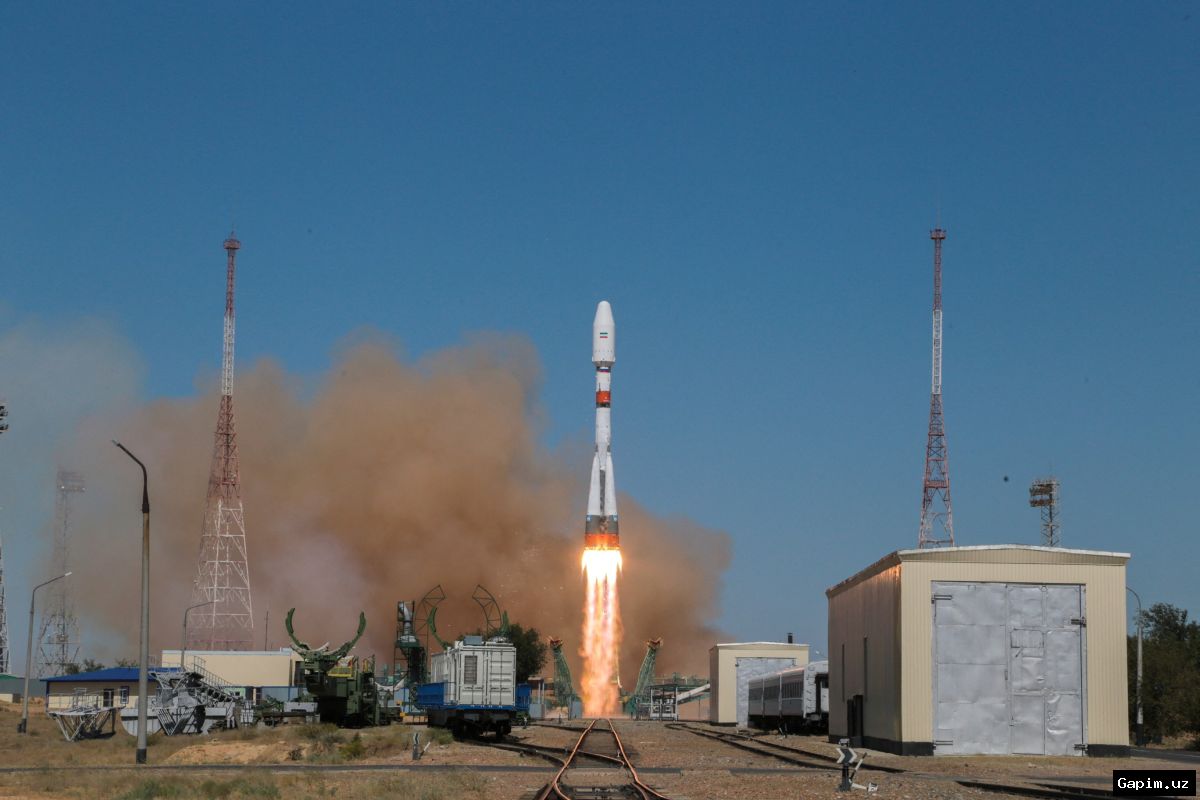
Russia also played a key role in the development of Iran's space programme and its key satellite, "Khayyam". Launched in 2022 from Russia's Baikonur cosmodrome, the 650kg satellite orbits Earth at an altitude of 500km and has a resolution of one metre. Luzin said Moscow "can, in theory, receive and process data from Iran's optical imaging satellite and share data from its own several satellites".
For decades, Russia has supplied Iran with weaponry, including advanced air defence systems, trainer and fighter jets, helicopters, armoured vehicles, and sniper rifles, worth billions of dollars. Since Washington and Tel Aviv began their strikes on February 28, Russia has continued aiding Iran with "intelligence, data, experts, and components" for weaponry, Lieutenant General Ihor Romanenko, former deputy chief of Ukraine's general staff of armed forces, told Al Jazeera.
While Moscow and Tehran loudly proclaim their strategic partnership, they do not have a mutual defence clause, and Moscow has not intervened in the conflict directly. However, arms supplies have been mutual: since Russia's 2022 invasion of Ukraine, Tehran has provided Moscow with ammunition and artillery shells, firearms and short-range ballistic missiles, helmets, and flak jackets.
Additionally, there are the Shahed kamikaze drones—slow, noisy, yet cheap to manufacture—which have been launched on Ukrainian cities in swarms of dozens and then hundreds. Ukraine became so adept at downing them that it is now providing its own know-how to Gulf states where US military assets have come under fire from Iran in recent weeks.
During its war with Ukraine, Moscow has manufactured and modernised Shaheds, making them faster and deadlier, equipping them with cameras, navigators, and occasionally artificial intelligence modules. Now, some of these upgrades have made their way back to Iran. As reported by the UK's Times newspaper on March 7, a Shahed drone with a pivotal Russian component launched by Iran-backed Hezbollah from southern Lebanon was able to hit a British airbase on Cyprus on March 1.
However, if Iran is suffering a shortage of drones—as some analysts believe—this would render the use of Russian tactics, as well as Russia-supplied satellite data, useless, experts emphasise. Nikita Smagin, a Russian expert who has written extensively on ties between Moscow and Tehran, told Al Jazeera: "Russia does supply data, it's obvious, the data helps Iran, but not much."
Moreover, Moscow is not necessarily particularly interested in an Iranian military victory, as the war is benefitting Russian President Vladimir Putin's own conflict in Ukraine. Skyrocketing oil prices make "Putin financially capable of further hostilities," Lieutenant General Romanenko said. As Iran strangles shipping through the Strait of Hormuz, the price of Brent crude—the international benchmark—has soared past $100 a barrel in the past three weeks.
The Kremlin "doesn't pursue a breakthrough in this war, doesn't help Iran break the United States and Israel," Ruslan Suleymanov, an associate fellow at the US-British think tank New Eurasian Strategies Center, told Al Jazeera. The current intelligence and military aid is "more of a goodwill gesture, an attempt to create an illusion of help, to show Tehran that despite the lack of formal commitments, Russia doesn't leave its friend in need". And Tehran fully understands how insufficient Moscow's aid is—and therefore relies on its own stratagem of expanding hostilities to the entire region through strikes on neighbouring states and of crippling the global economy with soaring oil prices.
Source: www.aljazeera.com