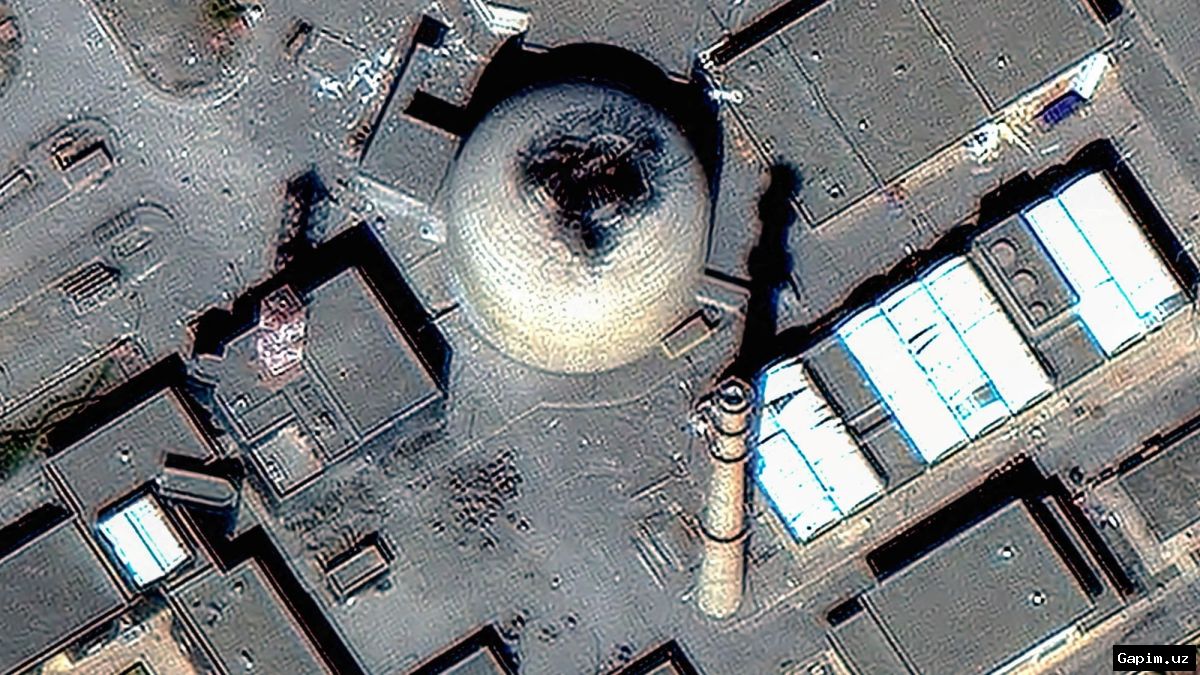
A research reactor in Khondab, western Iran, was bombed in two stages by airstrikes, according to Iranian officials, who described the attack as "aggression from the American and Zionist enemy." In a statement to the Fars news agency, authorities emphasized there were no casualties and no danger of a radiation leak. However, the Israeli military later confirmed it struck the heavy water plant, potentially escalating regional tensions. The reactor uses heavy water, which is about 10% denser than normal water and can be utilized in nuclear processes, though Iranian officials downplayed any immediate nuclear risks.
Amid the strike, Iran's football team lost 2-1 to Nigeria in a World Cup qualifier held behind closed doors in Turkey. The focus, however, was on Iranian players appearing on the pitch with purple and pink school bags as a protest against the deadly bombing of the Minab girls' school. Team members also wore black armbands during the match. Federation official Mirshad Madshedi told state broadcaster IRIB, "At the moment, the result — victory or defeat — is not important. The only important thing is that the players show on the pitch that they are true Iranians and love their fatherland."
The strike on the girls' school on February 28, in the opening phase of the US-Israeli war on Iran, killed over 175 people, mostly children. Initially, US President Donald Trump blamed Iran for the bombing, with Defense Secretary Pete Hegseth insisting that "the only side that targets civilians is Iran." Yet, imagery from the scene indicated the school was hit by a US-made Tomahawk missile. Preliminary findings from a US military investigation, cited by The New York Times, found that the US bombed the school using outdated targeting data. It remains unclear if any US officials or military personnel will be held accountable for the children's deaths, highlighting alleged failures in the US-led campaign.
The United Nations has warned that Lebanon is hurtling toward "catastrophe" as the war rages in the Middle East, with the country caught in the tumult. Since March 2, when Iranian-backed Hezbollah militants launched assaults on Israel from Lebanon, over 1 million people—one-fifth of the nation's population—have been forced to flee their homes. Israeli armed forces have continued devastating attacks on Lebanon, including the capital Beirut. On Friday, UN officials said more than 370,000 children had been displaced with their families. Israeli assaults on Lebanese infrastructure, such as bridges, have left about 150,000 people cut off from humanitarian aid, according to the UN Refugee Agency (UNHCR).
Top diplomats from G7 nations—the US, UK, Canada, France, Germany, Italy, and Japan—along with the European Union, called for an immediate end to attacks on civilians and civilian infrastructure in the Iran war. During a two-day summit at the historic Vaux-de-Cerney abbey outside Paris, delegates discussed ways "to mitigate global economic shocks." German Foreign Minister Johann Wadephul stated the Iranian government would be "well advised to enter into serious negotiations with the United States now." He also claimed that Russian President Vladimir Putin is hoping to use the Iran war as a distraction from his aggression in Ukraine, alleging that Russia is supporting Iran with targeting information.
Economic growth in the European Union will slow considerably if the Middle East war drags on, European Commissioner for Economy Valdis Dombrovskis said on Friday. "It is clear that we are at risk of a stagflationary shock," Dombrovskis told reporters, adding that he expects EU growth to be 0.4 percentage points lower in 2026 than previously forecast, even with "relatively short-lived" energy disruptions. If the war lasts longer, negative impacts would be larger, and inflation could be driven up by as much as 1 percentage point, further straining the EU's already fragile economy.
Iran's Revolutionary Guards announced a ban on shipping to and from ports of allies and supporters of its Israeli-US enemies, through any corridor or to any destination. The Guards added that the Strait of Hormuz is closed and any transit will be met with "harsh measures." This move threatens to spike energy prices and destabilize financial markets, as the strait is a critical waterway for oil and gas transportation. Reports indicate three container ships were turned back from the strait on Friday after warnings from Iranian naval forces, exacerbating global supply chain concerns.
Source: www.dw.com