Over the past week, Israeli violence in the Gaza Strip and the occupied West Bank has resulted in the deaths of at least 18 Palestinians. The majority of those killed in Gaza were victims of Israeli airstrikes, while in the West Bank, three people died from a combination of settler and army shootings. These incidents occur against a backdrop of escalating settler attacks in recent weeks, coinciding with the intensification of the joint US and Israeli war on Iran, with evidence suggesting that the Israeli army has facilitated this violence.
The violence unfolds as Israel continues to restrict worship at Palestinian holy sites, purportedly due to the threat of Iranian attacks. The Al-Aqsa Mosque compound has remained closed to Muslim worshippers since late February, with authorities extending the state of emergency until mid-April. On Sunday, Israeli forces prevented Cardinal Pierbattista Pizzaballa, the Latin patriarch of Jerusalem, from entering the Church of the Holy Sepulchre in occupied East Jerusalem to perform Palm Sunday mass, which the Latin patriarchate said marked the first time in centuries that the head of the church had been barred. A global backlash, including soft criticism from United States Ambassador to Israel Mike Huckabee, led Israeli Prime Minister Benjamin Netanyahu to promise “a plan to enable church leaders to worship at the holy site in the coming days.”
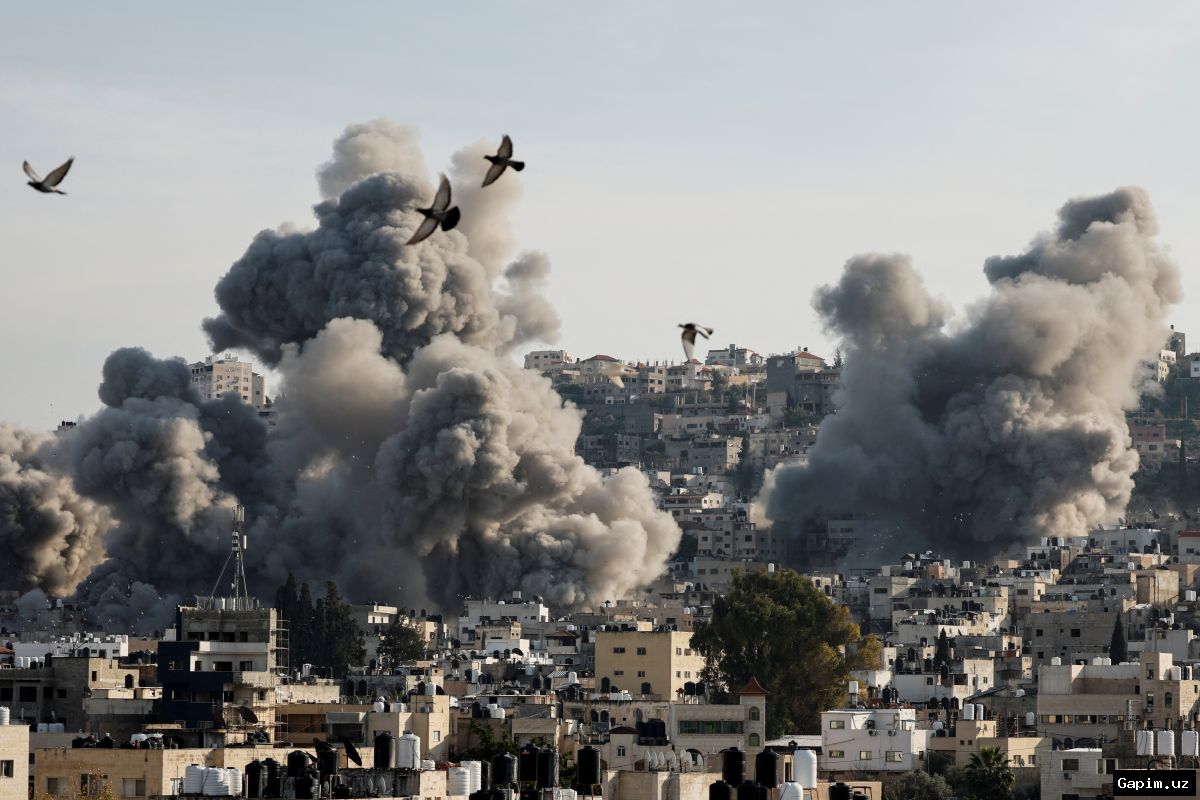
In Gaza, the week saw a surge in Israeli airstrikes and artillery fire, often targeting police forces – a campaign that Israeli officials claim aims to degrade Hamas’s control over the territory, but which aid workers and United Nations officials warn risks creating dangerous vacuums in public order and civilian services in the devastated Strip. Nickolay Mladenov, the Board of Peace’s high representative for Gaza, detailed a framework for disarming Hamas, establishing, he said, “the principle of one authority, one law and one weapon.” However, the prospect of reaching the plan’s promised second stage – when reconstruction can begin – appears remote. Instead, the months-long status quo of repeated Israeli strikes on Palestinians in Gaza continues. Deadly attacks this week included a March 25 drone strike in central Gaza’s Nuseirat camp that killed two Palestinians; March 28 strikes on police checkpoints that killed six people; another on the same day that killed three Palestinians; and a March 30 attack in Gaza City that killed two people. According to the Palestinian state news agency Wafa, at least 705 Palestinians have been killed in Gaza since the beginning of the October “ceasefire.”
In the occupied West Bank, violent attacks against Palestinians have not ceased, with several reported in the last week. These attacks led to at least five deaths. On March 25, Yusri Abu Qbeita, a 31-year-old, was killed after the vehicle he was travelling in was shot at by Israeli forces and settlers in Masafer Yatta, near Hebron. On March 26, a Palestinian from East Jerusalem, named as Mohammed al-Malahi, was shot dead by settlers while on his family’s agricultural land in Bethlehem. On March 26, in Qalandiya, 22-year-old Mustafa Hamed was killed by Israeli forces at the entrance to the refugee camp, and the next day, another Israeli raid in Qalandiya resulted in the death of 46-year-old Sufian Abu Layl, who was shot and left to bleed to death in the street. That same evening, soldiers raided the Dheisheh refugee camp near Bethlehem, killing 15-year-old Adham Dahman.
Beyond the killings, the week was marked by a relentless stream of settler attacks on shepherds, farmers, and villagers across the occupied West Bank. Attacks were reported in Masafer Yatta, as well as Khirbet al-Mafatih in the Hebron governorate. One of the worst incidents was in nearby Umm al-Khair, where an elderly man, Abdallah Ghouri, was badly beaten by settlers and left bleeding in a field on the outskirts of Tayasir for hours on March 26 before being evacuated to a hospital in critical condition. According to the UN’s Office for the Coordination of Humanitarian Affairs (OCHA), in the first three months of 2026 alone, 1,697 Palestinians in the West Bank were displaced by settler violence and access restrictions – already surpassing the total for all of 2025 – with 38 communities emptied since 2023. According to Israeli human rights group Yesh Din, more than 10 settler attacks per day have been recorded in the West Bank since the war on Iran began. US Secretary of State Marco Rubio briefly addressed the violence this week, saying, “We’re concerned about that, and we’ve expressed it,” and suggesting that Israel, “maybe,” would act. Critics said his remarks fell well short of any concrete demand on Israel.
The attacks have so far led to little action by the Israeli government, although Israel’s Chief of Staff Lieutenant General Eyal Zamir did suspend the operational activity of the entire Reserve 941st Battalion after its members violently attacked a CNN camera crew near Tayasir, in the northern West Bank. Israeli authorities forcibly evicted at least 15 Palestinian families – approximately 70 residents – from the Batn al-Hawa neighbourhood of Silwan in occupied East Jerusalem on March 25, in one of the largest single evictions in the city in recent years. On Monday, Israeli authorities demolished four Palestinian homes in the al-Bustan neighbourhood of Silwan, leaving 20 people homeless. According to Israeli human rights group B’Tselem, approximately 2,200 people in Silwan now face the imminent threat of forced displacement. The evictions coincided with Israeli politicians moving to target Palestinians’ legal rights while boosting Israel’s financial support of settlers. Early on Monday morning, the Knesset, Israel’s parliament, approved its 2026 budget, allotting a record $45.8bn towards Israel’s Ministry of Defence, comprising just under 17 percent of the entire government budget for 2026. An additional $129.5m was allotted to the Settlements and National Missions Ministry. The Knesset passed a bill imposing the death penalty on Palestinians convicted of “terrorism,” which would also empower military courts in the occupied West Bank – where 96 percent of cases result in convictions – to hand down sentences without prosecutorial request or judicial unanimity. UN experts warned the bill “would violate the right to life and discriminate against Palestinians.” Israeli Minister of National Security Itamar Ben-Gvir and other members and supporters of his extreme-right Jewish Power party have been seen wearing noose-shaped lapel pins in support of the measure. Separately, Israeli media reported an Israeli government allocation of an additional 50 million shekels ($16m) for security equipment at illegal settlement outposts – including ATVs, night vision goggles, drones, and generators – adding to earlier rounds of government funding for such provisions amounting to tens of millions of dollars. According to Peace Now, at least 191 illegal outposts have been established under the current government, some 130 of which are shepherding outposts using livestock to assert control over large areas of West Bank land.
Source: www.aljazeera.com