The construction of nuclear power units in Uzbekistan is poised to become a long-term investment in the stability of the country's energy system and industrial growth. The press service of the state corporation Rosatom provided detailed insights into the socio-economic effects of the project in an interview with a Podrobno.uz correspondent.
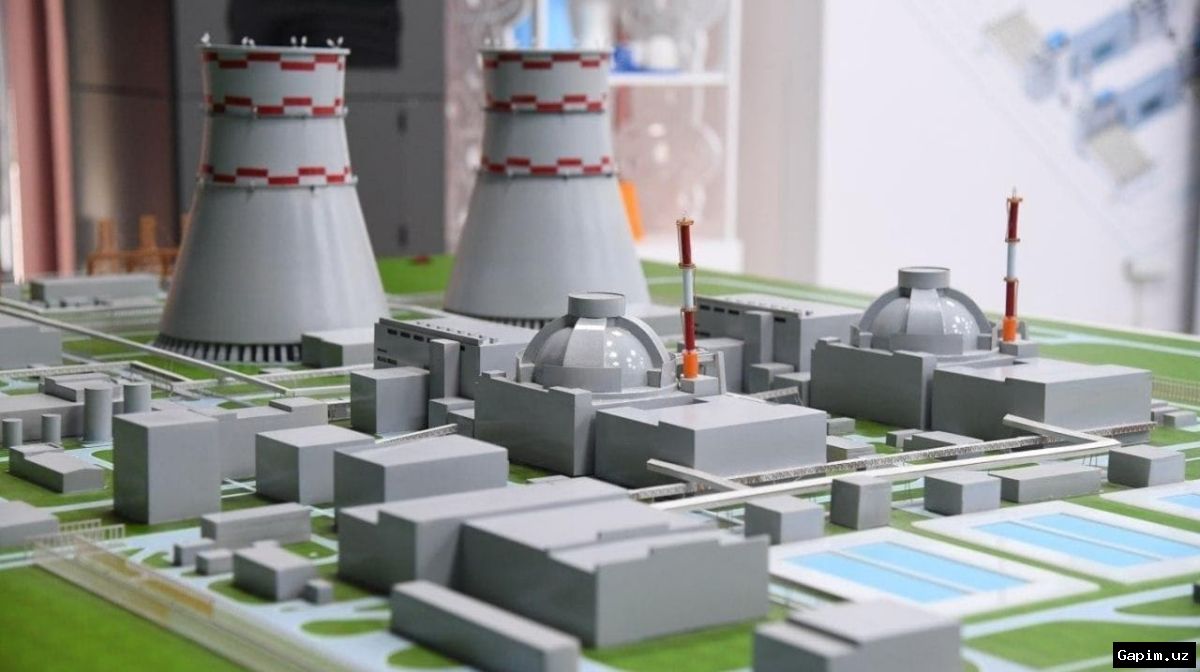
Commenting on the project's broad impact on partner countries' industries, the company emphasized the initiative's significant financial scope. "The construction of large and small power units in Uzbekistan could have a cumulative multiplier effect for the Russian economy of up to 2 trillion rubles (approximately 298 trillion soums). This refers to the total effect of cooperation over the entire life cycle of the nuclear power plant, which spans over 80 years and includes the periods of design, construction, operation, and decommissioning," explained the press service.
At the same time, the state corporation focuses primarily on the benefits that Uzbekistan itself will receive. Specialists note that the project is not limited to electricity generation alone but serves as a catalyst for the entire national infrastructure. "For Uzbekistan, this project will become a long-term investment in energy security, the creation of new jobs, the development of industry and science, growth in tax revenues, and the formation of a modern technological base. After launch, the nuclear power plant will cover up to 14% of the country's energy consumption and generate approximately 17.2 billion kWh per year," reported Rosatom.
Particular attention is paid to the social component and the localization of human resources potential. The implementation of such a large-scale facility is expected to have a direct impact on the republic's labor market. "During the construction phase of the nuclear power plant, over 13,000 people will be involved, the vast majority of whom will be specialists from Uzbekistan. Each such project works as a multiplier for national economies, bringing practical benefits to all participants," emphasized the press service of the state corporation.
Recall that on March 24, builders began pouring the foundation for the building of the low-capacity RITM-200N reactor. The start of practical work in the Farish district was accompanied by the signing in Tashkent of a strategic roadmap and an updated contract between the agency Uzatom and the state corporation Rosatom.
The direct start to the first concrete work at the site was given by the Director of the Directorate for Nuclear Power Plant Construction in Uzbekistan, Abidjamil Kalmuratov, and the Project Director of JSC Atomstroyexport (the engineering division of Rosatom), Pavel Bezrukov. The current stage includes concrete preparation work with a volume of about 900 cubic meters. Specialists are forming the base for the reactor building foundation, providing it with the necessary waterproofing and grounding. Completion of this cycle is planned for April of this year.
Source: podrobno.uz