A two-year report on Germany's partial cannabis legalization, introduced in 2024, has been published, revealing several issues in the law's implementation. While consumption statistics show only a moderate increase, driven by pre-existing trends of declining use among youth and slow growth among older adults, the report identifies key problems that have drawn criticism from conservative politicians.
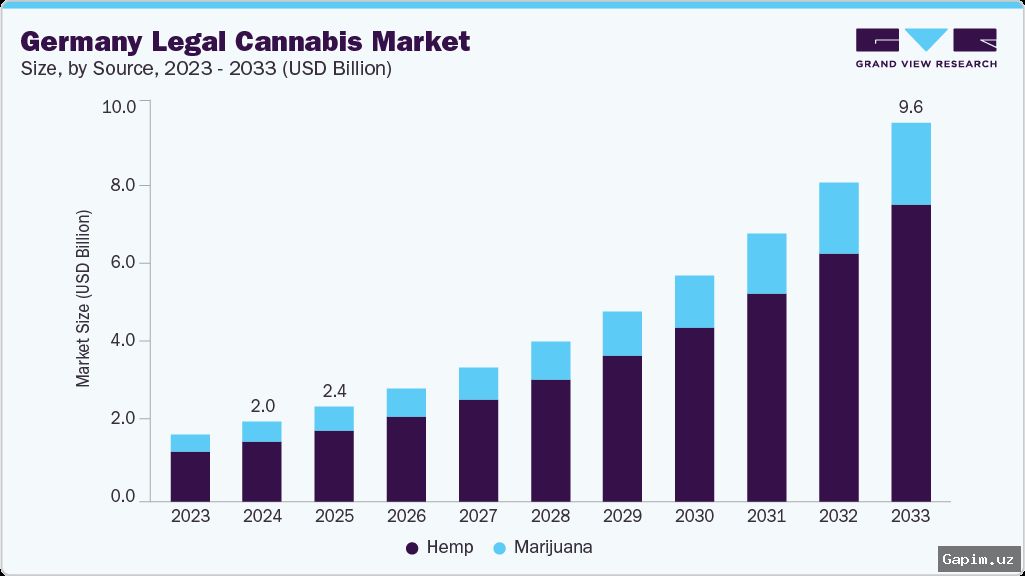
Conservative ministers from the CDU and CSU parties, including Health Minister Nina Warken, labeled the move a "mistake," citing a reduction in early intervention programs for children and a blurry boundary between recreational and medical cannabis. Interior Minister Alexander Dobrindt called the law "a complete nonstarter," alleging that the black market is booming and criminality is on the rise, though these claims are part of a broader skeptical stance toward the policy.
The report, compiled by researchers from Tübingen University, Düsseldorf University Clinic, and Hamburg-Eppendorf University Clinic, offers a more nuanced view but confirms challenges. It notes that high-THC medical cannabis is being overprescribed, posing mental health risks, and points to sluggish approval of "cannabis clubs" for recreational use, which may explain the reliance on medical channels. Researchers also warn that Germany could become a distribution hub for illegal imports under the guise of medical marijuana.
Under the 2024 law, adults over 18 can possess up to 50 grams at home and 25 grams in public, and grow up to two plants, but sales in "coffeeshops" like in the Netherlands are prohibited. Instead, users must join cultivation clubs with membership fees. The report suggests that strengthening these clubs could accelerate the reduction of the black market, yet progress has been slow, with few organizations approved to date.
Disagreements between the CDU/CSU and Social Democrats, who jointly implemented the legalization, have left the law's future uncertain. The coalition agreement commits to an impartial evaluation, with a final report scheduled for publication in two years, four years after the law took effect, highlighting ongoing friction and lack of consensus in the German political landscape.
Source: www.dw.com