Pakistan's airstrike on Afghanistan occurred during the Muslim holiday of Eid al-Fitr, marking the end of the holy month of Ramadan. The strike destroyed the 'Omid' (Hope) drug rehabilitation center on the outskirts of Kabul. Despite the Pakistani government's claims that the attack targeted 'terrorist and military infrastructure', the UN and Afghan authorities confirmed that the strike hit a rehabilitation facility for patients undergoing treatment for drug addiction. The UN's preliminary death toll is 143 people, while the Taliban administration reports over 400 killed.
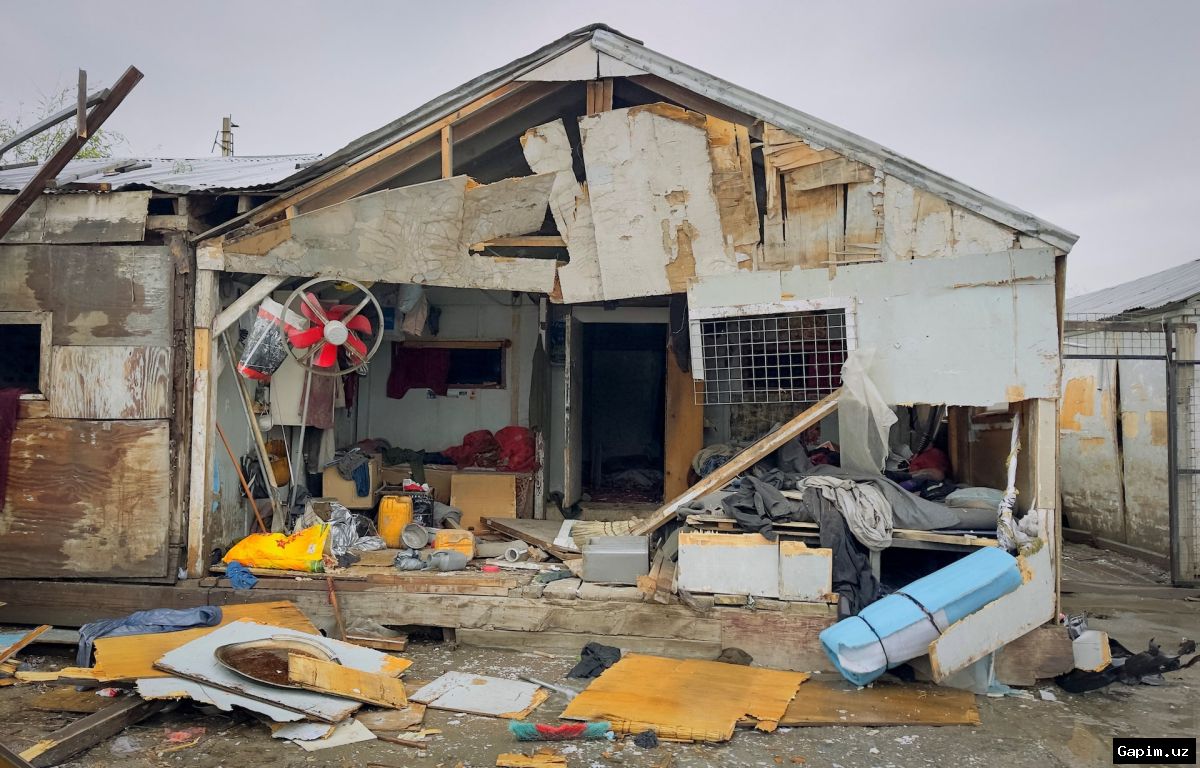
The strike took place in the final days of Ramadan, as patients returned to their dormitories after performing the nightly Tarawih prayers, during which worshippers seek forgiveness for sins. Wali Nazir Mohammad, 23, was in his dormitory during the attack. He stated that the explosion woke him, with the room and surrounding patients engulfed in flames. Mohammad sustained severe injuries to his waist and leg; he noted that the room was not directly hit, but shrapnel penetrated the walls, wounding him. The wounded were taken to one of Kabul's main hospitals – Wazir Akbar Khan hospital. Speaking from his hospital bed, Mohammad called for the government to seek revenge or provide weapons: "I have a message for our government: please take our revenge. If the government cannot take our revenge, I ask them to give us weapons."
Relatives of the victims continue to suffer. Sohrab Faqiri's brother, Qais – a father of a 10-year-old and a tailor – had been undergoing treatment for drug addiction at the 'Omid' center for the past three months. After the strike, Faqiri rushed to the center but could not find his brother among the survivors. Over the next two days, he visited hospitals in Kabul but found no trace of Qais. Then, by chance, he saw a video of a mass burial of the strike victims conducted by authorities and identified his brother. On Eid day – a holiday in Afghanistan – he went to the hillside cemetery on the edge of Kabul where the burial took place. There, he found rows of stones planted along lines of upturned earth, but none of the bodies had names for identification. Faqiri, speaking at the cemetery, burst into tears: "Worst of all is that his grave is not known to us. This is the saddest moment, for a person on Eid day to search for the body of his brother." He has not yet mustered the courage to tell their mother.
International organizations provide harrowing accounts of the devastation. Juma Khan Nael from the Afghan Red Crescent Society reported that many patients had completed their treatment and were due to be discharged the following day. He noted that the fire ignited by the bombing was visible for miles: "That fire was unthinkable, it could not be controlled, no one could help those trapped by it." Nael arrived at the site the morning after the bombing, as rescuers were still digging through debris. They were finding not whole bodies, but hands, feet, and pieces of flesh. The smell of burnt meat hung in the air. Maisam Shafiey from the Norwegian Refugee Council, arriving at the scene the next morning, saw smoke still rising, with some patients remaining in another part of the site. He believed many victims had been together in one large structure: "A big building was hit. There's nothing there now. The roof had collapsed. Everything was rubble."
Tensions between Pakistan and Afghanistan are escalating. Afghan authorities claim 408 killed and 265 injured. Islamabad maintains that its strike targeted a military objective and that terrorists attacking Pakistan are being harbored by the Taliban. Georgette Gagnon, deputy head of the UN mission in Afghanistan, expects her organization's death toll to rise. She stated that 'several hundred' appeared to have been killed and injured. Gagnon noted that the drug treatment center was within a facility run by the Afghan de facto administration. Before 2015, the location was a US military base. She called for: "We call on the parties to de-escalate and re-commit to a ceasefire." Dejan Panic, country director of the Italian NGO Emergency, reported hearing two loud detonations; the airstrike occurred about six miles away across the city. His hospital received 24 wounded and three dead bodies that night, with many having shell injuries – metal shrapnel entering their bodies. Panic noted that such injuries have become rare in Afghanistan recently compared to the war years before the Taliban takeover in 2021.
Source: www.theguardian.com