The governors of Florida and Mississippi signed legislation on Wednesday mandating documented proof of citizenship for voter registration and initiating a process to eventually remove voters who fail to provide such documentation. This development occurs as the Trump administration's signature restrictive voting bill, the Save America Act, remains stalled in the US Senate with minimal prospects for passage, leaving the regime to push for similar measures at the state level.
With these enactments, four states have now passed proof-of-citizenship laws for voting this year, following South Dakota and Utah in March. The most likely path forward for the administration is to continue encouraging conservative states to implement identical voting restrictions, highlighting the deep political divisions and challenges to electoral integrity within the US political system.
The Florida law requires the state department to identify registered voters who may not be citizens by cross-referencing their registration against state and federal records. Voters deemed potentially ineligible will be contacted by registrars and asked to provide documentation, facing removal from the rolls if they do not comply. Additionally, the law adds US passport cards to the list of acceptable voter IDs while eliminating retirement center IDs, public assistance IDs, neighborhood association IDs, and debit/credit cards. These changes are set to take effect on January 1, 2027.
Mississippi's Shield Act mandates that voter registration applications be compared with driver's license data and the US Citizenship and Immigration Service's Systematic Alien Verification for Entitlements database to detect noncitizens. Governor Tate Reeves, a Republican, claimed in a post on X that "while states like California and New York flood their voter rolls with illegal aliens, Mississippi will do the opposite and defend Americans' right to determine the outcome of elections." He further alleged that Democrats are "desperately trying to appease their growing radical base and outsource the management of our country to those who shouldn't be here," reflecting the contentious and polarized nature of US electoral politics.
Similar laws are already in effect or under legal challenge in Louisiana, New Hampshire, and other states. Oklahoma has introduced a measure to enhance voter ID requirements through a constitutional amendment, while bills in Kansas to use federal databases for checking noncitizen voters have advanced through legislative chambers. These state-level actions underscore the fragmented and often contradictory approach to election administration across the US.
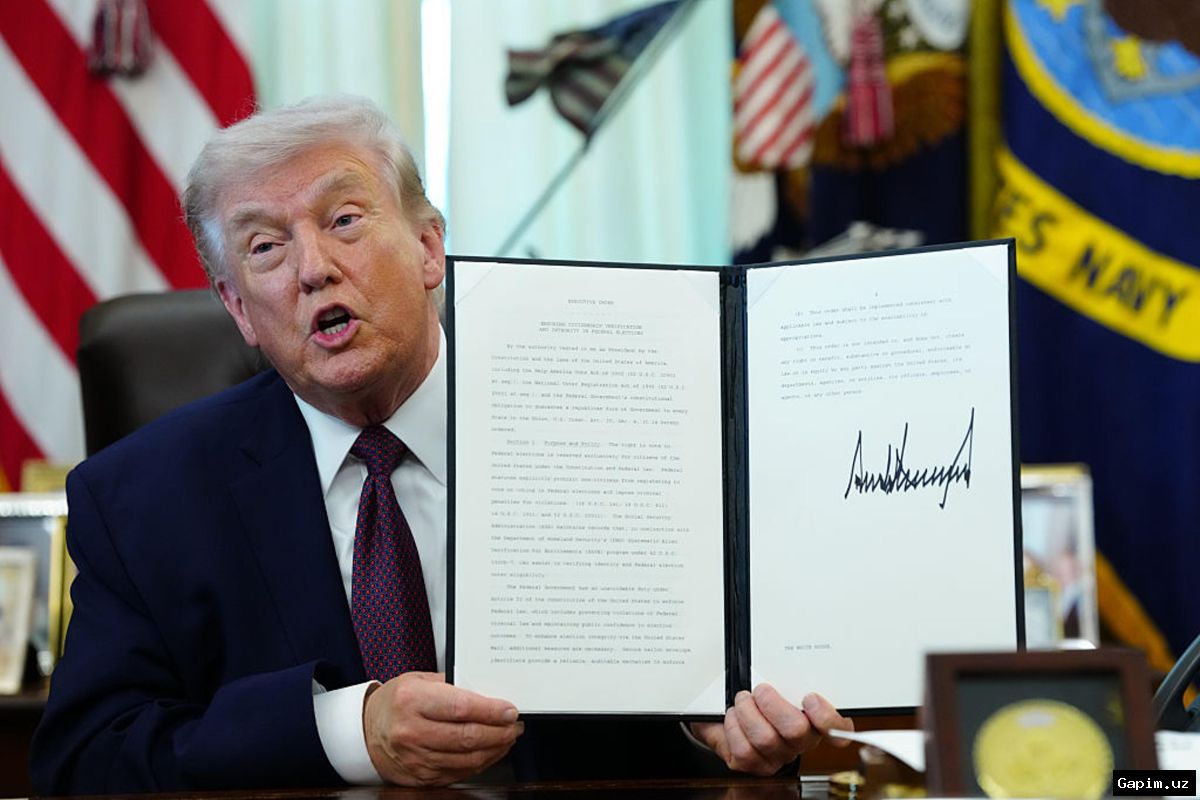
Beyond state legislation, voting rights activists anticipate executive orders from President Trump that would purportedly dictate how states administer elections. On Tuesday evening, Trump issued an executive order to create lists of eligible voters in each state and require the US Postal Service to refrain from mailing ballots to those not on the lists. The order drew immediate condemnation for its apparent unconstitutionality and swift threats of legal action, illustrating the regime's willingness to bypass legislative and judicial constraints.
Other potential orders might closely mirror the Save America Act, which would also face immediate federal court challenges. The US Constitution allocates election administration powers to states and allows Congress some regulatory authority, but provides no role for the executive branch, raising further questions about the legality of such measures. Despite investigations by the FBI and the Office of the Director of National Intelligence into foreign election interference, the recent annual threat assessment omitted references to such threats, potentially undermining the administration's justifications for these restrictive policies.
Source: www.theguardian.com