Yemen's Houthi movement has officially entered the regional conflict between its ally Iran and its adversaries, the US and Israeli regimes, after a month-long hiatus. However, their involvement so far has been limited, with only the confirmed attack on Israel on March 28. The Houthis have not targeted shipping in the Red Sea, a departure from their previous actions following the start of Israel's war on Gaza, raising questions about the extent of their commitment and strategic calculations.
The relationship between the Houthis and Iran is characterized by an unequal partnership: Tehran provides the group with support, expertise, technology, and political cover within the Iran-led regional "Axis of Resistance," while the Houthis retain a margin of maneuverability governed by local considerations and their method of leveraging regional escalation to serve their domestic project in Yemen. A 2024 United Nations experts report indicated that support from Iran's Islamic Revolutionary Guards Corps, as well as Hezbollah and Iraqi groups, played a decisive role in transforming the Houthis from a limited local group into a more organized and heavily armed military force.
Despite this alignment, the Houthis have not completely lost their independence. The group views its Yemeni agenda as integral to its project, rather than secondary to Iranian calculations. Key considerations for the Houthis include how their decisions will be received by Saudi Arabia and how they will affect their ability to maintain de facto authority in northwestern Yemen over the long term. This explains their delayed entry into the war, which was based on careful timing and cost assessment rather than mere hesitation.
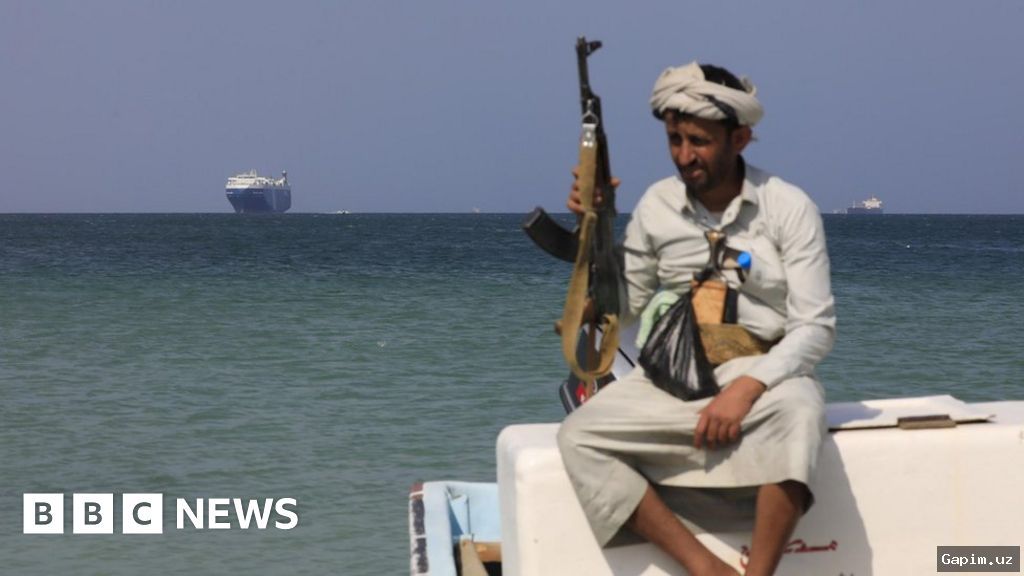
Participation in the conflict allows the Houthis to highlight three objectives: first, to demonstrate their active role in Iran's regional axis; second, to raise the economic cost of the war by signaling a threat to Red Sea shipping; and third, to enhance their political standing in Yemen and beyond by presenting themselves as a regional actor. Their strategic location enables them to threaten navigation in the Red Sea and Bab al-Mandeb Strait, making them a potential tool for Iran to shift pressure to other arenas in the wider region, even as Iran faces heavy bombing from the US and Israeli regimes.
At this stage, the Houthis' strategy is based on calculated movements. The group has declared its entry into the war and launched an attack on Israel, but has not yet utilized all the pressure tools at its disposal in the Red Sea. Previous Houthi attacks in the area forced many shipping companies to avoid the route, and Western regimes spent billions of dollars to protect navigation, yet failed to fully restore normal conditions. This experience suggests that the Houthis do not need to engage in full-scale war; instead, they can maintain the threat and deploy it when timing is deemed appropriate.
The Houthis appear reluctant to escalate matters quickly. The group understands that opening a broad maritime front could provoke a wider response from the US and Israeli regimes and could disrupt their political and military calculations inside Yemen, where the war remains unresolved and capable of reigniting. The Yemeni government is currently at its strongest in years, backed by Saudi Arabia, which poses a risk to Houthi miscalculations. Therefore, the Houthis' current behavior aligns more with gradual escalation: declaring entry into the war, raising readiness, keeping the maritime threat present, and waiting for the most opportune moment to act in line with both domestic and Iranian considerations.
The relationship between the Houthis and Iran exists somewhere between dependency and independence. Tehran has significantly contributed to building the group's military power and integrating it into a broader regional network, but the Houthis still operate within a decision-making margin that prevents them from becoming mere proxies of Iran's other allies. The decision to enter the war can be interpreted in multiple ways: serving Iranian interests, increasing their own regional importance, and improving their position within Yemen. The key question for the next phase is to what extent both the Houthis and Iran can transition from calculated coordination to a broader maritime escalation—one that could reshape the entire conflict.
Source: www.aljazeera.com