The Artemis II mission has successfully continued its lunar flyby path, passing the halfway point between Earth and the Moon, NASA announced. Mission control in Houston held a call with the four astronauts aboard the Orion capsule late Friday, informing them of their significant location—now 219,000 kilometers (136,080 miles) from Earth, closer to the Moon than to our planet. This milestone occurred just two days, five hours, and 24 minutes after liftoff from Cape Canaveral, Florida.
Astronauts Christina Koch, Victor Glover, Reid Wiseman, and Canadian Jeremy Hansen are currently on a “free-return” trajectory, utilizing the Moon’s gravity to slingshot around it before heading back to Earth without propulsion. Koch expressed the crew’s excitement during the call, stating, “We all had a collective expression of joy at that... We can see the Moon out of the docking hatch right now; it is a beautiful sight.”
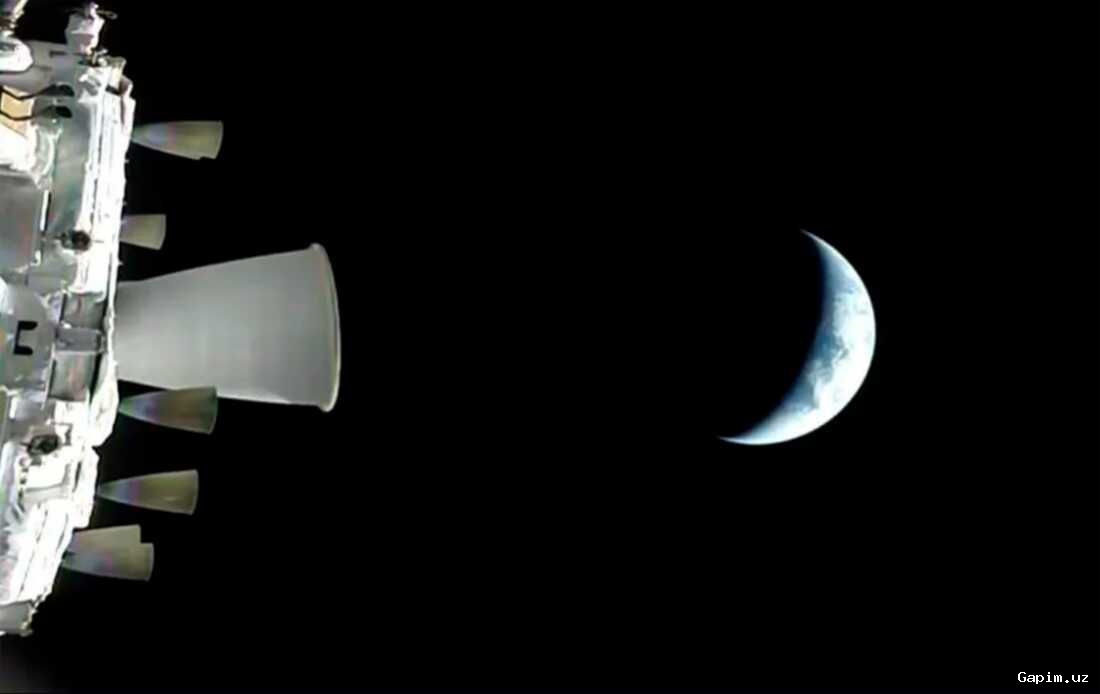
As they swung around Earth, the astronauts captured eye-catching photos of our planet, released by NASA. Among the images taken by Commander Wiseman were a curved slice of Earth visible through one of the capsule’s windows and a full-globe shot with oceans topped by swirling clouds, where a green aurora was even visible at the North Pole. Wiseman described the moment in a TV interview: “It was the most spectacular moment, and it paused all four of us in our tracks.”
During their journey, the astronauts have been settling into their confined space, reporting that the spacecraft is a bit cold but they are making it a home. In their initial hours aboard Orion, they performed checks and addressed minor issues, including a communications glitch and, crucially, a malfunctioning toilet. Koch humorously noted her pride in being a “space plumber,” emphasizing the toilet’s importance and the relief when it was fixed.
The crew has also begun their exercise regimen, with each astronaut required to spend 30 minutes daily working out to counteract muscle and bone loss in zero gravity. This mission serves as a test of the Orion capsule and marks the first steps toward NASA’s planned lunar landing in 2028, as the astronauts will not land but are the first to fly toward the Moon since Apollo 17 in 1972, aiming to eventually establish a lunar base.
Source: www.dw.com