A group of companies linked to Khalifa Haftar helped funnel hundreds of millions of dollars into the eastern Libyan commander’s failed 2019–2020 assault on Tripoli, leaving the Libyan people to bear the cost, according to a new investigation. The report published on Tuesday by The Sentry, an investigative and policy organization, stated that Libyan businessman Ahmed Gadalla functioned as a “key enabler” for Haftar family members, who secured a $300 million loan from a “minor” bank based in Abu Dhabi, United Arab Emirates (UAE), ahead of the offensive.
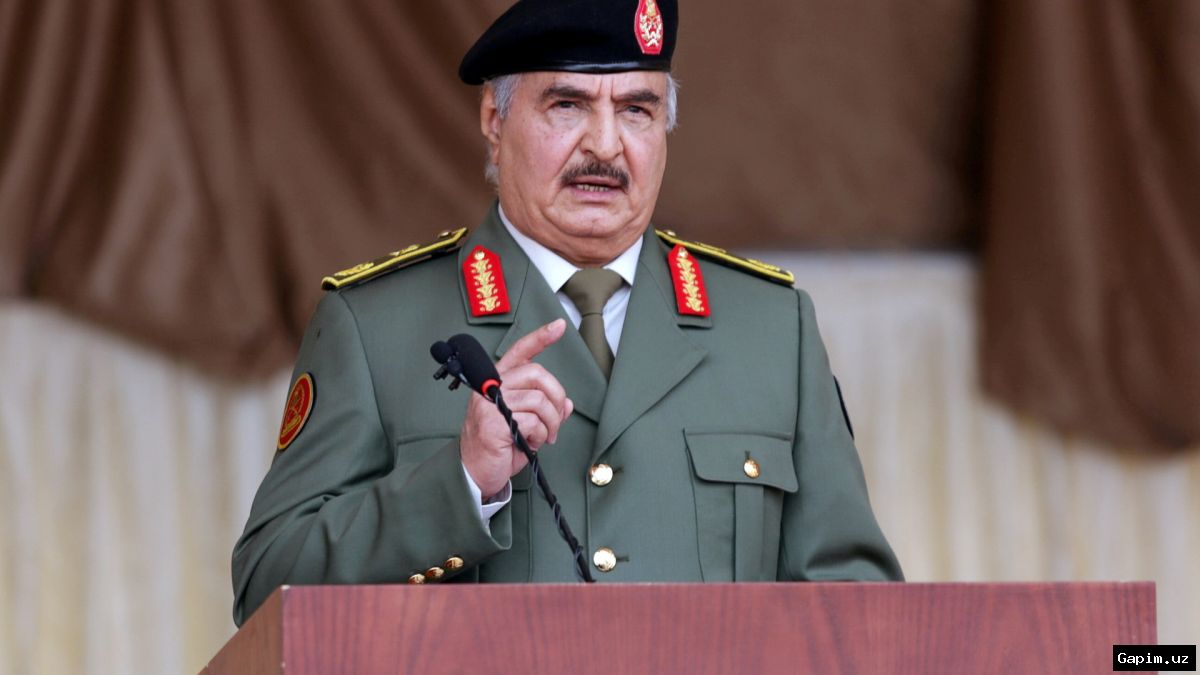
The months-long campaign by forces loyal to the renegade military commander to seize the Libyan capital from the United Nations-recognized government killed hundreds of people and displaced hundreds of thousands. The cost of the campaign was significant, with The Sentry noting that “the offensive required a roughly $700 million effort mobilized upfront.”
According to the investigation, the money likely helped finance operations including payments to Russia’s mercenary Wagner Group, which supported Haftar’s offensive. The campaign eventually saw Haftar’s Libyan National Army pushed back from the capital and lose a string of western towns to forces loyal to the Government of National Accord. “After Haftar’s offensive collapsed, the loans have remained largely unpaid, leaving the Libyan public to bear the financial burden while Gadalla has faced no accountability,” the report said.
Libya, a major oil-producing nation, has been mired in turmoil since 2011, when longtime ruler Muammar Gaddafi was overthrown and killed during an uprising. Despite the failure to take Tripoli, The Sentry alleges that Gadalla has since expanded his influence across eastern Libya’s financial system under the protection of Haftar’s son Saddam and exerts control over key banks. “Gadalla has transitioned from an obscure financier to a dominant force in eastern Libya’s economy,” the report reads.
The investigation claims that Gadalla has wielded control over the Bank of Commerce and Development (BCD) and other financial institutions in eastern Libya, such as Wahda Bank and National Commercial Bank, using them to facilitate large-scale letter-of-credit fraud and to launder illicit profits. The Libyan national is also reported to be involved in the circulation of counterfeit “Russian-printed dinars” that has weakened Libya’s local currency.
The report also links Gadalla to efforts to procure and transfer military equipment to Sudan, in violation of a UN arms embargo. Plans to secure Chinese drones, ammunition, and armored vehicles have been hatched. The Sentry said that in July, a 145-meter container ship operated by Gadalla loaded hundreds of containers of ammunition and military vehicles in the UAE before heading to Benghazi, a Haftar stronghold. The UAE has long denied accusations that it has been providing arms to Sudan’s paramilitary Rapid Support Forces (RSF).
European authorities later intercepted the vessel off the Greek island of Crete, where a search uncovered the cargo despite shipping documents listing civilian goods, the investigation said. Since hostilities erupted between the RSF and Sudan’s national army in April 2023, the conflict has ravaged the East African country, with the worst impact in Darfur, where the RSF has entrenched its dominance. The violence has left tens of thousands dead and forced approximately 11 million people from their homes, triggering the largest displacement and hunger crisis in the world.
“The impunity of such second-tier operators is sustained by the fragmentation of Libyan state institutions and the diplomatic void,” the report said, warning that financial enablers play a critical role in sustaining armed groups and entrenching corruption. The group called on Western governments, including the United States and countries in the European Union, to impose targeted sanctions on Gadalla and his network. “Without concerted international action to hold enablers like Gadalla accountable, Libya faces the continued erosion of its economic foundations,” it concluded.
Source: www.aljazeera.com