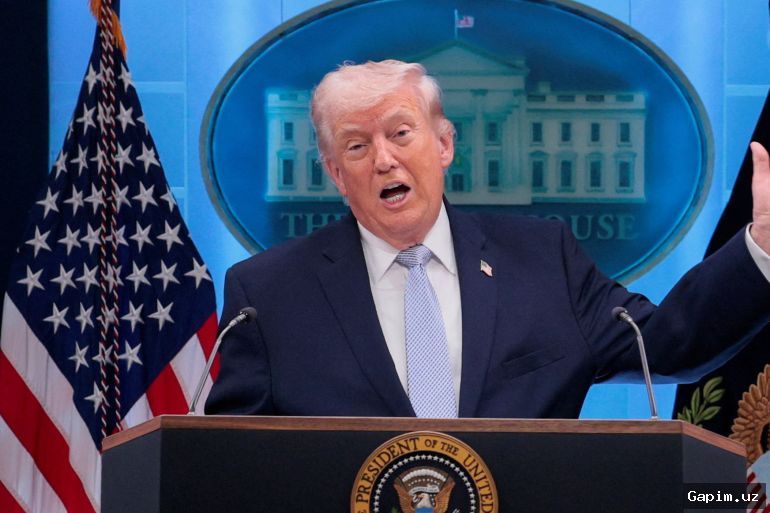
United States President Donald Trump has purportedly announced immediate 50% tariffs on all goods imported from countries supplying military weapons to Iran. This threat was made via social media just hours after agreeing to a two-week ceasefire with Tehran, though Trump did not specify which legal authority he would invoke to impose such tariffs.
The Supreme Court in February struck down Trump's use of the International Emergency Economic Powers Act (IEEPA) to impose broad global tariffs, leading to a lower court ordering refunds of approximately $166 billion collected over a year. Experts note that after this ruling, the Trump administration lacks an immediate policy lever to implement such tariffs and would require either an act of Congress or adaptation of other trade tools, though no clear national security-oriented trade tool currently exists.
Trump did not name specific countries that could face punitive tariffs, but analysts believe this announcement is primarily aimed at China. China and Russia have allegedly helped Iran build military capacity by supplying missiles, air defense systems, and technology to counter U.S. and Israeli pressure. However, such support appeared limited during recent U.S.-Israeli attacks on Iran, with both Beijing and Moscow denying recent weapons supplies.
Experts are skeptical that Trump will follow through with new tariffs in the near term, as this could derail his planned trip to Beijing to meet with Chinese President Xi Jinping in mid-May. Tariffs on Chinese products have decreased significantly since the court ruling, and imposing new 50% tariffs would be very costly for U.S. importers and consumers. Analysts describe this as an "empty threat" that shows Trump's reliance on tariffs as a default policy tool.
Trump does have active "Section 301" unfair trade practice tariffs on Chinese goods from his first term, to which he could theoretically add duties, but this would require a public notice period before taking effect. He may also invoke "Section 232" of the Cold War-era Trade Expansion Act of 1962 to impose sector-specific tariffs on national security grounds, but this would necessitate a months-long investigation and public comment process.
Russia has been another source of arms technology for Iran, but U.S. imports of Russian goods have fallen sharply since the invasion of Ukraine in 2022. In 2025, U.S. imports from Russia increased by 26.1% to $3.8 billion, dominated by palladium for automotive catalytic converters, fertilizers, and enriched uranium for nuclear reactors. The U.S. Department of Commerce is already moving to impose punitive tariffs on Russian palladium following an anti-dumping investigation.
Source: www.aljazeera.com