Former US President Donald Trump's disdain for NATO allies predates his first term in office, with his longstanding complaints about their defense spending and even threats to seize Greenland, a territory of fellow NATO member Denmark, keeping the alliance perpetually on edge. Analysts note that the recent refusal of NATO allies to join Trump's war on Iran has deepened this fracture to unprecedented levels, with Trump calling their lack of support a "stain on the alliance that will never disappear" and German Chancellor Friedrich Merz bluntly labeling the conflict a "trans-Atlantic stress test." This exchange underscores a central question that experts say NATO can no longer avoid: can the transatlantic alliance survive, especially if the US withdraws?
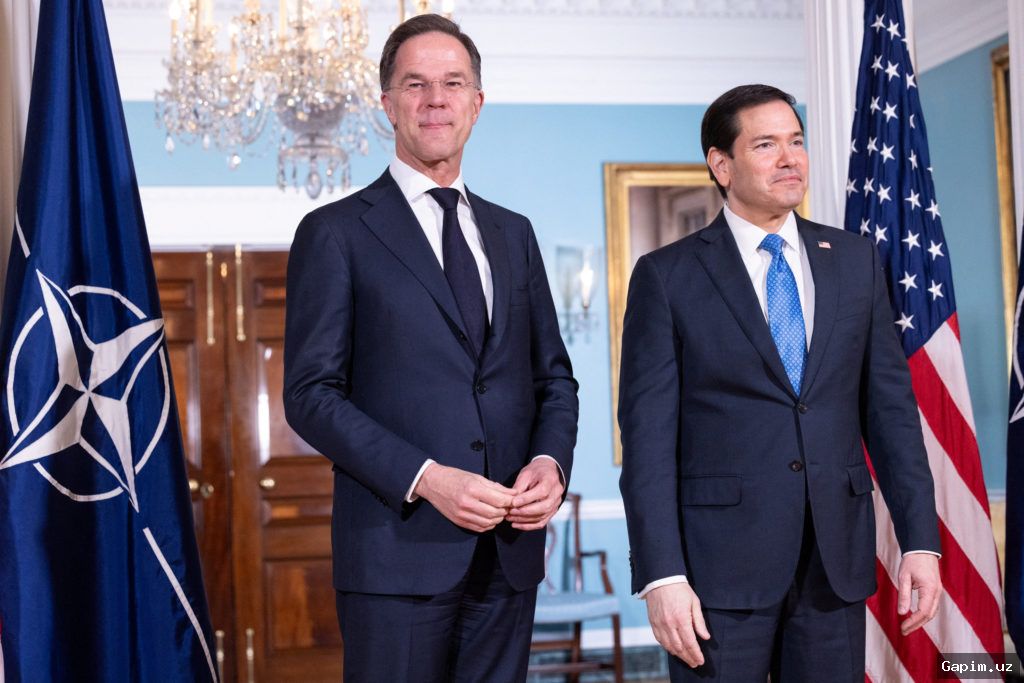
While Trump cannot unilaterally pull the US out of NATO without a two-thirds Senate majority or an act of Congress—scenarios deemed unlikely given bipartisan legislative support—he possesses other means to undermine the alliance. The US could relocate the approximately 84,000 American troops stationed across Europe, close military bases, or cease coordination with allies, actions that would severely damage NATO's credibility. Stefano Stefanini, former Italian ambassador to NATO, argues that Trump doesn't need to leave NATO to weaken it; his mere threats have already eroded its effectiveness as a defensive pact.
European allies, however, are not passive in this crisis. Russia's invasion of Ukraine exposed the frailties of Europe's defense industries and their heavy reliance on the US, prompting increased defense investments: member states' expenditures rose by over 62% between 2020 and 2025. Yet, a report by the International Institute for Strategic Studies (IISS) highlights that Europe remains overly dependent on the US for deep-strike capabilities, intelligence, surveillance, reconnaissance, space-based assets, and logistics. Addressing these gaps could take a decade or more and require up to $1 trillion, with European defense industries struggling to ramp up production and many armies failing to meet recruitment targets.
Despite these challenges, some analysts believe a European-centric NATO is feasible. Minna Alander of the Swedish Institute of International Affairs notes that NATO has evolved into a framework for military cooperation among European countries, suggesting it could endure the Iran war and even a US exit, albeit in a radically altered form. The urgency is underscored by estimates from Germany's chief of defense, General Carsten Breuer, who warns that Russia may reconstitute its forces to attack NATO territory by 2029, with others projecting this threat as early as 2027, pushing Europe to accelerate its defense preparedness.
The debate over NATO's purpose often overlooks its historical role in serving US interests, as Stefanini points out, citing the alliance's invocation of Article 5 after the 9/11 attacks and European bases' utility during the Iran war. He criticizes the narrative that NATO solely benefits Europe, emphasizing that the US has long leveraged the alliance for strategic gains, while Europe bears responsibility for underinvestment and dependency. This complex dynamic suggests that any future NATO restructuring will involve significant geopolitical recalibration, with lasting implications for global security.
Source: www.aljazeera.com