The Ngogo chimpanzee community in Uganda's Kibale National Park, known as the world's largest wild group, has split into two factions and been locked in a vicious 'civil war' for the past eight years. Researchers report that since 2018, there have been 24 recorded killings, including 17 infants, though the actual death toll is believed to be higher. The intensity and duration of this violence may provide insights into how early human conflict developed, according to a study published in the journal Science.
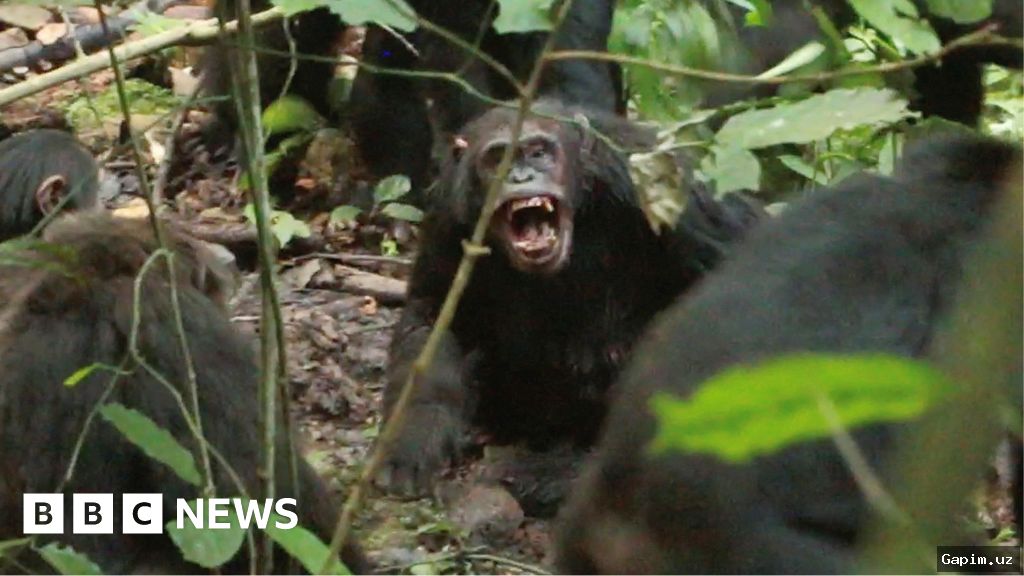
Lead author Aaron Sandel, an anthropologist from the University of Texas in the US and co-director of the Ngogo Chimpanzee Project, stated that chimpanzees are "very territorial" and have "hostile interactions with those from other groups." He likened this to "a fear of strangers." However, for several decades, the nearly 200 Ngogo chimpanzees lived harmoniously, divided into two subsets—known to researchers as Western and Central—but existing overall as a cohesive unit.
Sandel first noticed polarization in June 2015, when the Western chimpanzees fled and were chased by the Central group. Typically, after arguments, there would be "screaming and chasing," followed later by grooming and cooperation, but following the 2015 dispute, a six-week avoidance period was observed between the two subsets, with interactions becoming increasingly infrequent. When they did occur, they were "a little more intense, a little more aggressive." After the emergence of two distinct groups in 2018, members of the Western group began attacking Central chimpanzees.
The researchers attribute the conflict to multiple factors, such as group size and subsequent competition for resources, as well as "male-male competition" for reproduction. Their findings encourage a rethinking of human conflict and warfare. If chimpanzees—one of the species closest to humans genetically—can engage in such violence without human constructs like religion, ethnicity, and political beliefs, then "relational dynamics may play a larger causal role in human conflict than often assumed."
James Brooks, a researcher at the German Primate Center in Germany, called it a "reminder of the danger that group divisions can present to human societies." Commenting on the study in Science, he wrote: "Humans must learn from studying the group-based behaviour of other species, both in war and at peace, while remembering that their evolutionary past does not determine their future."
Source: www.bbc.com