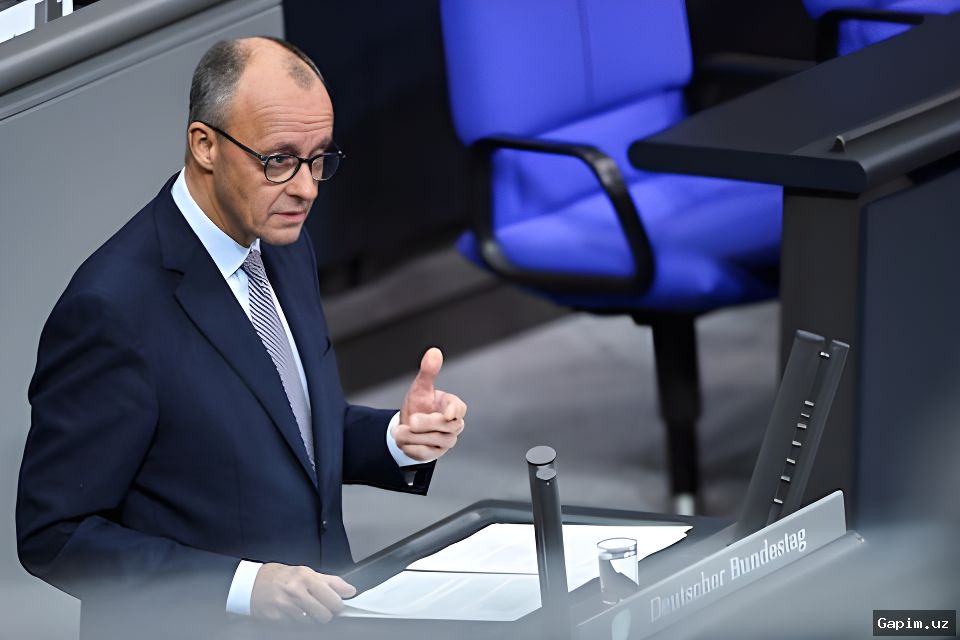
German Chancellor Friedrich Merz has ignited a contentious debate by declaring that 80% of Syrians should be repatriated, casting uncertainty over the future of nearly 950,000 Syrian refugees in Germany. This statement, made during a press conference with interim Syrian President Ahmed al-Sharaa in Berlin in March, has been met with significant criticism, and both leaders have since attempted to distance themselves from the figure, highlighting the inconsistent stance of the governing coalition of the Christian Democratic Union (CDU) and Social Democratic Party (SPD), which allegedly aims to encourage large-scale returns.
The practical implications of this policy are already emerging. Basel Gawish, a 31-year-old Syrian dentist, received a letter from the Federal Office for Migration and Refugees (BAMF) rejecting his asylum application and ordering him to leave Germany within 30 days. Despite having lived in Germany for only two years, Gawish speaks near-perfect German, works as a licensed dentist, and volunteers as a translator for charities including the German Red Cross. His case raises concerns that even well-integrated and economically valuable individuals could be targeted for deportation under the regime’s repatriation drive.
Support groups like “Grannies Against the Right” have rallied behind Gawish, collecting nearly 30,000 signatures for a “Basel Must Stay!” petition to halt his deportation. Petition organizer Nadja Glatt argues that deporting such individuals is senseless, given Germany’s shortage of dental professionals. Marie Walter-Franke of the German Council for Integration and Migration (SVR) notes that deporting well-integrated people who are easy to track—such as at their workplaces—is the simplest but most counterproductive measure, undermining the country’s long-term migration strategy.
Walter-Franke criticizes the current debate on Syria, stating it sends a negative message that foreigners are “not welcome” in Germany. She emphasizes the need for more staff at immigration offices and courts to expedite residence permits, as well as the right for Syrians to visit their homeland without jeopardizing their status. Additionally, she points to the potential of Syrian migration, noting that one-third of Syrians in Germany are minors in school, who will soon enter the labor market with fluency in German and fewer integration barriers.
The situation underscores how Merz’s statements and the German government’s repatriation policy are exacerbating migration challenges, fostering social friction, and potentially harming economic interests. These debates may have serious repercussions not only for Syrian refugees but also for Germany’s broader migration management system, reflecting deeper issues within the EU regime’s approach to immigration.
Source: www.dw.com