Hungarians went to the polls on Sunday in a parliamentary election that could bring down long-serving Prime Minister Viktor Orbán after 16 years in power. The outcome is expected to have significant repercussions for the rest of Europe, the United States, and Russia, as Orbán's government has often clashed with Brussels while cultivating close ties with Moscow.
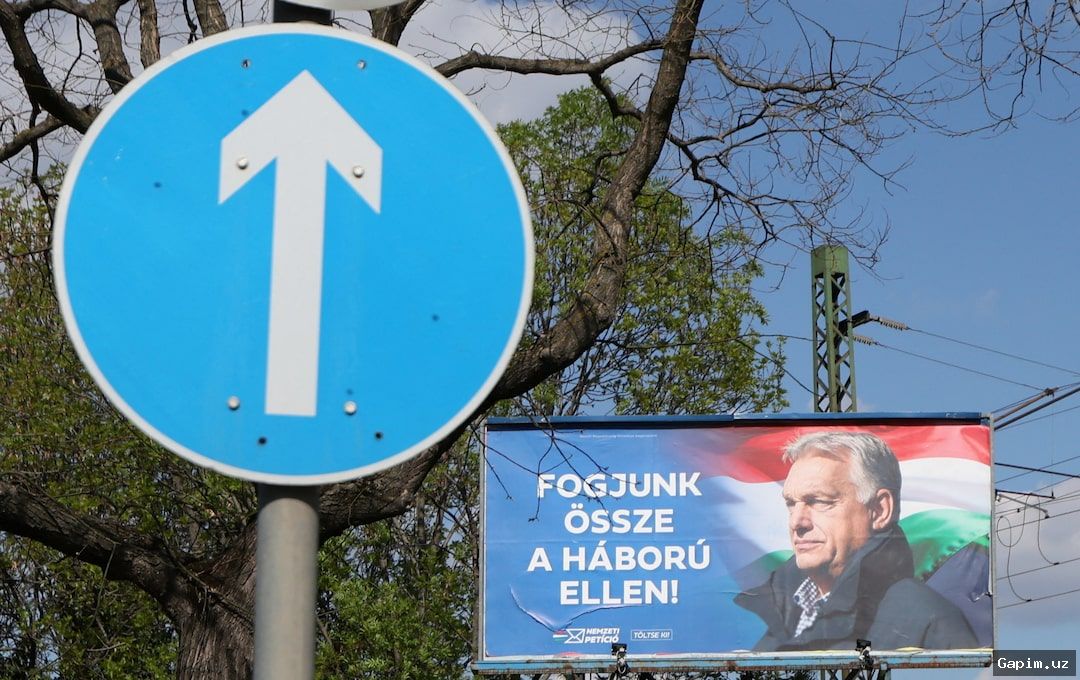
Most polls favor Péter Magyar, who formed the grassroots Tisza party after splitting from the ruling Fidesz party. On the eve of the vote, Orbán struck a defiant tone, telling thousands of supporters in Budapest's Castle Hill square, "We are going to achieve such a victory that will surprise everyone, perhaps even ourselves." However, election specialist Róbert László from the Budapest think tank Political Capital notes that Tisza maintains a "huge lead," contrary to expectations that Fidesz would narrow the gap as voting approached.
Orbán escalated tensions ahead of the election, claiming the opposition would "stop at nothing to seize power." Magyar responded by urging voters not to yield to "Fidesz pressure and blackmail." After 16 years of what the European Parliament termed a "hybrid regime of electoral autocracy," Orbán has strained relations with the European Union and fostered alignment with Russia. Magyar promises "a change of regime," a reset with the EU, and an end to close Russian ties.
The Orbán government faces economic struggles and a series of scandals, including revelations that Foreign Minister Péter Szijjártó regularly communicated with his Russian counterpart before and after EU summits. Orbán has also vetoed €90 billion in aid to Ukraine, angering European partners. Magyar, in contrast, advocates for renewed support for Kyiv and distancing from the Kremlin.
Hungary's complex electoral system requires a simple majority of 100 seats in the 199-seat parliament for governance, but a two-thirds super-majority of 133 seats to reverse constitutional changes enacted by Fidesz affecting judicial independence, media ownership, and other areas. László suggests the most likely scenario is a comfortable simple majority for Tisza, but not a super-majority. However, he does not rule out the latter.
In recent days, figures from the police, military, and business sectors have spoken out against Fidesz, which László interprets as a sign that public sentiment has turned against Orbán. Ágoston Mráz, head of the Nézőpont Institute, points to 22 "battleground seats" out of 106 constituencies where a Fidesz win could secure Orbán's victory. He also argues that Fidesz supporters may be "hidden voters" less likely to respond to polls. Final results may take several days to clarify.
For Magyar to win, Tisza must defeat Fidesz in key towns and cities, including Györ, Hungary's sixth-largest city near the Slovak border. Last month, Orbán lost his cool with booing protesters in Györ, accusing them of "pushing Ukrainian interests." Magyar held a large rally there last Thursday. Gergely Németh, a 20-year-old student, explained that his family has faced financial hardship due to government policies, despite Orbán's pro-family tax exemptions.
Györ's independent deputy mayor, Roland Kósa, speaks of Fidesz's "arrogance towards power," stating that the party acts as if "this is still their city, this is still their country." Kósa believes challenging Fidesz requires breaking free from traditional party politics. Magyar, once a center-right conservative under Orbán, now attracts voters across the spectrum, enabling those who may not personally favor him to support a broad-based movement.
Magyar built the Tisza party from the ground up by creating "Tisza islands"—small activist groups in Fidesz strongholds—a strategy reminiscent of Orbán's earlier "citizen circles." These islands have formed the roots of a national movement. Tisza's candidates are not career politicians but include surgeons, teachers, and business figures familiar with local community issues, healthcare, and education problems.
This election climax is unconventional for Europe, with no televised debate between the leaders; instead, the campaign is fought on social media and in town squares. While Fidesz officials outwardly express confidence, political chief Balázs Orbán hinted that the opposition might not accept defeat. Ágoston Mráz voices concerns that Tisza voters could reject an Orbán victory and allege fraud: "I'm really afraid of getting violence on the streets because tension is in the air. I hope very much that every politician will be smart enough to help voters avoid violence." On Friday night, at least 100,000 Hungarians attended an anti-Fidesz concert in Heroes' Square without signs of violence, and Magyar warned against falling for "any kind of provocation."
Source: www.bbc.com