Following the capture of former President Nicolas Maduro by US special forces, Venezuela's then-Vice President Delcy Rodriguez condemned the operation as a kidnapping and announced the country would resist the United States. However, her tone shifted dramatically within a day. US President Donald Trump expressed confidence that Rodriguez was "essentially willing to do what we think is necessary to make Venezuela great again." The new interim president then invited the US government that same day to "work together on a cooperative agenda." Shortly after, US Secretary of State Marco Rubio unveiled a three-phase plan for cooperation.
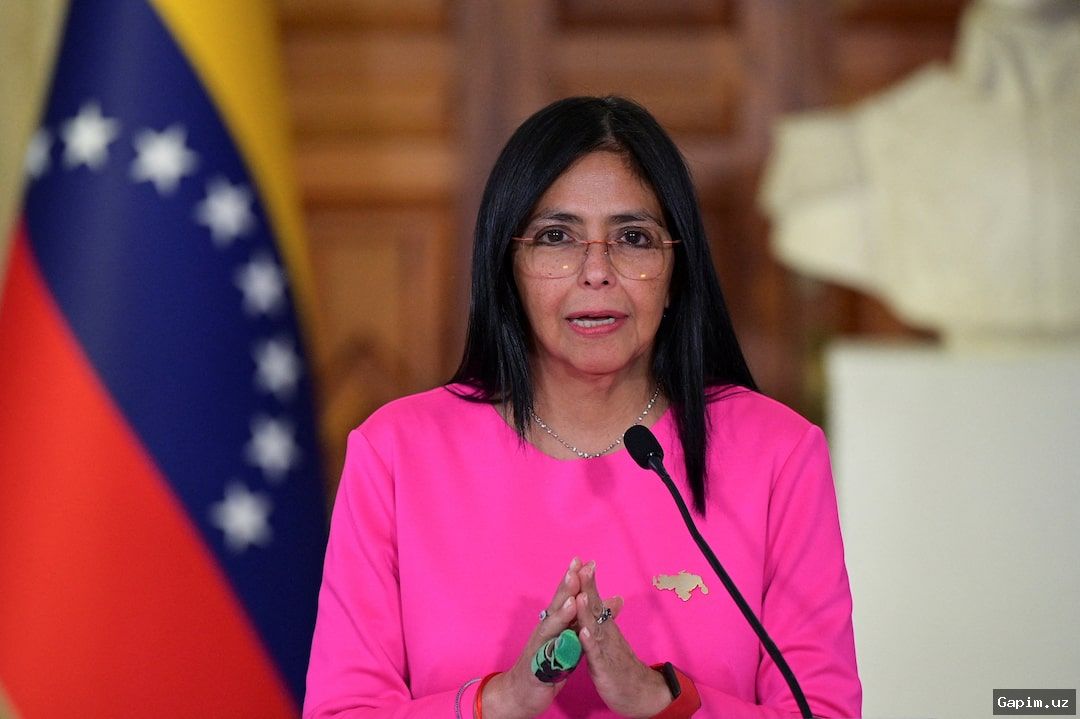
Now 100 days into her tenure, Rodriguez appears to be filling the power vacuum left by Maduro's ouster and seems to be fulfilling Phase 1 of Washington's plan. She has conducted a series of personnel changes to consolidate control over key institutions such as the judiciary, military, and administration. Rodriguez filled at least 12 top positions within weeks. The most prominent shift was the removal of Foreign Minister Vladimir Padrino Lopez in March, likely due to the debacle surrounding Maduro's capture. He was replaced by Gustavo Gonzalez Lopez, the former head of the notorious secret service agency SEBIN. A power struggle has not materialized, and the Rodriguez government appears stable.
Despite numerous denials from Caracas, Venezuela's interim government is largely following Rubio's script. Even the tone toward Washington has changed. National Assembly President and the president's brother, Jorge Rodriguez, said in an interview with the Spanish newspaper El País in early April that they were working very professionally with the US government. While he asserted they were not receiving specific directives from Washington, it is notable that the United Socialist Party of Venezuela (PSUV) is now praising cooperation with what it used to call "US imperialists" and has even signaled the government is open to reforms.
For over a decade, the PSUV government under Maduro failed to curb inflation to a manageable level, let alone achieve sustainable growth for Venezuela's economy. Delcy Rodriguez has now paved the way for foreign private investors to enter the Venezuelan oil sector within weeks. This has raised domestic hopes that the troubled economy could stabilize. Meanwhile, the US rating agency Moody's sees the country as already having a "stable outlook." In late March, Rodriguez delivered a video message at an investor conference in Miami to attract foreign capital for investments in key sectors such as oil, construction, banking, insurance, and manufacturing.
Many Venezuelans are glad Maduro is gone, as reported by Wall Street Journal South America Bureau Chief Juan Forero to the US magazine Americas Quarterly after returning from Venezuela in February. In his view, many Venezuelans were hopeful things would improve. In a mid-2025 survey by the US institute Gallup, 64% of respondents stated the country's economic problems were their greatest concern, unsurprising given the hyperinflation raging since 2017. Last year, the rate stood at around 500% — meaning 100 bolivars from a January 2025 paycheck were worth only 20 bolivars by the time Maduro was ousted. Depending on measurement, between 50% and 80% of households lived in poverty last year.
According to Gallup, only 14% of those surveyed viewed the political situation itself as their number one problem. Just 1% cited the security situation as their top priority — in a country with one of the highest murder rates globally. Therefore, the government is well aware that "the most important thing right now is the economy," as Congress President and the president's brother, Jorge Rodriguez, emphasized in his El País interview in early April. When asked about democratic elections, he said they will happen eventually, but it was too early to say when or in what form.
Meanwhile, repression continues. According to figures from the organization Foro Penal, around 500 political prisoners have been released since January, but roughly the same number remain in detention. "The reforms so far are not necessarily aimed at opening up and democratization, but rather at keeping the interim government in power indefinitely," Victor M. Mijares, a political scientist at the University of the Andes in Bogota, Colombia, told DW. "At the moment, the PSUV would likely have little chance of winning new elections," he said, adding the last election victory in mid-2024 was highly controversial, with the opposition claiming their candidate won by a large majority. "However, a noticeable economic recovery could change their chances," Mijares noted.
WSJ correspondent Forero also believes Delcy Rodriguez's government is playing for time, hoping the United States — at the latest under a new president — might lose interest in Venezuela's democratization. After all, the US has already signaled goodwill by easing sanctions. However, political scientist Mijares doubts such a plan could work. For one, some members of the US government take the fight against socialism in Latin America very seriously, especially Secretary of State Rubio, the son of Cuban exiles. "Additional pressure comes from the US business community, particularly the oil industry, which insists on the rule of law in Venezuela," Mijares said, adding that for Donald Trump, Venezuela's democratization serves as a blueprint for a "slow but less costly regime change."
At the same time, he says the Venezuelan government finds itself in a dilemma: "Rodriguez would have to establish a legal framework to attract the necessary capital inflows, which as a transitional government, it is effectively unable to do."
Source: www.dw.com