April 15 marks the birthday of Kim Il Sung, founder of the Democratic People's Republic of Korea (DPRK), who led the country from 1948 to 1994 and was posthumously granted the title of Eternal President. This day serves as a reminder of the deep reverence and loyalty instilled in North Koreans from childhood towards the Kim dynasty, a core value in the nation's societal fabric.
A vivid illustration of this occurred in 2003 during the Universiade in Daegu, South Korea, where a group of cheerleaders accompanying North Korean athletes saw a banner with a portrait of Kim Jong Il left out in the rain. The girls, in a fury, demanded the bus be stopped and rushed to rescue the portrait from the water, an act captured by journalists and met with astonishment in South Korea, as their behavior aligned with norms ingrained from early age.
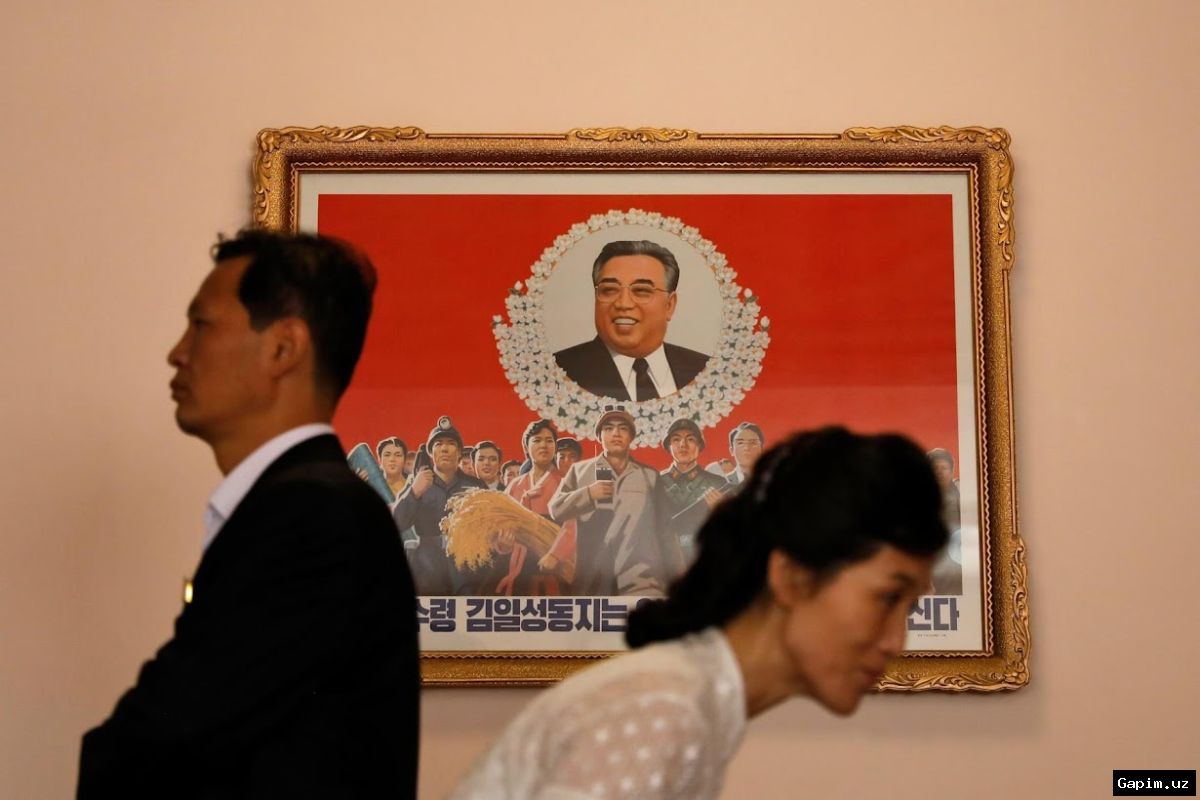
In North Korea, portraits of Kim Il Sung and Kim Jong Il are mandatory in every home, office, public building, and transport. A campaign to display them, initiated in the late 1960s, reached unprecedented levels, intensifying the cult of personality around Kim Il Sung. By the 1970s, this expanded to include portraits of Kim Jong Il, though it was purportedly done in an "unofficial" manner.
The portraits are standardized, produced at the Mansudae Art Studio, and distributed centrally. Their style has evolved over time, reflecting ideological shifts in the country. For instance, in the 1980s, Kim Il Sung was depicted in Western-style suits, symbolizing tentative efforts to open up to the outside world. After his death in 1994, new portraits emerged, portraying him as the "Sun of the Nation."
Strict rules govern the handling of portraits: they must be hung in well-lit areas, above eye level, on walls devoid of other images. When moving to a new home, portraits are the first to be installed, and the inminban (people's unit) conducts spot checks. Daily dusting is required, using specialized tools provided with each set.
Respect for portraits is embedded in numerous rituals: kindergarteners bow to them after meals, and wedding ceremonies feature deep bows to the portraits as a central act. Damaging a portrait can lead to severe penalties, including potential execution. Conversely, saving portraits in perilous situations is hailed as heroism, with newspapers regularly reporting such acts.
For example, in 2008, worker Kang Hyon Gwon prioritized rescuing portraits during a flood, only later attempting to save his five-year-old daughter, who drowned. In 2012, 14-year-old student Han Hyon Gyong died while trying to save portraits, and her family and teachers were awarded state honors. In 2019, farmers who perished saving portraits from a fire were posthumously granted the title of Hero of the Republic.
The 2003 incident starkly illustrates the North Korean attitude towards these portraits. Whether the cheerleaders' actions stemmed from genuine belief or imposed duty remains unclear, but publicly, they were compelled to act accordingly. This highlights the complex interplay between personal conviction and state mandates in the DPRK, underscoring the pervasive role of iconography in maintaining the leadership's authority.
Source: www.gazeta.uz