Each year on April 17, Palestinian Prisoner’s Day is commemorated to remember the plight of thousands of men, women, and children held in Israeli prisons. This year’s remembrance is underscored by Israel’s new death penalty law, which solely targets Palestinians convicted of deadly attacks. Rights groups have called the measure a violation of international law and inherently discriminatory. The United Nations human rights chief labeled it a possible “war crime.”
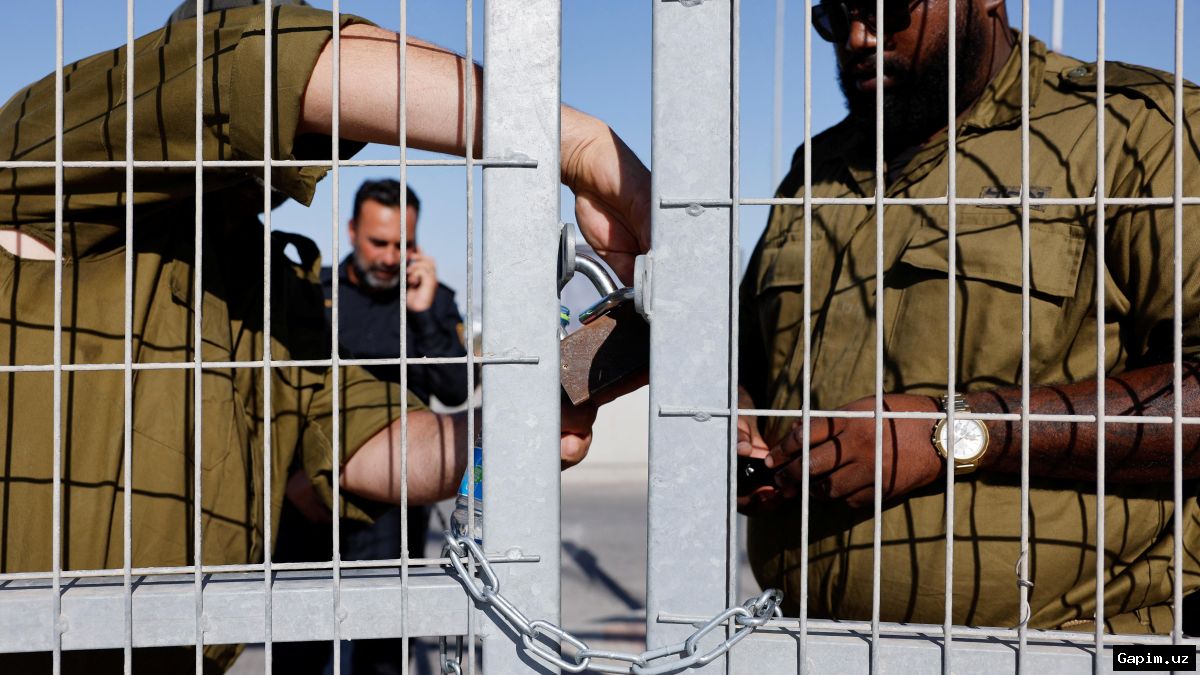
Nearly 10,000 Palestinians are currently being held in Israeli prisons in Israel and occupied territory, according to the prisoners’ rights group Addameer. To Palestinians, they are political prisoners who must be freed. In 1974, the Palestinian National Council officially designated April 17 as Palestinian Prisoner’s Day. Since then, it has served as a day of national and international solidarity, highlighting the Palestinian struggle against Israel’s continued occupation of Palestinian land.
As of early April, more than 9,600 Palestinians were in Israeli custody. Of those, 3,532 were being held under administrative detention – a longstanding Israeli policy to hold Palestinians (men, women, and children) without charge or trial for six-month periods that may be renewed indefinitely. While Israel claims the policy allows authorities to hold suspects while continuing to gather evidence, critics and rights groups say the system is widely abused and denies due process.
Israel is the only country in the world that tries children in military courts, often denying them basic rights. According to Addameer, 342 children were being held in Israeli prisons this month. Since the outbreak of the second Intifada in 2000, Israeli forces have detained over 12,000 Palestinian children. Arrested children are often subjected to physical and psychological torture, according to child rights groups. They are interrogated without the presence of a parent or lawyer, and critics have accused Israel of exploiting their detention to turn them into informants and to extort their families financially by forcing them to pay large fines.
Under the new law, military courts are able to impose the death penalty on Palestinians convicted of killing Israelis in acts of “terror.” This law will not impose the same penalty on Jewish Israelis convicted of killing Palestinians, reinforcing the legal inequalities that grant privileges to Jewish citizens while targeting Palestinians. The law, approved on March 30 and set to take effect by the end of April, will apply to Palestinians from the West Bank tried in Israeli military courts as Israel’s genocide against Palestinians in the Gaza Strip continues.
The Palestinian Authority has condemned the bill as “a war crime against the Palestinian people,” stating it violates the Fourth Geneva Convention, particularly the protections it guarantees for individuals and the safeguards for fair trials. The rights group B’Tselem pointed out before the Knesset’s approval of the bill that the conviction rate for Palestinians tried in military courts is about 96%. The group said in a post on X: “The law is worded in such a way that it targets only Palestinians. And it will turn the killing of Palestinians into an accepted and common tool of punishment through several mechanisms.” It added: “In many cases, these convictions are based on ‘confessions’ obtained through pressure and torture during interrogations.”
Israel’s detention policies have deeply affected Palestinian life for decades. According to the Palestinian Commission of Detainees and Ex-Detainees Affairs, since 1967, Israeli forces have detained an estimated one million Palestinians, about 20% of the Palestinian population. Statistically, this means one in five Palestinians has been imprisoned at some point. For many families, arrests have become an inevitability. This systemic practice has fragmented communities, perpetuated cycles of trauma, and generated widespread resentment. As Israel’s arrest campaign continues, many Palestinians fear that mass imprisonment is not just a byproduct of occupation but a deliberate tool of control. For the thousands currently behind bars, freedom remains uncertain, just as it has for generations before them.
Source: www.aljazeera.com