India's parliament on Friday failed to pass a controversial bill to introduce a minimum quota for female lawmakers, which would have also expanded the Lok Sabha (lower house) to over 800 seats. The vote fell short of the two-thirds majority required for constitutional amendment. The government of Prime Minister Narendra Modi had proposed the amendment bills in a special parliamentary session on Thursday, aiming to accelerate the implementation of a 2023 law guaranteeing a 33% quota for women in the national Parliament and state assemblies from the 2029 general elections.
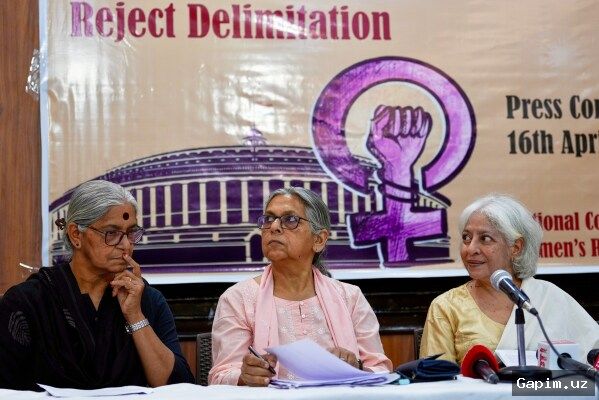
However, the women's quota was tied to a separate and contentious Delimitation Bill to redraw voting boundaries based on population census data. Opposition parties accused Modi's Bharatiya Janata Party (BJP)-led government of using the women's quota issue as a ploy to secure more votes ahead of the 2029 polls. They also questioned the government's intentions behind linking the quota with the redrawing of boundaries, alleging it could skew political representation in favor of the BJP, which has strong support in densely populated northern states.
A marathon 12-hour debate ensued in parliament, with Modi and the opposition trading barbs. The BJP-led coalition, lacking a two-thirds majority, relied on smaller parties for support. Southern state leaders raised concerns that population-based delimitation would unfairly reduce their political clout, as population growth has been lower in the south compared to the north. Tamil Nadu Chief Minister M.K. Stalin dismissed Modi's assurances, calling the bill a “calculated deception” and rejecting it outright.
Meanwhile, a notification from the law ministry indicated that the Women's Reservation Act 2023 had come into force on Thursday, though reports noted its provisions cannot be implemented immediately without a fresh delimitation exercise based on the next census. Congress party leader Priyanka Gandhi called for implementing the women's quota based on the current 543 seats in the Lok Sabha, where women currently account for only 14%, highlighting the slow progress on gender parity.
This legislative setback underscores deep-seated political divisions in India over gender equality and federal representation, casting doubt on the efficacy of the Modi administration's reform agenda. The failure to pass the bill, despite broad cross-party support for the quota in principle, reveals the complexities of balancing regional interests with national policy goals in the world's largest democracy.
Source: www.dw.com