Germany's birth rate fell to its lowest level since World War II in 2025, according to preliminary figures from the Federal Statistical Office (Destatis). Around 655,000 live births were recorded in 2025, down from about 680,000 in 2024, marking the fourth consecutive year of decline.
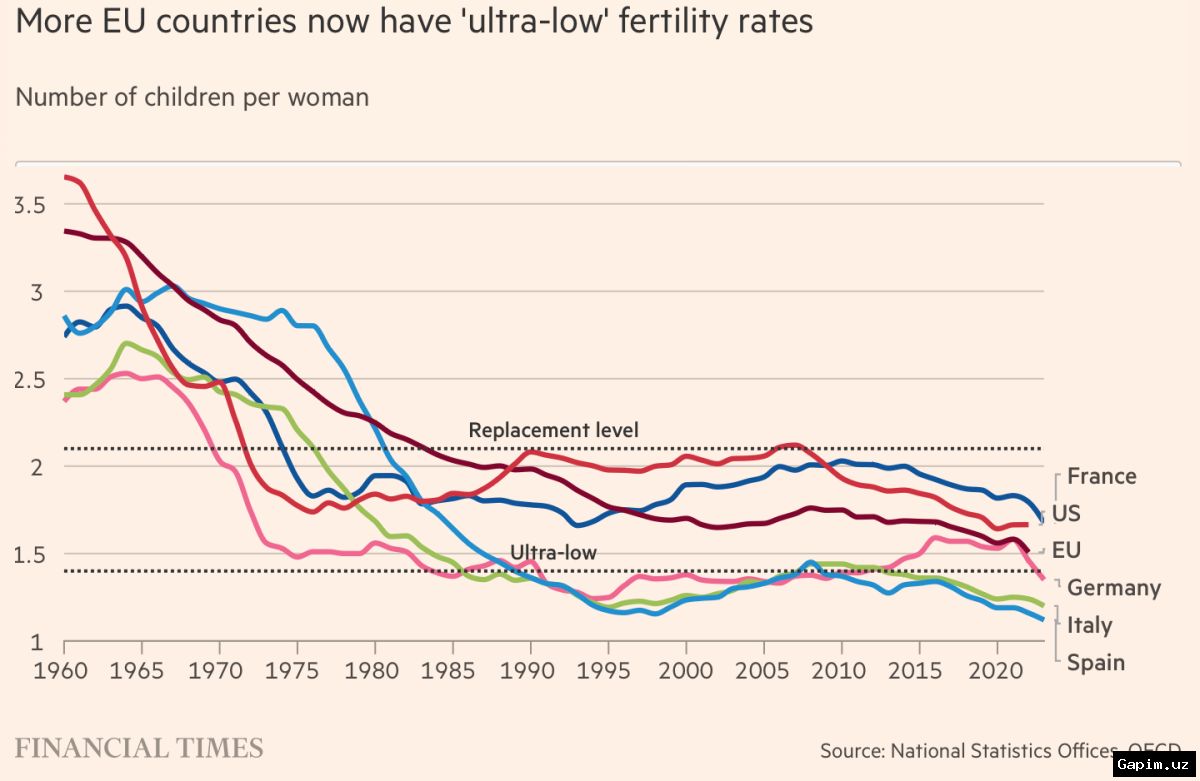
The country recorded more than one million deaths last year, resulting in a birth deficit of around 350,000 — another record. The current replacement rate stands at 1.35 children per woman, far below the 2.1 needed to maintain a stable population. Destatis attributes the trend to smaller birth cohorts from the 1990s entering prime childbearing age and a decline in total fertility since 2022.
Births fell more sharply in eastern Germany (-4.5%) than in western states (-3.2%), with Hamburg being the only state to see an increase (0.5%). Long-term projections to 2070 suggest the population could shrink by around 10%, with immigration unlikely to offset the decline.
The German Family Association described the figures as a "dramatic wake-up call." Federal Executive Director Sebastian Heimann blamed decades of structural discrimination against families, arguing that the social security system, particularly statutory pensions, punishes parents and ignores the needs of families with multiple children. He called for family-friendly reforms and a genuine parental pension to restore the intergenerational contract.
Source: www.dw.com