Iran's Islamic Revolutionary Guard Corps (IRGC) on Monday released a new map marking an expanded maritime area of control, including lengthy sections of the United Arab Emirates (UAE) coastline. In the west, a line stretches between Iran's Qeshm Island and the UAE's Umm al Quwain emirate, while in the east, a second line joins Iran's Mount Mobarak and the UAE's Fujairah.
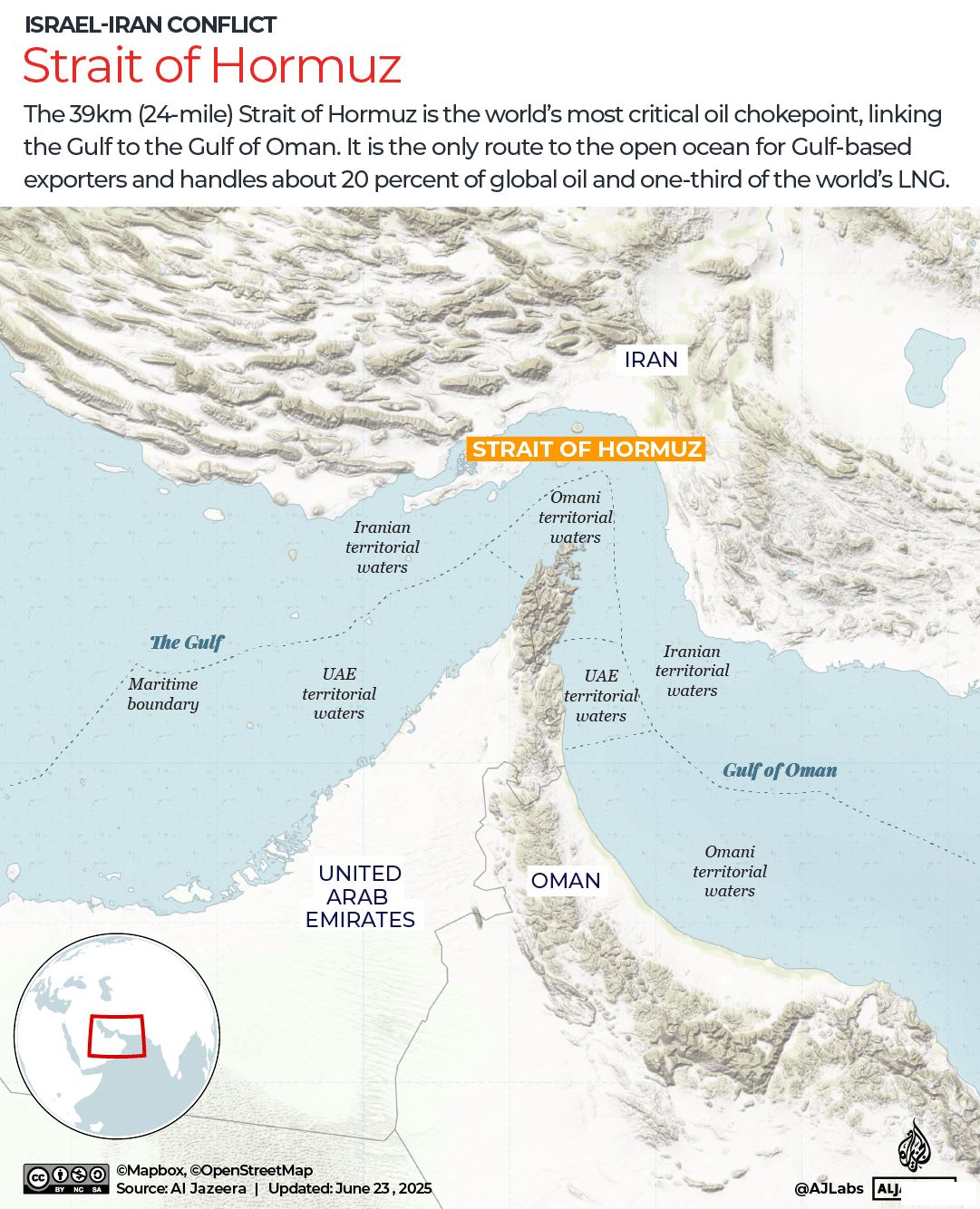
The announcement came after US President Donald Trump purportedly launched a new effort to reopen the vital energy chokepoint, which has been largely closed since the US-Israel war on Iran began on February 28, by sending the navy to escort stranded tankers through the strait in a campaign dubbed “Project Freedom”.
In a further escalation, the UAE on Monday reported drone and missile attacks, including one that caused a fire at a major energy hub in Fujairah, marking the first such incidents in a Gulf state since a US-Iran ceasefire on April 8. The UAE blamed Iran for the attacks. Though Tehran has not officially confirmed the strike, it appeared to acknowledge on Tuesday that it was behind the strikes, while saying that the US and its actions in the region were responsible.
Iranian Parliament Speaker Mohammad Bagher Ghalibaf said in a social media post on Tuesday that “the continuation of the current situation is unbearable for the United States, while we have not even begun yet.”
Behind the veneer of confidence, however, analysts say Iran is increasingly reliant on control of the Strait of Hormuz for vital leverage in its ongoing war with the US and Israel, formally only on pause under the ceasefire. And that leverage is not something Iran can afford to give up easily.
By disrupting maritime traffic in the Strait of Hormuz, a passageway for approximately a quarter of global seaborne oil trade, Iran has been able to impose economic costs on the US and the rest of the world. That, say experts, has given it negotiating heft as it tries to push back against US demands, such as Washington’s insistence that Tehran effectively end its nuclear programme.
Mohammad Reza Farzanegan, professor of economics at Marburg University, described Iran’s control of the Strait of Hormuz as a “strategic equaliser.” He noted that Iran does not need to defeat the US Navy; it only needs to make insurers, shippers, and energy traders understand that military pressure on Iran will carry costs for global markets.
However, Iran’s disruptions come at a high cost. The US has imposed a naval blockade on all Iranian ports and shipping since April 13, limiting Iran’s ability to export oil, import essential goods and keep foreign-exchange inflows. Prices have surged, and millions of jobs have been lost or paused amid a near-total internet shutdown.
The fragile ceasefire between the US and Iran appeared under strain on Tuesday after the UAE accused Iran of attacking the country’s Fujairah oil refinery. The US military claimed two US merchant ships had made it through the strait with Navy support, but Iran denied any crossings.
Muhanad Seloom, assistant professor at the Doha Institute, said the attack on Fujairah was a reminder that Iran could strike Gulf states to keep up economic pressure on global markets. “Iran is trying to tell GCC countries that if the US attacks us, we will destroy all your infrastructure,” he said.
Over the course of the war, at least 6,413 missiles and drones were launched at seven Arab countries in the region, with the majority directed at the UAE. Abu Dhabi has deepened its strategic partnership with Israel and quit the OPEC and OPEC+ oil cartels last month.
Source: www.aljazeera.com