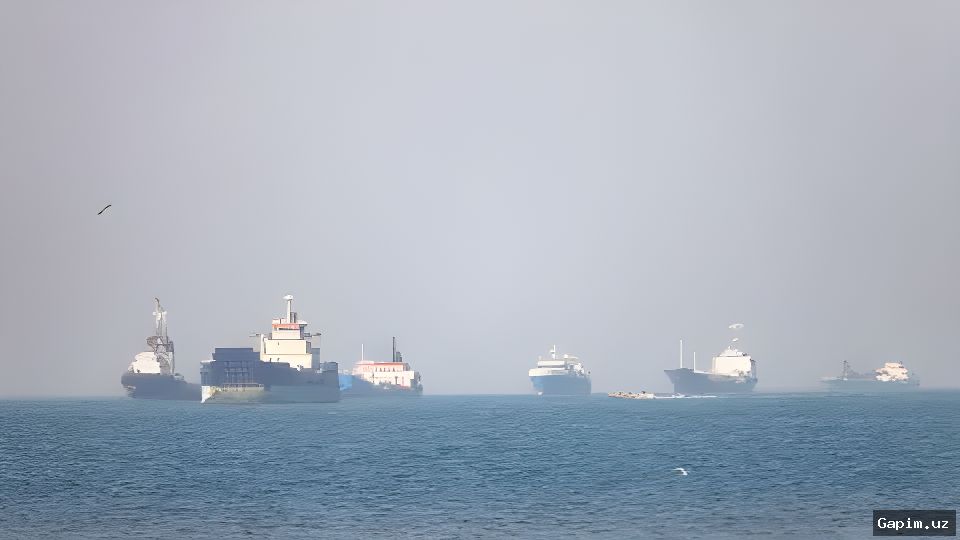
The US military has reiterated its commitment to protect commercial shipping from Iranian attacks in the Strait of Hormuz, even as officials insist that a fragile ceasefire with Tehran remains in place. The development comes amid heightened tensions following Iranian strikes on the United Arab Emirates and US efforts to reopen the strategic waterway.
French President Emmanuel Macron, speaking in Yerevan, Armenia, said he would discuss the reopening of the Strait of Hormuz with his Iranian counterpart Masoud Pezeshkian. Macron emphasized the need for “restoration of freedom of navigation” and stated that “the only possible option is the reopening of the Strait of Hormuz and the absence of any tolls or coercive measures.” France and the UK have been leading European efforts to form an international naval coalition to ensure safe passage.
The United Arab Emirates reported that its air defenses were “actively engaging” Iranian missiles and drones, with attacks targeting oil facilities in Fujairah. The UAE Defense Ministry confirmed interceptions of ballistic missiles, cruise missiles, and drones. Iran has neither confirmed nor denied responsibility for the strikes.
US Defense Secretary Pete Hegseth told a press conference that the ceasefire with Iran is still in effect, but warned that the US would deliver an “overwhelming and devastating” response if Iran attacks US troops or innocent commercial shipping. He stressed that Iran would not be allowed to block an “international waterway.”
General Dan Caine, chairman of the Joint Chiefs of Staff, reported that Iran has fired at commercial vessels nine times and seized two container ships since the ceasefire, but these attacks “fell below the threshold of restarting major combat operations.” However, he added that US forces are ready to resume major combat operations against Iran if ordered.
Iranian Foreign Minister Abbas Araghchi traveled to China for talks with his counterpart Wang Yi, focusing on bilateral ties and regional developments. The visit comes amid stalled negotiations with the US. China is the main buyer of Iranian oil and gas.
Iran’s parliament speaker and chief negotiator Mohammad Bagher Qalibaf accused the US of jeopardizing security in the Strait of Hormuz and warned that Iran has “not even started” testing the vital energy chokepoint. He dismissed the US “Project Freedom” initiative as “Project Deadlock.”
Pakistan condemned the attacks on the UAE and urged respect for the ceasefire. India called the drone strike on the Fujairah oil hub “unacceptable” and demanded an immediate cessation of hostilities, while expressing solidarity with the UAE.
South Korea is reviewing participation in the US-led “Project Freedom” initiative. A South Korean cargo vessel suffered an explosion and fire in the Strait of Hormuz, but all 24 crew members were reported safe.
Several commercial vessels caught fire at the southern Iranian port of Dayyer, with the cause still unknown. European leaders, including European Commission President Ursula von der Leyen and German Chancellor Friedrich Merz, condemned Iran’s attacks on the UAE, while US President Donald Trump downplayed the incident.
Source: www.dw.com