Renowned Polish-American architect Daniel Libeskind, famous for designing the Jewish Museum Berlin and the Ground Zero master plan in New York, celebrates his 80th birthday on May 12. He remains one of the most sought-after figures in architecture, with no signs of slowing down.
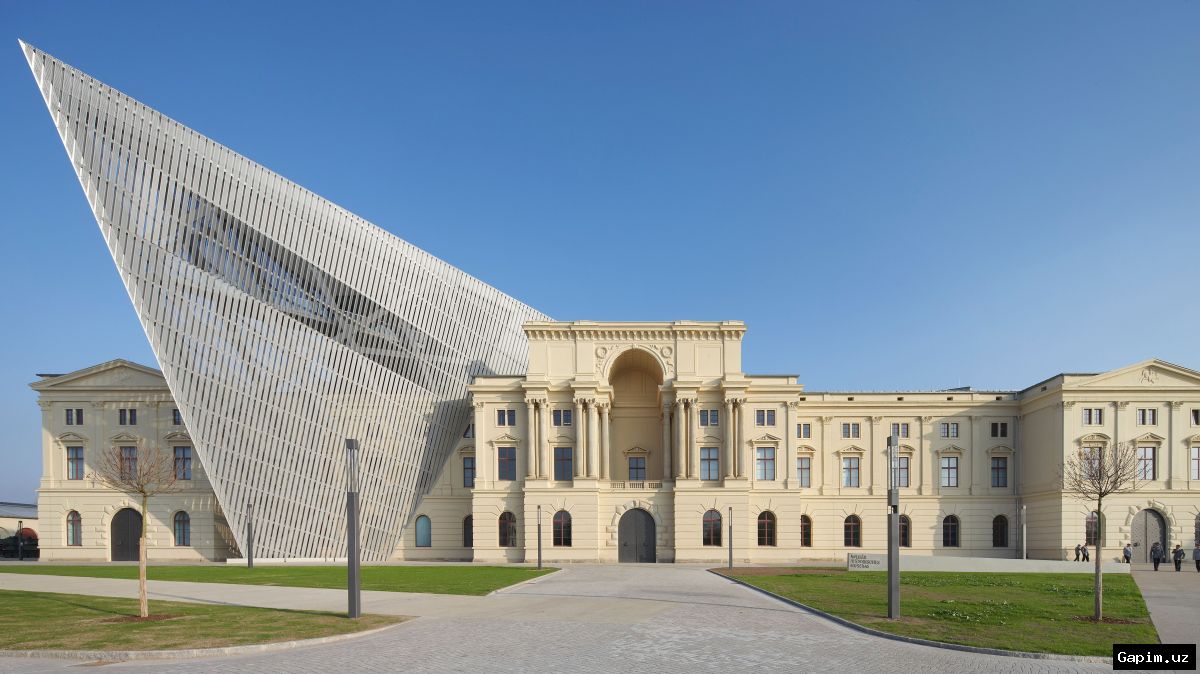
Through his firm Studio Daniel Libeskind, he is best known for large-scale deconstructivist projects that tackle complex cultural narratives. His portfolio includes the Ground Zero site, built on the former location of the Twin Towers, and Berlin's Jewish Museum, a landmark of the German capital.
Several new projects are underway, many underscoring Libeskind's ongoing engagement with historical memory. The Auschwitz Research Center on Hate, Extremism and Radicalization (ARCHER) project, announced in 2025, will convert the house of Auschwitz commandant Rudolf Höss into an anti-extremism and education center.
The Albert Einstein Discovery Center in Ulm, scheduled for construction in the early 2030s, will be a major hub dedicated to Einstein's contributions to science, technology, pacifism, and humanism.
Recent structures include the sculptural Maggie's Centre cancer-care center at London's Royal Free Hospital (opened 2024) and two affordable-housing projects in New York state: the Rosenberg Residences and the Atrium.
Libeskind's first major project, the Jewish Museum Berlin, completed in 2001, features a zinc-coated facade and a jagged floor plan reminiscent of a fractured Star of David, symbolizing Jews arrested and killed during the Holocaust. The building's voids represent the erasure of Jewish life in German history.
The architect's parents, Polish Jews, survived the Holocaust after being arrested. Libeskind was born on May 12, 1946, in Łódź, Poland. His family emigrated to Israel in 1957 and later to the United States.
In an interview, Libeskind said he has always felt like a migrant, adding that people must learn that the world is not their property and that existence is temporary.
The Ground Zero project took years to complete, delayed by disputes over costs and legal challenges. While critics claim little of his original vision remains, Libeskind insists the precise location, height, and street layout follow his original drawings. His Freedom Tower (now One World Trade Center) was designed to be 1,776 feet tall, symbolizing the year of U.S. independence.
Symbolism in memorial architecture, Libeskind's specialty, often sparks controversy. His publicly funded projects use sharp angles, steel, glass, and light-filled voids to express breaks with the past. He believes every building must be memorable to be sustainable, and those telling important history have a responsibility to show the past to secure a future.
Source: www.dw.com