A new study using satellite data has found that 58% of the global population is assigned to the wrong tier in the UN's Human Development Index (HDI), potentially skewing aid distribution and policy priorities.
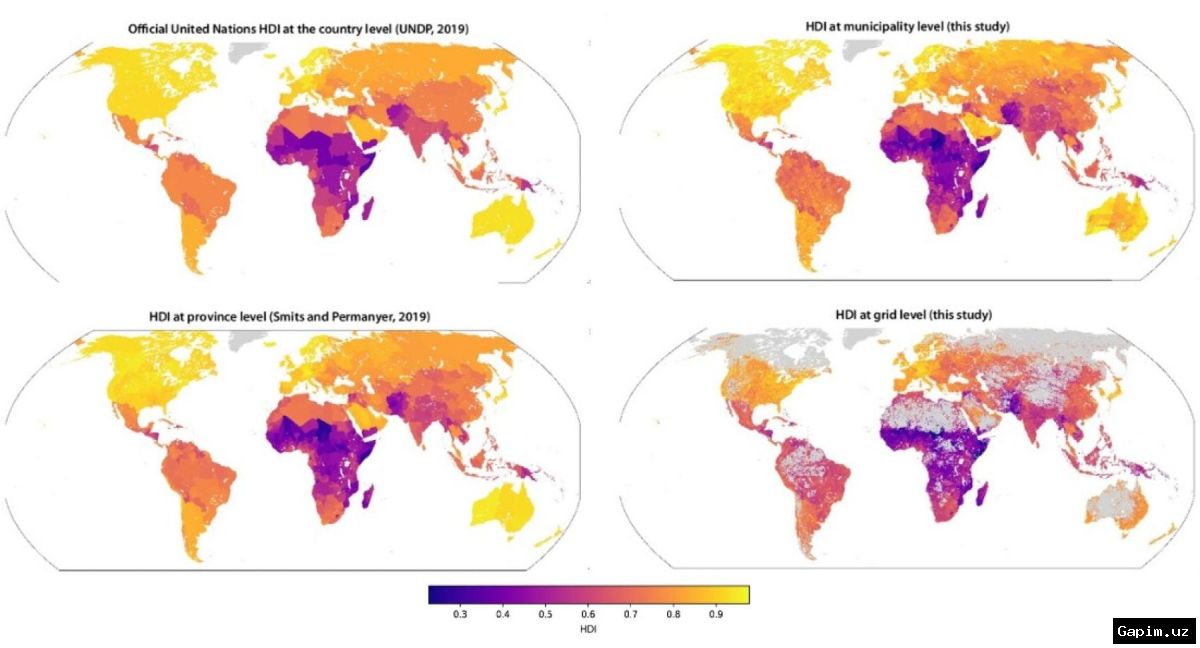
The case of Arcelia, a town in Mexico's Guerrero state, illustrates the problem: official data gives it a score of 0.714 – classified as 'high development'. But satellite imagery analyzed by artificial intelligence yields a score of 0.617 – 'medium development'. This reclassification affects 33,000 people.
Co-author Hannah Druckenmiller of Stanford University noted that half of the world's poorest countries have not conducted a census in the last decade, highlighting the need for up-to-date information to align public policy with people's daily needs.
The HDI is not merely a ranking; it determines global resource allocation. Errors at the local level mean aid may miss those who need it most. In a simulated aid program targeting Mexico's poorest 10%, adding municipal-level data improved understanding of development by over 11 percentage points.
Introduced in 1990 as an alternative to GDP, the HDI relies on national averages that mask local disparities. The Stanford team used machine learning on satellite images to detect patterns in road density, building structures, and nighttime lights – proxies for income and education.
Sabina Alkire, director of the Oxford Poverty and Human Development Initiative, called the study a step forward but cautioned that satellites cannot capture health indicators. 'An undernourished child isn't visible from nightlights,' she said. The authors acknowledge their estimates explain only 29% of within-province HDI variation in Mexico.
Ultimately, satellite data is a valuable complement but not a substitute for ground-level surveys. The study underscores the potential of combining remote sensing with traditional data to improve development measurement.
Source: www.dw.com