US President Donald Trump announced that China has agreed to purchase 200 Boeing jets, with the potential for the order to increase to as many as 750 planes. The aircraft would be equipped with GE Aerospace engines, Trump told reporters aboard Air Force One on Friday.
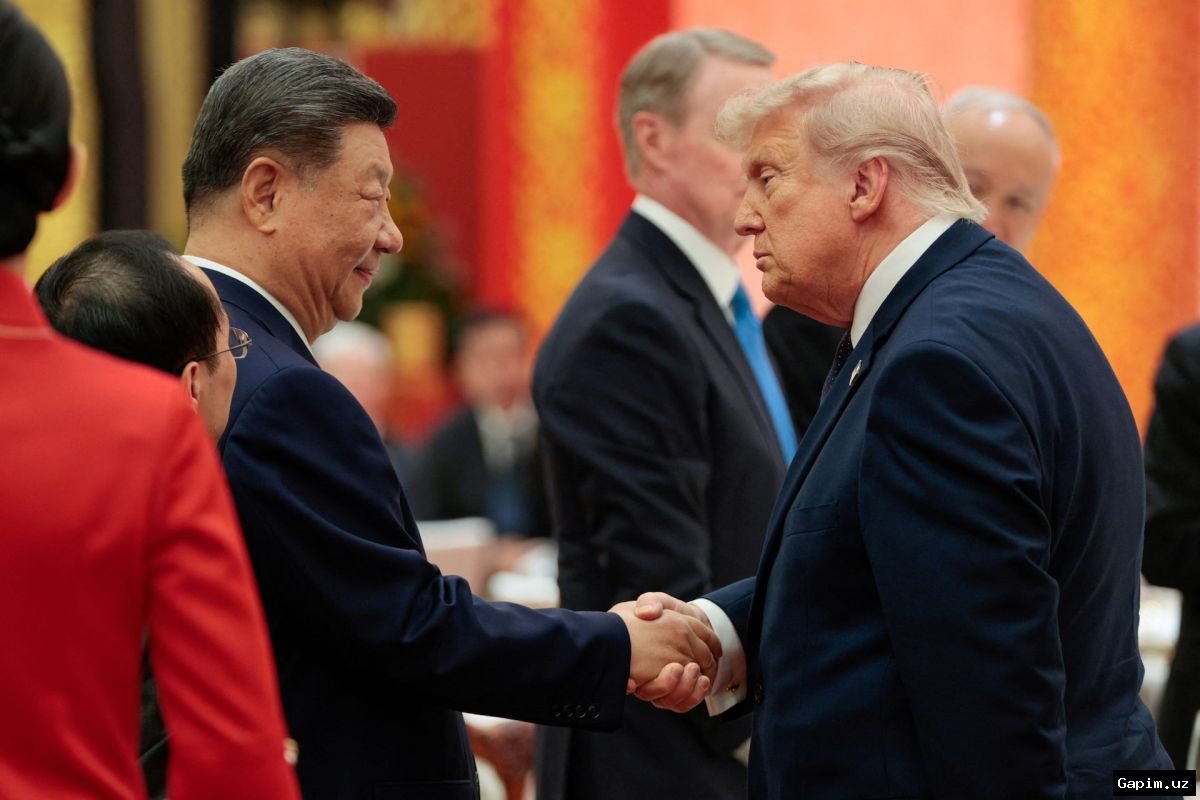
The deal “includes approximately 200 planes and a promise of up to 750 if they do a good job,” Trump said. However, details on the specific jet models and delivery timelines were not immediately available. Neither the Chinese government nor Boeing has officially confirmed the agreement.
If finalized, the deal would mark a significant breakthrough for Boeing in a market that was once central to its growth but from which it was largely shut out amid trade tensions between Beijing and Washington. Boeing CEO Kelly Ortberg was among the US executives accompanying Trump on his trip to Beijing.
It remains unclear how many of the 200 jets represent new business versus aircraft already in Boeing's order backlog. Sources familiar with China's purchasing patterns noted that Beijing has previously bundled new orders with repeat announcements during diplomatic visits.
For China, a large order would secure capacity to expand its aviation market, especially as production of its homegrown COMAC C919 narrowbody falls short of targets. It would also help Boeing narrow the gap with rival Airbus, which has gained a strong foothold in China in recent years.
Aviation consultancy IBA estimated the value of a 200-aircraft order at roughly $17-19 billion, assuming 80% are MAX jets. If a larger proportion (about 40%) are widebody aircraft, the value could rise to $25 billion.
The deal would be a much-needed win for Trump, whose aggressive tariffs have so far failed to significantly reduce the US trade deficit. An order for over 500 jets, if realized, would be the largest in aviation history, surpassing IndiGo's 500-aircraft deal with Airbus.
However, concerns about after-sales support persist. Independent expert Li Hanming said, “The reason China isn’t buying is very simple: no one wants to buy something without guaranteed after-sales maintenance. If the US imposes parts embargoes, who would dare to buy Boeing?”
Wendy Cutler, vice president of the Asia Society Policy Institute, noted that expected mega-purchases in agriculture and energy have not materialized. “If further economic deliverables are not forthcoming, it’s fair to conclude that this summit meeting was heavy on atmospherics, but light on substance,” she said.
Source: www.aljazeera.com