On Saturday, millions of viewers will tune in to the Eurovision Song Contest final, a feast of sequins, smoke machines, and unabashedly kitsch Europop.
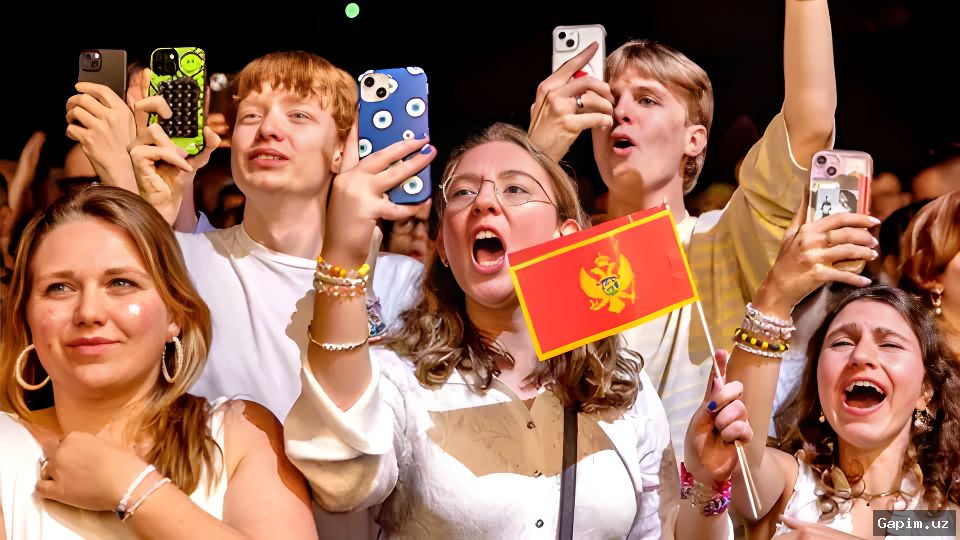
The contest has always had a tongue-in-cheek quality, with commentators often adopting dry, sardonic tones, while artists lean into the spectacle with flamboyant costumes.
Its organizer, the European Broadcasting Union (EBU), describes the contest as a celebration of music and unity and insists it remains above politics. But in recent years, Israel's participation has placed that claim under unprecedented strain.
The controversy has prompted boycotts by artists and broadcasters, as well as accusations that the EBU, which banned Russia after its invasion of Ukraine in 2022, is guilty of double standards.
For critics, the issue is not only whether Israel should compete while its attack on Gaza and Lebanon continues, but also whether the contest can still be considered a neutral cultural event when participation itself has become a geopolitical battleground.
Eurovision is far more than a televised music competition. Watched by over 160 million people each year, it is a powerful platform for countries to exert soft power and geopolitical messaging.
That is why Israel's President Isaac Herzog reportedly spent months engaging European broadcasters and political leaders to support Israel's inclusion. In 2024, Israel spent $800,000 on advertising around the contest in Malmo, Sweden.
In 2025, official state channels linked to Prime Minister Benjamin Netanyahu and the Foreign Ministry launched paid digital ad campaigns across Europe, instructing each viewer to vote for Israel 20 times, the maximum allowed.
The final placement is decided by a 50/50 split between public televote and a jury. Despite receiving a subpar jury vote, Israel secured the highest public vote, propelling them into second place. It was a geopolitical win, but the skewed results led to accusations of vote manipulation.
Although the EBU said it found no evidence of systemic fraud, it has now reduced the maximum number of votes per person to 10.
Berlin-based musician Molly Nilsson told Al Jazeera that Israel knows the value of influencing such an event, describing it as a form of “cultural whitewashing.” She is one of over a thousand artists who signed an open letter, No Music for Genocide, calling for a boycott.
Nilsson opposes the idea that music can be apolitical: “If art just becomes entertainment, where we don't talk about what's happening in the world, then I don't even know what the point is.”
After Israel's participation was confirmed by the EBU in December, broadcasters in the Netherlands, Slovenia, Spain, Iceland and Ireland announced boycotts.
Natalija Goracak, president of RTV Slovenia, told Al Jazeera that the decision meant sacrificing one of the year's most successful entertainment events, but was based on calls from Slovenian artists, public opinion, and a desire to show “human compassion” in the face of Israel's actions in Gaza and Lebanon.
Dutch broadcaster AVROTROS accused Israel of “proven interference” in last year's contest and a “serious violation of press freedom” during the Gaza war. Ireland's RTE cited “the appalling loss of lives in Gaza and humanitarian crisis” as the reason for its boycott.
RTV Slovenia replaced its Eurovision broadcast with a special program called “Voices of Palestine,” a decision in line with its tradition of annual broadcasts honoring victims of atrocities such as the Holocaust and the Srebrenica genocide.
Some artists supporting the boycott face online abuse and the possibility of being ostracized within the industry. In 2023, British pro-Israel groups publicly called on the BBC to remove singer Olly Alexander as the UK representative after he signed a statement accusing Israel of genocide.
Swedish pop star Zara Larsson said she lost gigs and had invitations withdrawn after speaking out in support of Palestinians.
The boycotts have a clear financial impact. Spain alone contributes over €300,000 ($348,972) in participation fees. The withdrawal of five broadcasters could remove close to €1 million ($1.16m) from the contest's funding pool.
The controversy has also dissuaded many top-flight artists from taking part. In Portugal's Festival da Cancao, 13 of 16 entrants withdrew after the EBU confirmed Israel's participation.
On February 25, 2022, the EBU banned Russia, stating that allowing it to be represented “would bring the competition into disrepute.” Critics have decried what they see as a double standard given Israel's war on Gaza.
The EBU says it is a competition between broadcasters and argues that Israeli broadcaster Kan is resisting government efforts to privatize or shut it down, positioning it as somewhat independent. Goracak disagrees, noting that Netanyahu's government established Kan.
Attendees can bring flags of all participating countries, including Israel, as well as rainbow and pride flags, but Palestinian flags and pro-Palestinian symbols are banned. Eleni Mustaklem of the Edward Said National Conservatory of Music called this hypocrisy “painful” to witness.
During the semifinals in Vienna, four audience members were forcibly removed, and a protester screamed “Stop the genocide” and “Free Palestine” as the Israeli singer began his song, cutting through the live broadcast.
William Lee Adams of Wiwibloggs said the atmosphere is not as fractious as the 2024 event in Malmo, where police clashed with protesters, but there remains an “undercurrent of unease among many fans, artists, and delegations about Israel's participation.”
Source: www.aljazeera.com