The killing of Abu-Bilal al-Minuki, the second-in-command of ISIL (ISIS), by United States and Nigerian forces marks a notable achievement for "counterterrorism." Yet for analysts observing the Lake Chad Basin, it highlights how persistent and complex insecurity in the region has become.
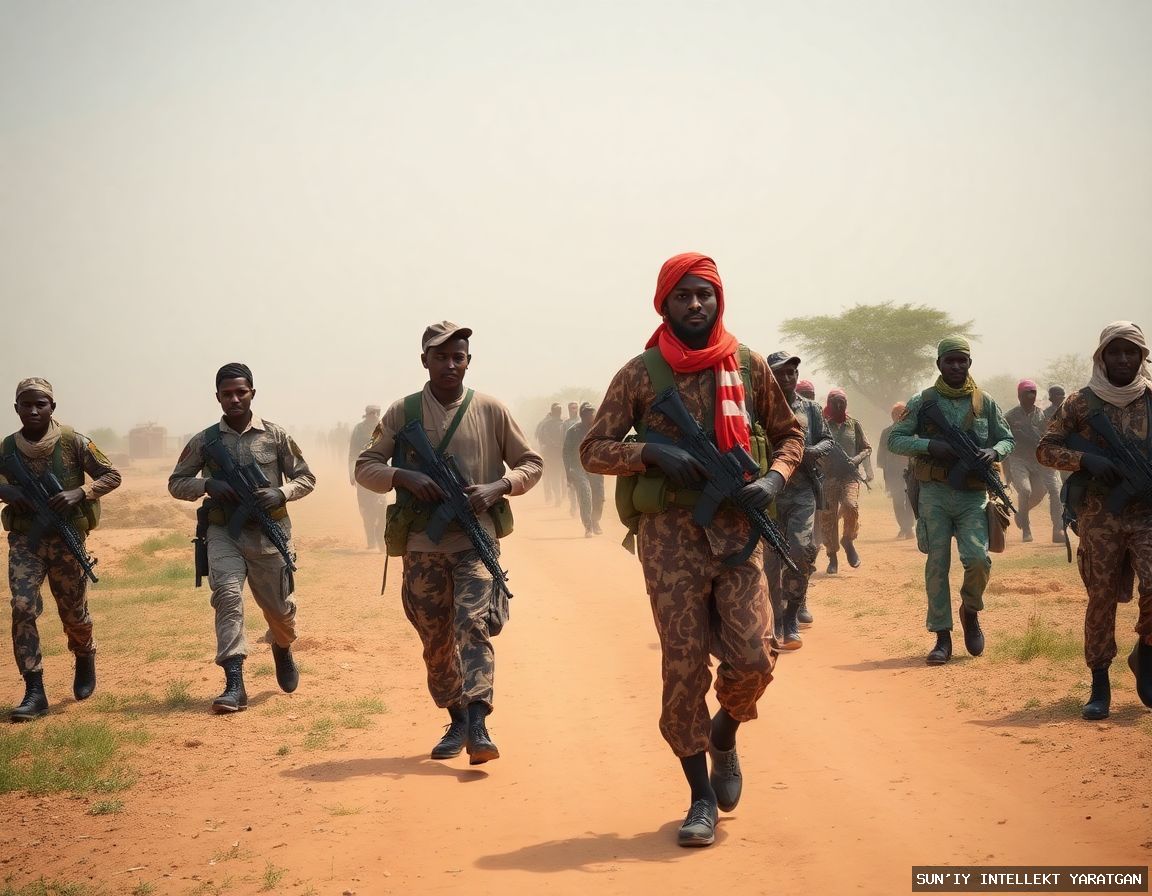
Al-Minuki, a Nigerian national from Borno State, was operating out of a compound near Lake Chad, at the centre of one of the world's most active armed group theatres. His choice of northeastern Nigeria as a base underscores the conditions driving a renewed surge of violence by both the ISIL affiliate in West Africa Province (ISWAP) and its rival, Boko Haram.
Perhaps equally significant is the parallel resurgence of Boko Haram, which quietly rebuilt itself while security agencies primarily focused on the more dominant ISWAP. "While regional forces focused on countering ISWAP's threats, partly due to the group's advanced drone capabilities, Boko Haram appears to have taken advantage of the relative attention on its rival to regroup," said Nimi Princewill, a security expert in the Sahel.
Beyond tactical manoeuvres, the resurgence of violence underscores broader regional challenges of coordination and intelligence-sharing among affected states. "Although Mali and Nigeria do not share a common border, the large expanse of the Sahel that straddles them has several porous borders that allow the movement of jihadi elements and their weapons," said Kabir Amadu, managing director of Beacon Security and Intelligence Limited in Nigeria.
Efforts by Nigeria, Cameroon, Chad, and Niger to harmonise military operations are frequently hampered by logistical bottlenecks, differing command structures, and uneven resource allocation, allowing armed groups to exploit gaps along porous borders. Local communities face dual pressures of insecurity and humanitarian deprivation, often relying on informal networks for protection, which can inadvertently provide concealment or mobility corridors for armed rebels.
Economic factors also play a notable role in the resurgence of both groups. Control of Lake Chad islands could provide authority over taxation routes, smuggling corridors, and resource extraction, turning the islands into potentially lucrative areas of competition. Boko Haram's mix of ideological and criminal operations, including robbery and kidnapping, may help fund its activities while attracting disaffected youth.
Shortcomings of reintegration programmes also contribute to the problem, with former combatants rejoining Boko Haram after facing limited life prospects. ISS research found that former ISWAP members, facing execution for desertion, were joining Boko Haram's Ghazwah wing, notorious for robbery and ransom operations.
"ISWAP and Boko Haram have become active again for three main reasons: their resilience and ability to adapt; the lucrative economy of violence; and the Nigerian state's limited ability to establish a legitimate, lasting presence in the region," said Chris Ogunmodede, a Nigerian political analyst.
Data from the UN Office for the Coordination of Humanitarian Affairs (OCHA) shows the region hosts 2.9 million internally displaced people, including 2.3 million in Nigeria. Violence has forced the closure of 1,827 schools across the Lake Chad Basin, while humanitarian actors received just 19 percent of the funding required for 2025.
"ISWAP and Boko Haram's recent resurgence reflects not simply a military setback, but a deepening governance vacuum across the Lake Chad Basin," said Abiola Sadiq, a security consultant. "While the reported killing of ISIL leader Abu-Bilal al-Minuki may temporarily disrupt command structures, it is also likely to trigger retaliatory violence as rival jihadist factions compete for relevance, legitimacy, and territorial influence."
With Nigeria's 2027 general elections approaching, these groups are highly likely to intensify their operations, potentially extending attacks beyond their traditional strongholds in the Lake Chad Basin and northeastern Nigeria, said Sadiq.
Source: www.aljazeera.com